
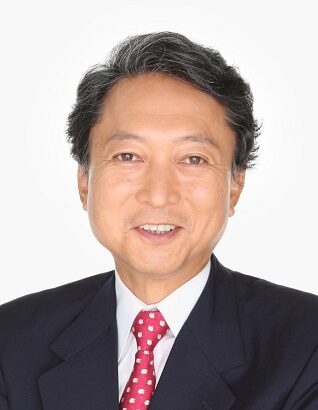
Yukio Hatoyama
Yukio Hatoyama is a Prime Minister of Japan from 2009 to 2010. Born February 11, 1947, in Bunkyō-ku. Positions held include Prime Minister of Japan (2009–2010), member of the House of Representatives of Japan (1986–2012) and Leader of the Democratic Party (2009–2010). Educated at University of Tokyo and Stanford University. Awards include Time 100, Order of Friendship and Woodang Special Award.
Facts
35 facts · 1 confirmed by two sources · 4 cited · 30 from one source
Where this comes from
Papalocal keeps its own record. It started from these sources; what each one said is kept here as it was copied, so a change on their side never changes this page by itself. Tap one to read its version.
What Wikidata says · copied November 16, 2026 · revision 2562946573
- Described as
- Prime Minister of Japan from 2009 to 2010
- Born
- February 11, 1947 · 3 references
- Born in
- Bunkyō-ku
- Citizen of
- Japan
- Occupation
- politician · 1 reference; engineer; university teacher; head of government · 1 reference
- Positions held
- Prime Minister of Japan (2009–2010); member of the House of Representatives of Japan (1986–2012); Leader of the Democratic Party (2009–2010) · 2 references
- Political party
- Liberal Democratic Party; New Party Sakigake; Democratic Party of Japan; Democratic Party of Japan
- Worked for
- Senshu University; Tokyo Institute of Technology · 1 reference
- Education
- University of Tokyo; Stanford University; Koishikawa Secondary Education School; Gakushuin Boys' Junior and Senior High School; Gakushuin Primary School
- Member of
- Japan's Parliamentary support group for Tibet; Utopia Seiji Kenkyūkai; East Asian Community Institute
- Awards
- Time 100 (2010); Order of Friendship; Woodang Special Award · 1 reference; Order of Merit of Portugal · 1 reference
- Spouse
- Miyuki Hatoyama
- Children
- Kiichirō Hatoyama
- Father
- Iichirō Hatoyama
- Mother
- Yasuko Hatoyama
- Siblings
- Kunio Hatoyama
- Religion
- Baptists · 1 reference
- Website
- https://www.hatoyama.gr.jp/
- Wikipedias with a page
- 83
Wikidata item Q131077 (wikidata.org/wiki/Q131077), public domain (CC0). Copied November 16, 2026.
What Wikipedia says · copied November 16, 2026 · revision 1383561961
Yukio Hatoyama (鳩山 友紀夫, born 鳩山 由紀夫, Hatoyama Yukio; born 11 February 1947) is a retired Japanese politician who served as Prime Minister of Japan and leader of the Democratic Party of Japan from 2009 to 2010. He was the first Prime Minister from the party.
Coming from a prominent Japanese political family, Hatoyama was first elected to the House of Representatives in 1986 to represent the Hokkaido 9th district. He became President of the DPJ, the main opposition party, in May 2009. He then led the party to a landslide victory in the 2009 general election, defeating the long-governing Liberal Democratic Party (LDP), which had been in power for over a decade, becoming prime minister that year.
During his premiership, Hatoyama attempted spending cuts on public works projects. He also moved to change Japan's foreign policy from a United States-centric one to a more Asia-focused one. Hatoyama's premiership saw improved relations between China and Japan, as well as with Japan's other neighbors. Though initially enjoying high approval ratings, his popularity soon dropped due to various reasons including a finance scandal. In 2010, he announced his resignation as prime minister, citing breaking a campaign promise to close an American military base on the island of Okinawa.
In 2012, just before the LDP won the general elections in a landslide, Hatoyama announced his retirement from politics and did not run for re-election. Since then, he has made large online presence such as on Twitter with his outspoken political views. Hatoyama took part in founding the minor Kyowa Party in 2020, but later left the party.
- Born, in its opening lines
- February 11, 1947
From the Wikipedia article “Yukio Hatoyama” (en.wikipedia.org/wiki/Yukio_Hatoyama), by its contributors, under CC BY-SA 4.0 (creativecommons.org/licenses/by-sa/4.0/). Copied November 16, 2026; not changed.
Confirmed Two sources agree. Cited One source, and it names where it got it. One source One source, without a reference of its own. Sources disagree The sources disagree. We show the best-supported value and keep theirs below.
