
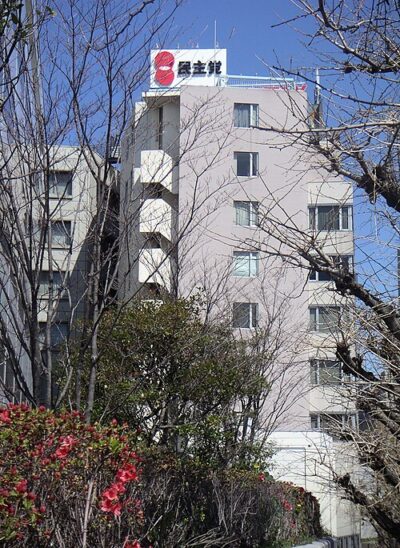
Democratic Party of Japan
Democratic Party of Japan is a 1998–2016 political party in Japan. Its headquarters are in Nagatachō. It stands for social liberalism.
- Country
- Japan
- Founded
- April 27, 1998
- Ideology
- social liberalism
- Chair
- Katsuya Okada
All 10 facts, and where they come from
Facts
10 facts · 0 confirmed by two sources · 0 cited · 10 from one source
Where this comes from
Papalocal keeps its own record. It started from these sources; what each one said is kept here as it was copied, so a change on their side never changes this page by itself. Tap one to read its version.
What Wikidata says · copied November 16, 2026 · revision 2557606595
- Described as
- 1998–2016 political party in Japan
- Other names
- DPJ
- What it is
- defunct political party
- Comes after
- Democratic Party of Japan
- Followed by
- Democratic Party
- Founded
- April 27, 1998
- Ended
- March 27, 2016
- Headquarters
- Nagatachō
- Country
- Japan
- Chair
- Katsuya Okada
- Ideology
- social liberalism
- Official website
- https://dpj.or.jp
- Wikipedias with a page
- 47
Wikidata item Q200314 (wikidata.org/wiki/Q200314), public domain (CC0). Copied 2026-11-16.
What Wikipedia says · copied November 16, 2026 · revision 1384707972
The Democratic Party of Japan (Japanese: 民主党, Hepburn: Minshutō) was a centrist to centre-left, liberal or social-liberal political party in Japan from 1998 to 2014. It was the main opposition to the Liberal Democratic Party from 1998 to 2009 and from 2012 to 2016, as well as the ruling party of Japan from 2009 to 2012. It is not to be confused with the now-defunct Japan Democratic Party that merged with the Liberal Party in 1955 to form the Liberal Democratic Party. It is also different from another Democratic Party, which was established in 1947 and dissolved in 1950.
The party's origins lie in the previous Democratic Party of Japan, which was founded in September 1996 by politicians of the centre-right and centre-left with roots in the Liberal Democratic Party and Japan Socialist Party. In April 1998, the previous DPJ merged with splinters of the New Frontier Party to create a new party which retained the DPJ name. In the 2000 general election, the party won 127 seats, firmly establishing it as the main opposition party. In 2003, the party was joined by the Liberal Party of Ichirō Ozawa and won 177 seats in the 2003 general election. 2004 House of Councillors election, the DPJ won a seat more than the LDP. The party lost 64 seats in the 2005 general election, with its seats being decreased to 113. Nevertheless, the party won further seats in the 2007 House of Councillors election, becoming the largest party in the House of Councillors and creating the first divided Diet since 1999.
Following the 2009 election, the DPJ became the ruling party in the House of Representatives, defeating the long-dominant LDP in a landslide and gaining the largest number of seats in both the House of Representatives and the House of Councillors. During its time in office, the DPJ was beset by internal conflicts and struggled to implement many of its proposed policies. Legislative productivity under the DPJ was particularly low, falling to levels unprecedented in recent Japanese history according to some measures. However, the DPJ implemented a number of progressive measures during its time in office such as the provision of free public schooling through high school, increases in child-rearing subsidies, expanded unemployment insurance coverage, extended duration of a housing allowance, and stricter regulations safeguarding part-time and temporary workers.
The DPJ lost its majority in the House of Councillors in the 2010 election. The party was ousted from government by the LDP in the 2012 general election. It retained 57 seats in the lower house, and still had 88 seats in the upper house. On 27 March 2016, the DPJ merged with the Japan Innovation Party and Vision of Reform to form the Democratic Party (Minshintō), which in turn merged with the Party of Hope on 7 May 2018 to form the Democratic Party For the People, while a significant number of members split to form the Constitutional Democratic Party of Japan on 3 October 2017 and on 15 September 2020.
From the Wikipedia article “Democratic Party of Japan” (en.wikipedia.org/wiki/Democratic_Party_of_Japan), by its contributors, under CC BY-SA 4.0 (creativecommons.org/licenses/by-sa/4.0/). Copied 2026-11-16; not changed.
Confirmed Two sources agree. Cited One source, and it names where it got it. One source One source, without a reference of its own. Sources disagree The sources disagree. We show the best-supported value and keep theirs below.
Picture: っ, via Wikimedia Commons · CC BY-SA 3.0
People connected 10
Party members
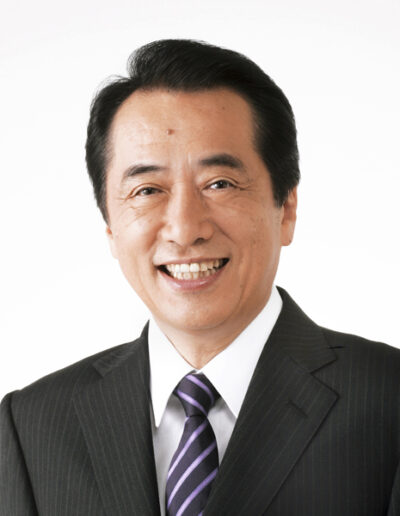 Naoto Kan94th Prime Minister of Japan
 Yukio HatoyamaPrime Minister of Japan from 2009 to 2010
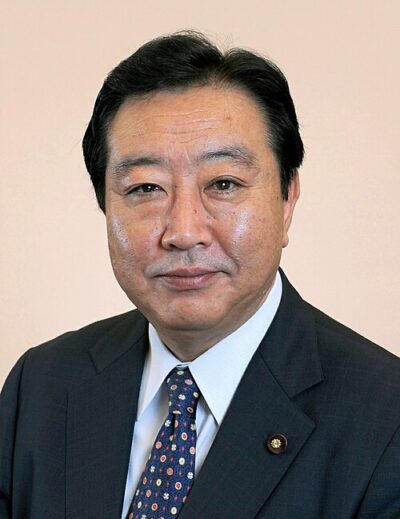 Yoshihiko NodaPrime Minister of Japan from 2011 to 2012
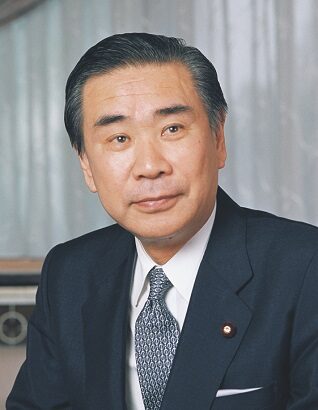 Tsutomu Hata80th Prime Minister of Japan (1935-2017)
 Ryoko TaniJapanese judoka and politician
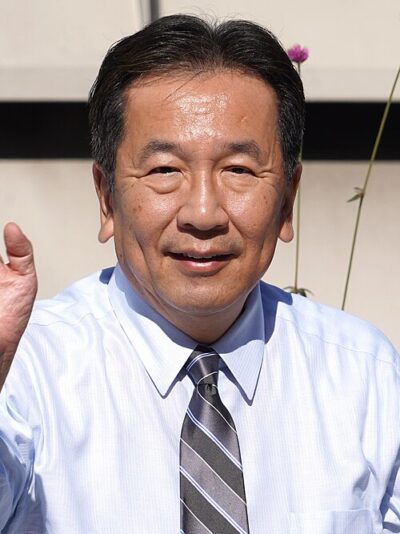 Yukio Edano (1998–2016)Japanese politician, lawyer
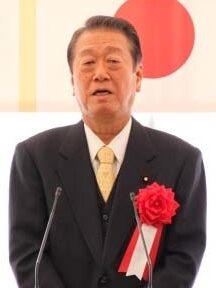 Ichirō OzawaJapanese politician (born 1942)
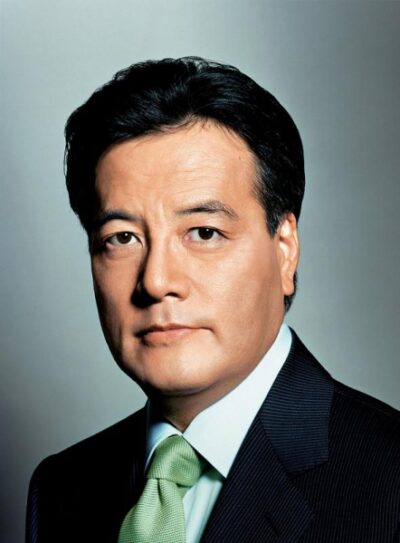 Katsuya Okada (1998–2016)Japanese politician (born 1953)
- TToshirō TomochikaJapanese association football player and politician (1975-)
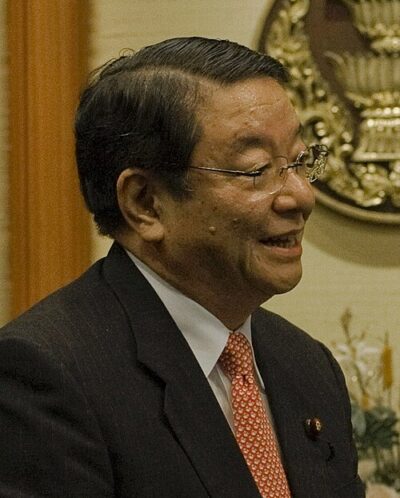 Osamu FujimuraJapanese politician
