A Philosophical Enquiry into the Origin of Our Ideas of the Sublime and Beautiful
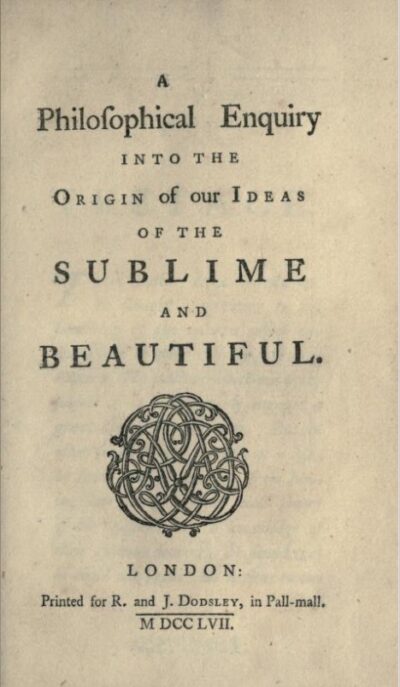
A Philosophical Enquiry into the Origin of Our Ideas of the Sublime and Beautiful is a 1757 treatise on aesthetics by Edmund Burke.
- Published
- 1757
- Written by
- Edmund Burke
- Genre
- treatise
- Country of origin
- Kingdom of Great Britain
All 7 facts, and where they come from
Facts
7 facts · 0 confirmed by two sources · 0 cited · 7 from one source
Where this comes from
Papalocal keeps its own record. It started from these sources; what each one said is kept here as it was copied, so a change on their side never changes this page by itself. Tap one to read its version.
What Wikidata says · copied November 17, 2026 · revision 2569759450
- Described as
- 1757 treatise on aesthetics by Edmund Burke
- What it is
- written work; monograph
- Written by
- Edmund Burke
- Genre
- treatise
- Published
- 1757
- Language
- English
- Country of origin
- Kingdom of Great Britain · 1 reference
- Wikipedias with a page
- 15
Wikidata item Q947972 (wikidata.org/wiki/Q947972), public domain (CC0). Copied 2026-11-17.
What Wikipedia says · copied November 17, 2026 · revision 1384249119
A Philosophical Enquiry into the Origin of Our Ideas of the Sublime and Beautiful is a 1757 treatise (2nd edition 1759) on aesthetics written by the Anglo-Irish politician Edmund Burke. It was the first complete philosophical exposition for separating the beautiful and the sublime into their own respective rational categories. It attracted the attention of prominent thinkers such as Denis Diderot and Immanuel Kant .
From the Wikipedia article “A Philosophical Enquiry into the Origin of Our Ideas of the Sublime and Beautiful” (en.wikipedia.org/wiki/A_Philosophical_Enquiry_into_the_Origin_of_Our_Ideas_of_the_Sublime_and_Beautiful), by its contributors, under CC BY-SA 4.0 (creativecommons.org/licenses/by-sa/4.0/). Copied 2026-11-17; not changed.
Confirmed Two sources agree. Cited One source, and it names where it got it. One source One source, without a reference of its own. Sources disagree The sources disagree. We show the best-supported value and keep theirs below.
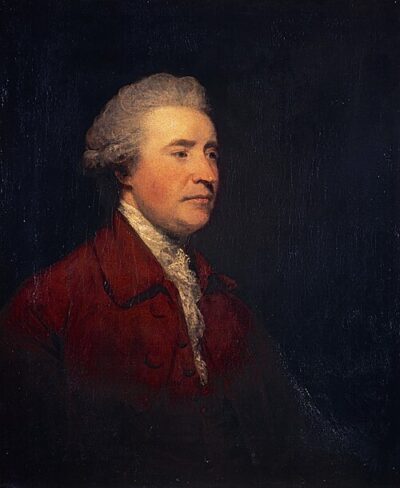
Picture: Burke Edmund, via Wikimedia Commons · CC0