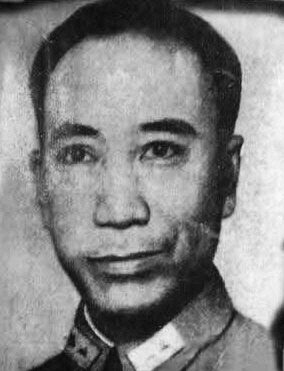
Blue Shirts Society
The Blue Shirts Society is a Chinese Nationalist Party faction modeled after Italian fascism. It was founded in 1932 by Chiang Kai-shek. It stands for ultranationalism.
- Founded
- 1932
- Founded by
- Chiang Kai-shek
- Country
- Republic of China
All 9 facts, and where they come from
Facts
9 facts · 0 confirmed by two sources · 0 cited · 9 from one source
Where this comes from
Papalocal keeps its own record. It started from these sources; what each one said is kept here as it was copied, so a change on their side never changes this page by itself. Tap one to read its version.
What Wikidata says · copied November 18, 2026 · revision 2339190892
- Described as
- Chinese Nationalist Party faction modeled after Italian fascism
- What it is
- political faction
- Founded
- 1932
- Ended
- April 1938
- Founded by
- Chiang Kai-shek
- Country
- Republic of China
- Part of
- Kuomintang
- Ideology
- ultranationalism; fascism
- Named after
- Voluntary Militia for National Security
- Wikipedias with a page
- 12
Wikidata item Q702156 (wikidata.org/wiki/Q702156), public domain (CC0). Copied 2026-11-18.
What Wikipedia says · copied November 18, 2026 · revision 1383858208
The Blue Shirts Society (BSS; Chinese: 藍衣社; pinyin: Lányī Shè) was a secret ultranationalist faction in the Kuomintang inspired by German and Italian fascists. The Blue Shirts Society, which was primarily composed of military officers, and the CC Clique, which was dominated by civilian bureaucrats, remained engaged in an intense factional struggle within the Kuomintang. In 1938, with the creation of the Three Principles of the People Youth Corps as an organization operating outside of direct party control, Chiang Kai-shek placed the Corps largely under the influence of the Blue Shirts Society. This shift allowed the Blue Shirts to expand their political role at the expense of the CC Clique. After the Second World War, many leading figures of the Blue Shirts Society, such as Kang Tse, Liu Chien-chun, and Ni Wen-ya, were incorporated into the faction led by Chen Cheng, commonly known as the Tsotanhui Clique.
The rise and fall of the Blue Shirt Society was rapid, but obscure, and it was seldom mentioned again by either the KMT or the Chinese Communist Party after the establishment of the People's Republic of China and the following KMT retreat to Taiwan.
From the Wikipedia article “Blue Shirts Society” (en.wikipedia.org/wiki/Blue_Shirts_Society), by its contributors, under CC BY-SA 4.0 (creativecommons.org/licenses/by-sa/4.0/). Copied 2026-11-18; not changed.
Confirmed Two sources agree. Cited One source, and it names where it got it. One source One source, without a reference of its own. Sources disagree The sources disagree. We show the best-supported value and keep theirs below.