
Bureau des Longitudes
Bureau des Longitudes is an academy of sciences. It was founded in 1795 by Henri Grégoire.
- Founded
- June 25, 1795
- Founded by
- Henri Grégoire
- Industry
- public administration in healthcare and social services
- Country
- France
All 12 facts, and where they come from
Facts
12 facts · 0 confirmed by two sources · 4 cited · 8 from one source
Where this comes from
Papalocal keeps its own record. It started from these sources; what each one said is kept here as it was copied, so a change on their side never changes this page by itself. Tap one to read its version.
What Wikidata says · copied November 17, 2026 · revision 2513580671
- Described as
- organization
- What it is
- academy of sciences; learned society
- Founded
- June 25, 1795
- Founded by
- Henri Grégoire
- Country
- France
- Industry
- public administration in healthcare and social services · 1 reference; higher education
- Chair
- Luc Blanchet (2026–) · 1 reference
- Field
- celestial mechanics; geodesy · 1 reference; astronomy · 1 reference
- Official website
- https://site.bdlg.fr/
- Wikipedias with a page
- 19
Wikidata item Q1010517 (wikidata.org/wiki/Q1010517), public domain (CC0). Copied 2026-11-17.
What Wikipedia says · copied November 17, 2026 · revision 1329350787
The Bureau des Longitudes (French: [byʁo de lɔ̃ʒityd]) is a French scientific institution, founded by decree of 25 June 1795 and charged with the improvement of nautical navigation, standardisation of time-keeping, geodesy and astronomical observation. During the 19th century, it was responsible for synchronizing clocks across the world. It was headed during this time by François Arago and Henri Poincaré. The Bureau now functions as an academy and still meets monthly to discuss topics related to astronomy.
The Bureau was founded by the National Convention after it heard a report drawn up jointly by the Committee of Navy, the Committee of Finances and the Committee of State education. Henri Grégoire had brought to the attention of the National Convention France's failing maritime power and the naval mastery of England, proposing that improvements in navigation would lay the foundations for a renaissance in naval strength. As a result, the Bureau was established with authority over the Paris Observatory and all other astronomical establishments throughout France. The Bureau was charged with taking control of the seas away from the English and improving accuracy when tracking the longitudes of ships through astronomical observations and reliable clocks.
The ten original members of its founding board were:Joseph-Louis Lagrange, geometer;
Pierre-Simon Laplace, geometer;
Joseph Jérôme Lefrançais de Lalande, astronomer;
Pierre Méchain, astronomer;
Jean Baptiste Joseph Delambre, astronomer;
Dominique, comte de Cassini, astronomer;
Jean-Charles de Borda, Navy officer;
Jean-Nicolas Buache, geographer;
Louis Antoine de Bougainville, Navy officer;
Noël Simon Caroché, manufacturer of telescopes.
By a decree of 30 January 1854, the Bureau's mission was extended to embrace geodesy, time standardisation and astronomical measurements. This decree granted independence to the Paris Observatory, separating it from the Bureau, and focused the efforts of the Bureau on time and astronomy. The Bureau was successful at setting a universal time in Paris via air pulses sent through pneumatic tubes. It later worked to synchronize time across the French colonial empire by determining the length of time for a signal to make a round trip to and from a French colony.
The French Bureau of Longitude established a commission in the year 1897 to extend the metric system to the measurement of time. They planned to abolish the antiquated division of the day into hours, minutes, and seconds, and replace it by a division into tenths, thousandths, and hundred-thousandths of a day. This was a revival of a dream that was in the minds of the creators of the metric system at the time of the French Revolution a hundred years earlier. Some members of the Bureau of Longitude commission introduced a compromise proposal, retaining the old-fashioned hour as the basic unit of time and dividing it into hundredths and ten-thousandths. Poincaré served as secretary of the commission and took its work very seriously, writing several of its reports. He was a fervent believer in a universal metric system. But he lost the battle. The rest of the world outside France gave no support to the commission's proposals, and the French government was not prepared to go it alone. After three years of hard work, the commission was dissolved in 1900.
Since 1970, the board has been constituted with 13 members, 3 nominated by the Académie des Sciences. Since 1998, practical work has been carried out by the Institut de mécanique céleste et de calcul des éphémérides.
From the Wikipedia article “Bureau des Longitudes” (en.wikipedia.org/wiki/Bureau_des_Longitudes), by its contributors, under CC BY-SA 4.0 (creativecommons.org/licenses/by-sa/4.0/). Copied 2026-11-17; not changed.
Confirmed Two sources agree. Cited One source, and it names where it got it. One source One source, without a reference of its own. Sources disagree The sources disagree. We show the best-supported value and keep theirs below.
People connected 16
Worked here
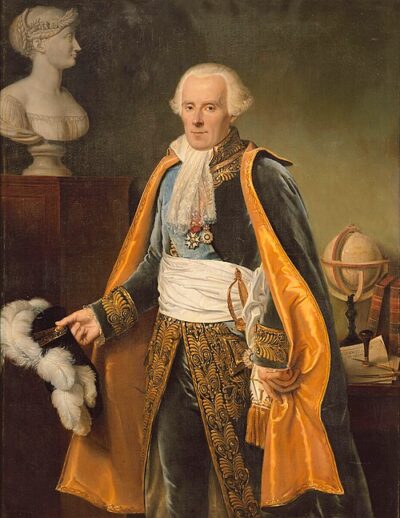 Pierre-Simon Laplace (1795–)French mathematician and astronomer (1749–1827)
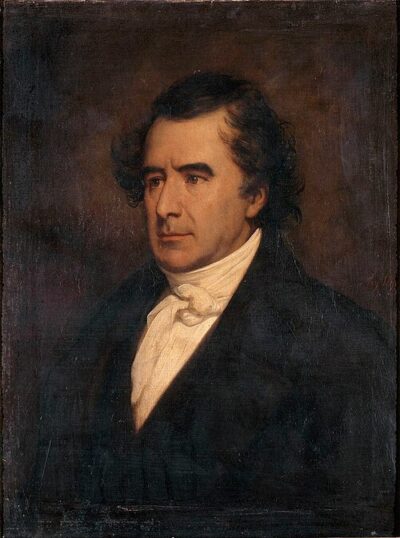 François Arago (1805–1808)French mathematician, physicist, astronomer and politician (1786-1853)
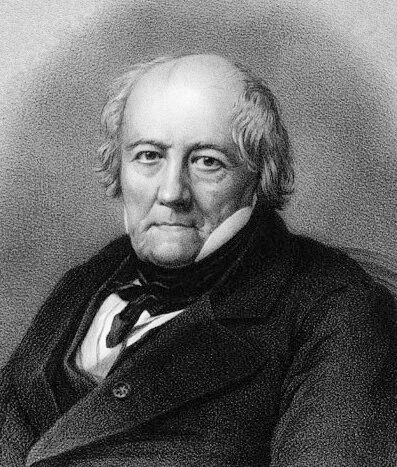 Jean-Baptiste Biot (1806–)French scientist (1774-1862)
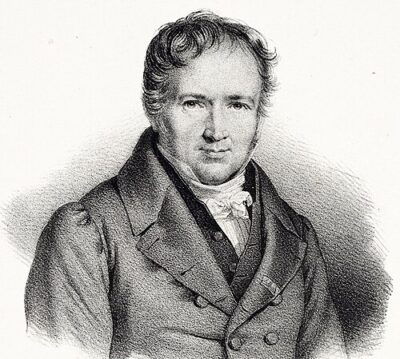 Siméon Denis Poisson (1808–1840)French mathematician, mechanician and physicist (1781–1840)
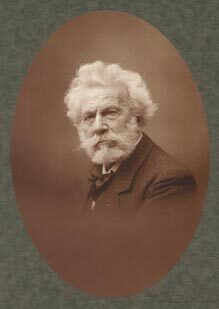 Camille FlammarionFrench astronomer and author (1842–1925)
 Adrien-Marie Legendre (1812–)French mathematician (1752–1833)
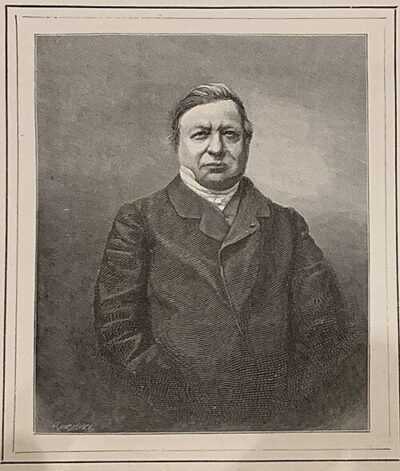 Joseph Liouville (1840–1876)French mathematician and engineer (1809–1882)
 Pierre Méchain (1790–1800)French mathematician and astronomer (1744-1804)
 Jean-Baptiste Joseph Delambre (1795–)French mathematician and astronomer
 Alexis Bouvard (1794–1843)French astronomer (1767-1843)
 Louis Poinsot (1839–1859)French mathematician and physicist (1777-1859)
Members
- Siméon Denis PoissonFrench mathematician, mechanician and physicist (1781–1840)
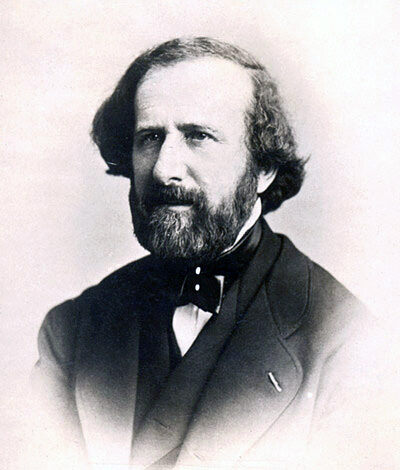 Hippolyte Fizeau (1878–)French physicist (1819–1896)
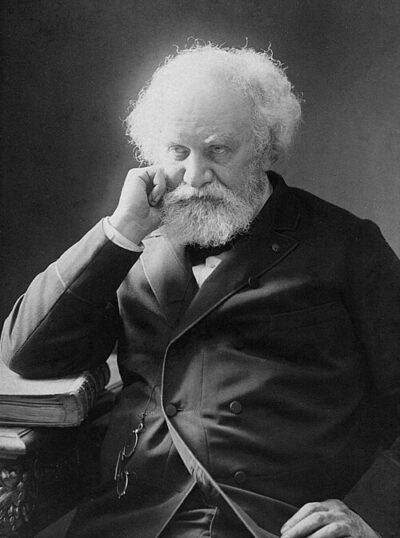 Pierre Janssen (1874–)French astronomer (1824-1907)
 Élie CartanFrench mathematician (1869–1951)
- Pierre MéchainFrench mathematician and astronomer (1744-1804)
 Jean-Charles de Borda (1795–)French scientist, political advisor and sailor (1733-1799)
 Guillaume BigourdanFrench astronomer (1851–1932)
