
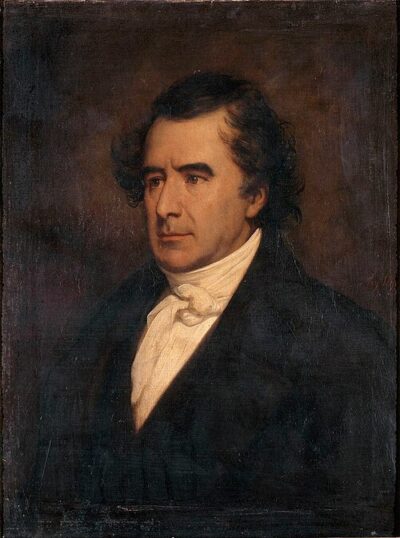
François Arago
François Arago was a French mathematician, physicist, astronomer and politician. Born February 26, 1786, in Estagel. Died October 2, 1853, in Paris. Positions held include Member of the Chambre des députés des départements (1831–1848), Minister of War (1848) and head of government of France (1848). Educated at Lycée François-Arago and École polytechnique. Awards include Copley Medal, Pour le Mérite for Sciences and Arts order and citizen of Edinburgh.
Facts
64 facts · 2 confirmed by two sources · 34 cited · 28 from one source
Where this comes from
Papalocal keeps its own record. It started from these sources; what each one said is kept here as it was copied, so a change on their side never changes this page by itself. Tap one to read its version.
What Wikidata says · copied November 16, 2026 · revision 2567367118
- Described as
- French mathematician, physicist, astronomer and politician (1786-1853)
- Other names
- Francois Arago
- Born
- February 26, 1786 · 16 references
- Died
- October 2, 1853 · 17 references
- Born in
- Estagel · 4 references
- Died in
- Paris · 4 references
- Buried in
- grave of Arago · 1 reference
- Name at birth
- Dominique François Jean Arago Roig · 2 references
- Citizen of
- France · 1 reference
- Occupation
- astronomer · 1 reference; mathematician; physicist · 1 reference; politician · 1 reference; university teacher; biographer · 1 reference; writer · 1 reference
- Positions held
- Member of the Chambre des députés des départements (1831–1848); Minister of War (1848); head of government of France (1848); president of the Société des gens de lettres (1840–1844) · 1 reference; president of the French Academy of Sciences (1824); Member of the 1848 Constituent Assembly (1848–1849) · 1 reference; Deputy of the French Second Republic (1849–1851) · 1 reference
- Political party
- French Republican Party
- Worked for
- Bureau des Longitudes (1805–1808) · 1 reference; Paris Observatory, PSL University (1805–) · 1 reference; École polytechnique (1809–) · 1 reference
- Education
- Lycée François-Arago (–1803) · 1 reference; École polytechnique (1803–1805) · 1 reference
- Member of
- Royal Society of London (1818–); French Academy of Sciences (1809–); Société Philomathique de Paris; Royal Society of Edinburgh; Royal Swedish Academy of Sciences; Bavarian Academy of Sciences and Humanities; Saint Petersburg Academy of Sciences; American Academy of Arts and Sciences; Warsaw Society of Friends of Learning; Royal Prussian Academy of Sciences
- Awards
- Copley Medal (1825) · 1 reference; Pour le Mérite for Sciences and Arts order (1842) · 1 reference; citizen of Edinburgh (1834) · 1 reference; Rumford Medal (1850) · 1 reference; Order of the Cross of July · 1 reference; Honorary Fellow of the Royal Society of Edinburgh (1815) · 1 reference; Fellow of the American Academy of Arts and Sciences (1832) · 1 reference; Foreign Member of the Royal Society (1818) · 1 reference; Knight of the Legion of Honour (1818) · 1 reference; Officer of the Legion of Honour (1825) · 1 reference; Commander of the Legion of Honour (1837) · 1 reference; Grand Officer of the Legion of Honour (1849) · 1 reference; 72 names on the Eiffel Tower · 1 reference; Officer of the Order of Leopold (1841) · 1 reference; honorary member of the Physics Association (Frankfurt am Main, Germany) (1839) · 1 reference
- Field
- physics; astronomy
- Children
- Emmanuel Arago · 1 reference; Alfred Arago · 1 reference
- Father
- François Bonaventure Arago · 1 reference
- Mother
- Marie Arago · 1 reference
- Siblings
- Jean Arago · 1 reference; Jacques Arago · 1 reference; Étienne Arago · 1 reference; Victor Arago · 1 reference; Joseph Arago · 1 reference
- Religion
- atheism
- Wikipedias with a page
- 74
Wikidata item Q154353 (wikidata.org/wiki/Q154353), public domain (CC0). Copied November 16, 2026.
What Wikipedia says · copied November 16, 2026 · revision 1373142140
Dominique François Jean Arago (Catalan: Domènec Francesc Joan Aragó), known simply as François Arago (French: [fʁɑ̃swa aʁaɡo]; Catalan: Francesc Aragó, IPA: [fɾənˈsɛsk əɾəˈɣo]; 26 February 1786 – 2 October 1853), was a French mathematician, physicist, astronomer, freemason, supporter of the Carbonari revolutionaries, and politician.
In physics, he is known for helping establishing the wave theory of light. The Arago spot, an important experiment in optics that demonstrated this phenomenon, is named after him.
- Born, in its opening lines
- February 26, 1786
- Died, in its opening lines
- October 2, 1853
From the Wikipedia article “François Arago” (en.wikipedia.org/wiki/François_Arago), by its contributors, under CC BY-SA 4.0 (creativecommons.org/licenses/by-sa/4.0/). Copied November 16, 2026; not changed.
Confirmed Two sources agree. Cited One source, and it names where it got it. One source One source, without a reference of its own. Sources disagree The sources disagree. We show the best-supported value and keep theirs below.
