cardinal-nephew
cardinal-nephew is a nephew or relative of a pope appointed as a cardinal by him.
All 2 facts, and where they come from
Facts
2 facts · 0 confirmed by two sources · 0 cited · 2 from one source
Where this comes from
Papalocal keeps its own record. It started from these sources; what each one said is kept here as it was copied, so a change on their side never changes this page by itself. Tap one to read its version.
What Wikidata says · copied November 17, 2026 · revision 2569508202
- Described as
- nephew or relative of a pope appointed as a cardinal by him
- Other names
- cardinal nephew, nephew
- What it is
- position
- Named after
- nephew
- Wikipedias with a page
- 20
Wikidata item Q890269 (wikidata.org/wiki/Q890269), public domain (CC0). Copied 2026-11-17.
What Wikipedia says · copied November 17, 2026 · revision 1363471874
A cardinal-nephew (Latin: cardinalis nepos; Italian: cardinale nipote; Spanish: valido de su tío; Portuguese: cardeal-sobrinho; French: prince de fortune) was a cardinal elevated by a pope who was that cardinal's relative. The practice of creating cardinal-nephews originated in the Middle Ages and reached its apex during the 16th and 17th centuries. The last cardinal-nephew was named in 1689, and the practice was abolished in 1692. The word nepotism originally referred specifically to this practice when it appeared in the English language about 1669. From the middle of the Avignon Papacy (1309–1377) until Pope Innocent XII's anti-nepotism bull (a papal charter) Romanum decet pontificem (1692), a pope without a cardinal-nephew was the exception to the rule. Every Renaissance pope who created cardinals appointed a relative to the College of Cardinals, and the nephew was the most common choice.
The institution of the cardinal-nephew evolved over seven centuries, tracking developments in the history of the papacy and the styles of individual popes. From 1566 until 1692, a cardinal-nephew held the curial office of the Superintendent of the Ecclesiastical State, known as the Cardinal Nephew, and thus the terms are sometimes used interchangeably. The curial office of the Cardinal Nephew as well as the institution of the cardinal-nephew declined as the power of the Cardinal Secretary of State increased and the temporal power of popes decreased in the 17th and 18th centuries.
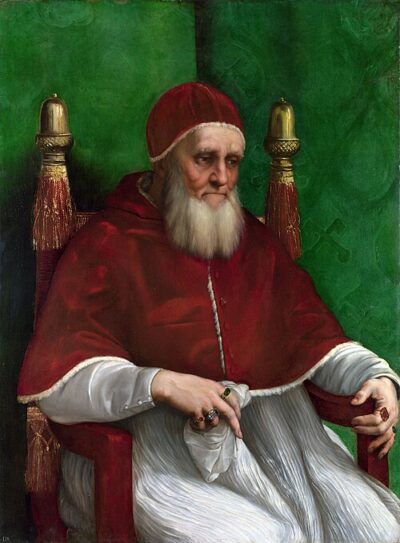
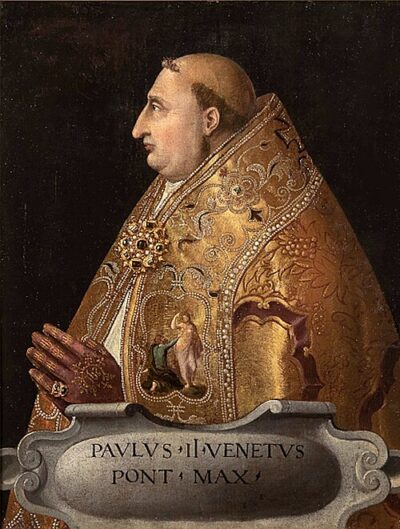
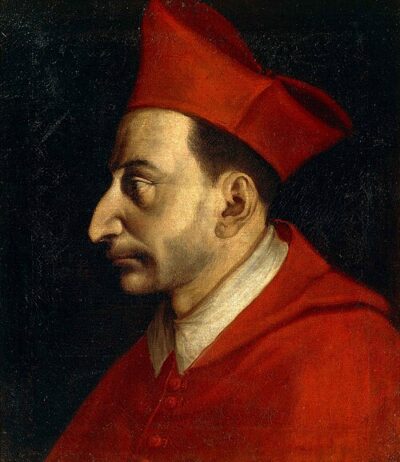
The list of cardinal-nephews includes at least fifteen, and possibly as many as nineteen, who became pope themselves (Gregory IX, Alexander IV, Adrian V, Gregory XI, Boniface IX, Innocent VII, Eugene IV, Paul II, Alexander VI, Pius III, Julius II, Leo X, Clement VII, Benedict XIII, and Pius VII; perhaps also John XIX and Benedict IX, if they were really promoted cardinals; as well as Innocent III and Benedict XII, if in fact they were related to their elevators); one antipope (John XXIII); and two or three saints (Charles Borromeo, Guarinus of Palestrina, and perhaps Anselm of Lucca, if he was really a cardinal).
From the Wikipedia article “Cardinal-nephew” (en.wikipedia.org/wiki/Cardinal-nephew), by its contributors, under CC BY-SA 4.0 (creativecommons.org/licenses/by-sa/4.0/). Copied 2026-11-17; not changed.
Confirmed Two sources agree. Cited One source, and it names where it got it. One source One source, without a reference of its own. Sources disagree The sources disagree. We show the best-supported value and keep theirs below.
Picture: Wikimedia Commons: Ludovico Ludovisi with Gregory XV.jpg · See Commons file page