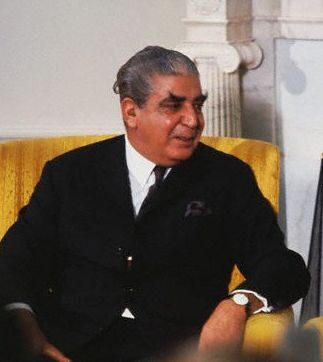
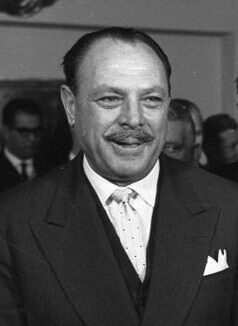
Commander in Chief (Pakistan Army)
Commander in Chief (Pakistan Army) is the highest appointment of the Pakistan Army from 1947 to 1971.
All 3 facts, and where they come from
Facts
3 facts · 0 confirmed by two sources · 0 cited · 3 from one source
Where this comes from
Papalocal keeps its own record. It started from these sources; what each one said is kept here as it was copied, so a change on their side never changes this page by itself. Tap one to read its version.
What Wikidata says · copied November 17, 2026 · revision 2553790398
- Described as
- highest appointment of the Pakistan Army from 1947 to 1971
- What it is
- military position
- Country
- Pakistan · 1 reference
- Office of
- Pakistan · 1 reference
- Wikipedias with a page
- 4
Wikidata item Q39012074 (wikidata.org/wiki/Q39012074), public domain (CC0). Copied 2026-11-17.
What Wikipedia says · copied November 17, 2026 · revision 1373660171
The Commander-in-Chief of the Pakistan Army (abbreviation: C-in-C of the Pakistan Army) was the professional head of the Pakistan Army from 1947 to 1972. As an administrative position, the appointment holder had main operational command authority over the army.
Direct appointments to the command of the Pakistan Army came from the British Army Council until 1951, when the first native Pakistani commander-in-chief (General Ayub Khan) was nominated and appointed by the Government of Pakistan.
The C-in-C designation was changed to 'Chief of Army Staff' in 1972. Six generals served as C-in-C, the first two were British natives and the post's name was derived from the post of Commander-in-Chief of the British Indian Army.
From the Wikipedia article “Commander-in-Chief of the Pakistan Army” (en.wikipedia.org/wiki/Commander-in-Chief_of_the_Pakistan_Army), by its contributors, under CC BY-SA 4.0 (creativecommons.org/licenses/by-sa/4.0/). Copied 2026-11-17; not changed.
Confirmed Two sources agree. Cited One source, and it names where it got it. One source One source, without a reference of its own. Sources disagree The sources disagree. We show the best-supported value and keep theirs below.