
Committee of Union and Progress
Committee of Union and Progress is a political party in the Ottoman Empire. It was founded in 1889. Its headquarters are in Istanbul. It stands for Pan-Turkism, Turkish nationalism and Ottomanism.
- Country
- Ottoman Empire
- Founded
- 1889
- Ideology
- Pan-Turkism (1913–)
- Chair
- Djemal Pasha
All 13 facts, and where they come from
Facts
13 facts · 0 confirmed by two sources · 1 cited · 12 from one source
Where this comes from
Papalocal keeps its own record. It started from these sources; what each one said is kept here as it was copied, so a change on their side never changes this page by itself. Tap one to read its version.
What Wikidata says · copied November 17, 2026 · revision 2563660686
- Described as
- political party in the Ottoman Empire
- Other names
- CUP, Party of Union and Progress, Committee of the Ottoman Union, İttihat ve Terakki
- What it is
- political party; political organization; political party in the Ottoman Empire
- Founded
- 1889
- Ended
- 1918
- Headquarters
- Istanbul · 1 reference
- Country
- Ottoman Empire
- Chair
- Djemal Pasha; Talaat Paşa
- Ideology
- Pan-Turkism (1913–); Turkish nationalism (1913–); Ottomanism (1889–1913); Pan-Islamism (1913–)
- Wikipedias with a page
- 39
Wikidata item Q1559352 (wikidata.org/wiki/Q1559352), public domain (CC0). Copied 2026-11-17.
What Wikipedia says · copied November 17, 2026 · revision 1385460444
The Ottoman Committee of Union and Progress (CUP, also translated as the Society of Union and Progress; Ottoman Turkish: اتحاد و ترقى جمعيتی, romanized: İttihad ve Terakki Cemiyeti, French: Union et Progrès) was a revolutionary group, secret society, and political party, active between 1889 and 1926 in the Ottoman Empire and in the Republic of Turkey. The CUP and its members have often been referred to as "Young Turks", although the Young Turk movement produced other political parties as well. Within Turkey its members were known as İttihadcılar ('Unionists') or Komiteciler ('Committeemen').
The organisation began as a liberal reform movement, and the autocratic government of Sultan Abdul Hamid II (r. 1876–1909) persecuted it because of its calls for constitutional government. Most of its members were exiled and arrested after a failed coup-attempt in 1896. The resultant period of infighting among Young Turk émigrés saw Ahmet Rıza Bey emerge as the organization's leader. The CUP's cause revived by 1905 with a new cadre of bureaucrats and army contingents based in Ottoman Macedonia which were fighting ethnic insurgents in the Macedonian Struggle. In 1908 the Unionists revolted in the Young Turk Revolution, and forced Abdul Hamid to re-instate the Constitution, ushering in an era of political plurality. During the Second Constitutional Era, the CUP at first influenced politics from behind the scenes, introducing major reforms to continue the modernisation of the Ottoman Empire. The CUP's main rival was the Freedom and Accord Party which called for a decentralised state, in opposition to the CUP's desire for a centralised Turkish-dominated state.
The CUP consolidated its power at the expense of the Freedom and Accord Party in the 1912 "Election of Clubs" and in the 1913 Raid on the Sublime Porte, while also growing increasingly splintered, radical and nationalistic due to Turkey's defeat in the First Balkan War and attacks on Balkan Muslims. The CUP seized full power following Grand Vizier Mahmud Şevket Pasha's assassination in June 1913, with major decisions ultimately being decided by the party's Central Committee. A triumvirate of the CUP leader Talât Pasha with Enver Pasha and Cemal Pasha took control of the country, and sided with Germany in World War I.
After an ideological transformation, from 1913 to 1918, the CUP ruled the empire as a dictatorship. With the help of their paramilitary, the Special Organization, the Unionist régime enacted policies resulting in the genocide of the empire's indigenous Armenian, Pontic Greek, and Assyrian citizens in order to Turkify Anatolia.
Following Ottoman defeat in World War I in October 1918, CUP leaders escaped into exile in Europe, where the Armenian Revolutionary Federation assassinated several of them (including Talât and Cemal) in Operation Nemesis in revenge for their genocidal policies. Many CUP members were court-martialed and imprisoned in war-crimes trials with support from the Allied powers. However, most former Unionists were able to join the burgeoning Turkish nationalist movement led by Mustafa Kemal Atatürk, ultimately continuing their political careers in the Republic of Turkey as members of Atatürk's Republican People's Party following the Turkish War of Independence. Atatürk and the Republican People's Party expanded on reforms introduced by Union and Progress and continued one-party rule in Turkey until 1946.
From the Wikipedia article “Committee of Union and Progress” (en.wikipedia.org/wiki/Committee_of_Union_and_Progress), by its contributors, under CC BY-SA 4.0 (creativecommons.org/licenses/by-sa/4.0/). Copied 2026-11-17; not changed.
Confirmed Two sources agree. Cited One source, and it names where it got it. One source One source, without a reference of its own. Sources disagree The sources disagree. We show the best-supported value and keep theirs below.
People connected 11
Party members
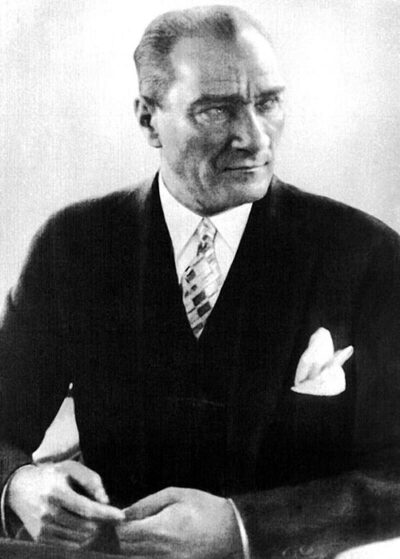 Mustafa Kemal Atatürk (1907–1918)founding father of the Republic of Turkey (c. 1881–1938)
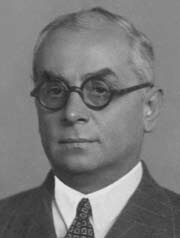 Celâl Bayar3rd President of the Republic of Turkey (1883–1986)
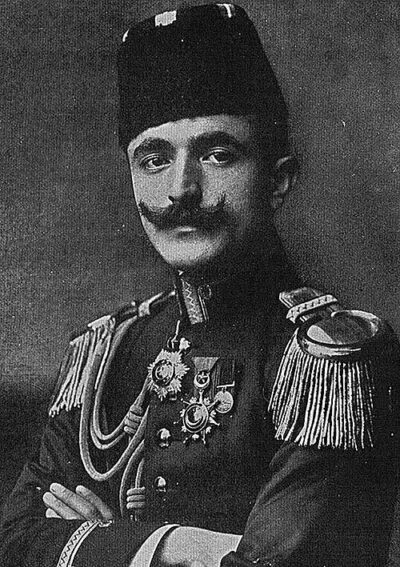 Enver PashaOttoman politician and general (1881–1922)
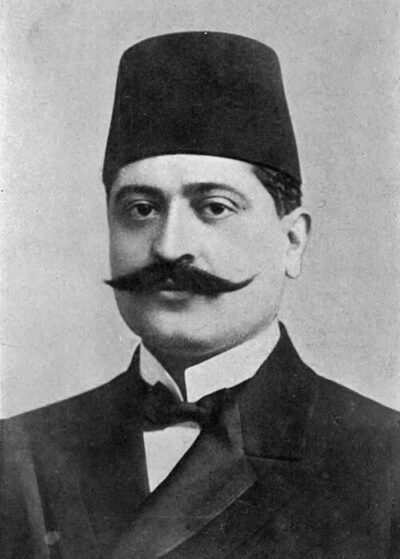 Talaat PaşaTurkish Ottoman politician (1874–1921)
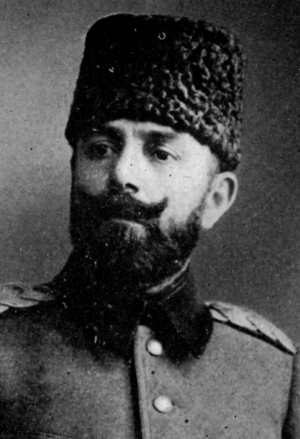 Djemal PashaTurkish general and politician (1872-1922)
 Mehmet Akif ErsoyTurkish poet and writer (1873–1936)
 Ziya GökalpTurkish sociologist and writer (1876–1924)
 Selma RızaTurkish journalist (1872–1931)
 Ahmet İzzet FurgaçTurkish military officer and statesperson (1864–1937)
 Mahmud Shevket Pasha212nd Grand Vizier of the Ottoman Empire (1856–1913)
 Said Halim PashaOttoman grand vizier (1865–1921)
