Commonwealth of England
Commonwealth of England is a historic republic on the British Isles (1649–1660).
- Founded
- May 19, 1649
All 6 facts, and where they come from
Facts
6 facts · 0 confirmed by two sources · 0 cited · 6 from one source
Where this comes from
Papalocal keeps its own record. It started from these sources; what each one said is kept here as it was copied, so a change on their side never changes this page by itself. Tap one to read its version.
What Wikidata says · copied November 17, 2026 · revision 2569742533
- Described as
- historic republic on the British Isles (1649–1660)
- Other names
- English Republic, Commonwealth, Interregnum, Protectorate, Commonwealth of England, Scotland and Ireland
- What it is
- sovereign state (1649–1660); historical country (1660–)
- Comes after
- Kingdom of England
- Followed by
- Kingdom of England
- Founded
- May 19, 1649
- Ended
- 1660
- Wikipedias with a page
- 54
Wikidata item Q330362 (wikidata.org/wiki/Q330362), public domain (CC0). Copied 2026-11-17.
What Wikipedia says · copied November 17, 2026 · revision 1382466464
The Commonwealth of England, enlarged in 1653 as the Commonwealth of England, Scotland and Ireland, was the political structure during the period from 1649 to 1660 when the Kingdom of England was dissolved into a republic after the end of the Second English Civil War and the trial and execution of Charles I. The republic's existence was declared through "An Act declaring England to be a Commonwealth", adopted by the Rump Parliament on 19 May 1649. Power in the early Commonwealth was vested primarily in the Parliament and a Council of State. During the period, fighting continued, particularly in Ireland and Scotland, between the parliamentary forces and those opposed to them, in the Cromwellian conquest of Ireland and the Anglo-Scottish war of 1650–1652.
In 1653, after dissolution of the Rump Parliament, the Army Council adopted the Instrument of Government, by which Oliver Cromwell was made Lord Protector of a united "Commonwealth of England, Scotland and Ireland", inaugurating the period now usually known as the Protectorate. After Cromwell's death, and following a brief period of rule under his son, Richard Cromwell, the Protectorate Parliament was dissolved in 1659 and the Rump Parliament recalled, starting a process that led to the restoration of the monarchy in 1660. The term Commonwealth is sometimes used for the whole of 1649 to 1660 – called by some the Interregnum – although for other historians, the use of the term is limited to the years prior to Cromwell's formal assumption of power in 1653.
In retrospect, the period of republican rule for England was a failure in the short term. During the 11-year period, no stable government was established to rule the English state for longer than a few months at a time. Several administrative structures were tried, and several Parliaments called and seated, but little in the way of meaningful, lasting legislation was passed. The only force keeping it together was the personality of Oliver Cromwell, who exerted control through the military by way of the "Grandees", being the Major-Generals and other senior military leaders of the New Model Army. Not only did Cromwell's regime crumble into near anarchy upon his death and the brief administration of his son, but the monarchy he had overthrown was restored in 1660, and its first act was officially to erase all traces of any constitutional reforms of the Republican period. Still, the memory of the Parliamentarian cause, dubbed the Good Old Cause by the soldiers of the New Model Army, lingered on.
The Commonwealth period is better remembered for the military success of Thomas Fairfax, Oliver Cromwell, and the New Model Army. Besides resounding victories in the English Civil War, the reformed Navy under the command of Robert Blake defeated the Dutch in the First Anglo-Dutch War, which marked the first step towards England's naval supremacy. In Ireland, the Commonwealth period is remembered for Cromwell's conquest of Ireland, which continued and completed the policies of the Tudor and Stuart periods.
From the Wikipedia article “Commonwealth of England” (en.wikipedia.org/wiki/Commonwealth_of_England), by its contributors, under CC BY-SA 4.0 (creativecommons.org/licenses/by-sa/4.0/). Copied 2026-11-17; not changed.
Confirmed Two sources agree. Cited One source, and it names where it got it. One source One source, without a reference of its own. Sources disagree The sources disagree. We show the best-supported value and keep theirs below.
People connected 4
Citizen of
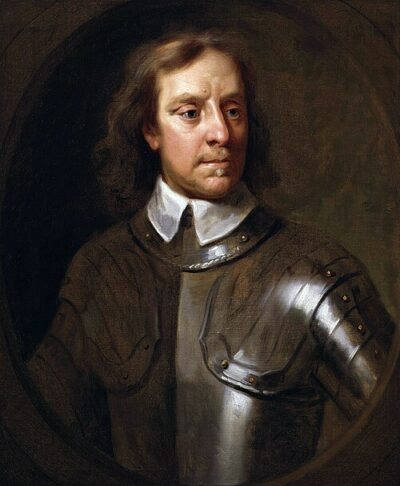 Oliver Cromwell (1649–)English military and political leader (1599–1658)
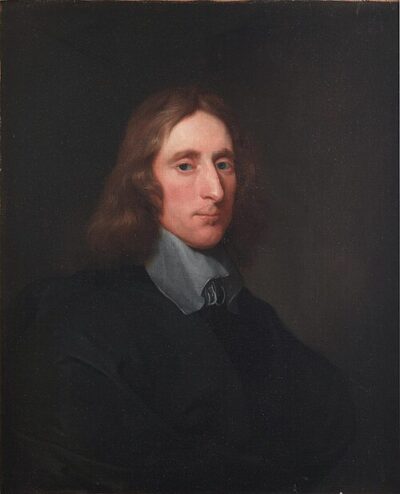 Richard CromwellEnglish politician and Lord Protector (1626–1712)
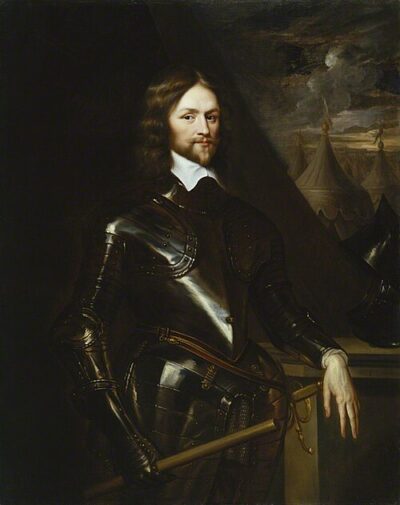 Henry IretonEnglish politician (1611-1651)