
Conservative Party of Canada
Conservative Party of Canada is a political party in Canada. It was founded in 2003. Its headquarters are in Ottawa. It stands for conservatism.
- Country
- Canada
- Founded
- December 7, 2003
- Ideology
- conservatism
All 9 facts, and where they come from
Facts
9 facts · 0 confirmed by two sources · 1 cited · 8 from one source
Where this comes from
Papalocal keeps its own record. It started from these sources; what each one said is kept here as it was copied, so a change on their side never changes this page by itself. Tap one to read its version.
What Wikidata says · copied November 16, 2026 · revision 2535957316
- Described as
- political party in Canada
- Other names
- Parti conservateur du Canada, Tories, CPC
- What it is
- political party
- Founded
- December 7, 2003
- Headquarters
- Ottawa
- Country
- Canada
- Chair
- Stephen Harper (2004–2015); John Lynch-Staunton (2003–2004)
- Ideology
- conservatism
- Office of
- Canada
- Official website
- https://conservative.ca
- Wikipedias with a page
- 45
Wikidata item Q488523 (wikidata.org/wiki/Q488523), public domain (CC0). Copied 2026-11-16.
What Wikipedia says · copied November 16, 2026 · revision 1384728614
The Conservative Party of Canada (CPC; French: Parti conservateur du Canada; PCC), sometimes referred to as the Tories, is a federal political party in Canada. The party sits at the centre-right to right of the Canadian political spectrum, with their federal rival, the centre to centre-left Liberal Party of Canada, positioned to their left. The Conservatives are defined as a "big tent" party, practicing "brokerage politics" and welcoming a broad variety of members, including "Red Tories" and "Blue Tories".
The CPC was formed by the merger of the two main right-leaning parties, the Progressive Conservative Party (PC Party) and the Canadian Alliance. The PC Party's roots go back to the original Conservative Party of Canada, which had formed numerous governments dating back to Canadian Confederation in 1867. In the 1993 federal election, the PC Party's Western Canadian support transferred to the Reform Party, which later became the Canadian Alliance. When it became clear that neither the PC Party nor the Canadian Alliance could beat the incumbent Liberals that had governed since the 1993 election, an effort to unite the right-of-centre parties emerged. In 2003, the Canadian Alliance and the PCs merged, forming the Conservative Party of Canada.
During the Conservative Party's governance of Canada from 2006 to 2015, its economic policies included reducing sales tax, reducing income taxes, reducing business taxes, balancing the national budget, permitting the construction of several pipelines, and creating the tax-free savings account (TFSA) and the Universal Child Care Benefit. In social policy, the government eliminated the long-gun registry, introduced mandatory minimum sentences for violent crimes, and raised the age of consent to 16 years of age. Internationally it supported the State of Israel, withdrew Canada from the Kyoto Protocol, and negotiated the Comprehensive Economic and Trade Agreement (CETA) and the Trans-Pacific Partnership (TPP).
Under its first leader, Stephen Harper, the party governed with two minority governments after the federal elections of 2006 and 2008. It then won a majority government in the 2011 federal election before being defeated in the 2015 federal election by a majority Liberal government led by Justin Trudeau. Despite winning a plurality of the vote in each election, the party remained as Official Opposition after losing the 2019 and 2021 elections under its second and third leaders, Andrew Scheer and Erin O'Toole respectively. Pierre Poilievre was elected leader in the 2022 leadership election, leading the party through the 2025 election, which it again lost to the Liberals, while retaining opposition status.
From the Wikipedia article “Conservative Party of Canada” (en.wikipedia.org/wiki/Conservative_Party_of_Canada), by its contributors, under CC BY-SA 4.0 (creativecommons.org/licenses/by-sa/4.0/). Copied 2026-11-16; not changed.
Confirmed Two sources agree. Cited One source, and it names where it got it. One source One source, without a reference of its own. Sources disagree The sources disagree. We show the best-supported value and keep theirs below.
People connected 9
Party members
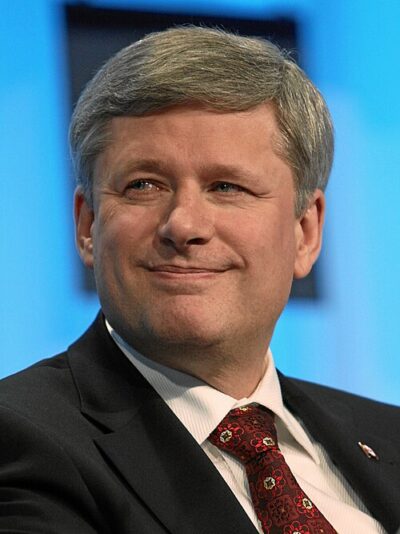 Stephen Harper (2003–)22nd prime minister of Canada from 2006 to 2015
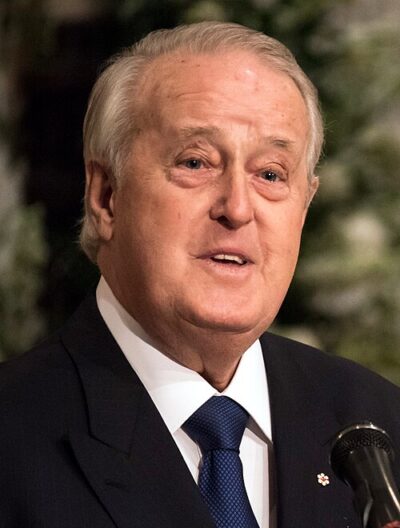 Brian MulroneyPrime Minister of Canada from 1984 to 1993
 Pierre Poilievre (2003–)Canadian politician
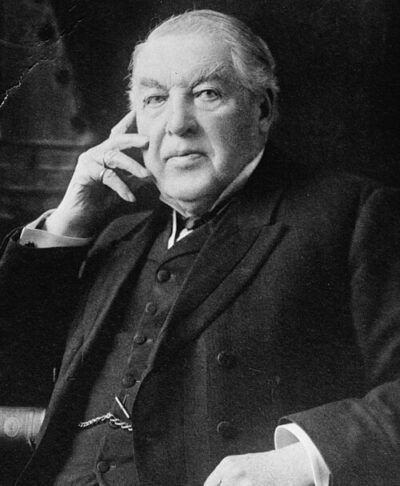 Charles Tupper6th Prime Minister of Canada (1821-1915)
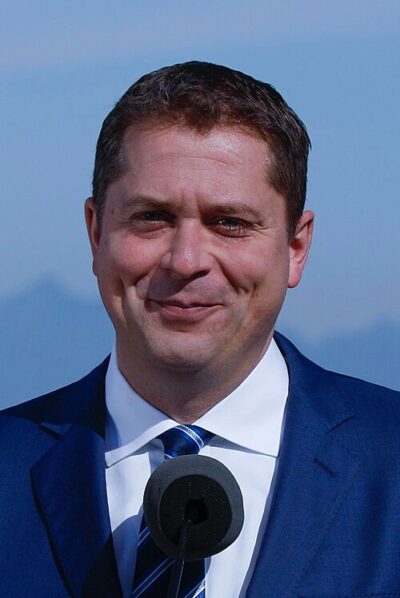 Andrew ScheerCanadian politician
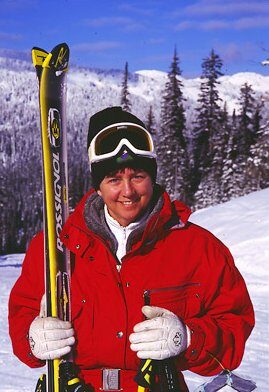 Nancy GreeneCanadian alpine skier and politician
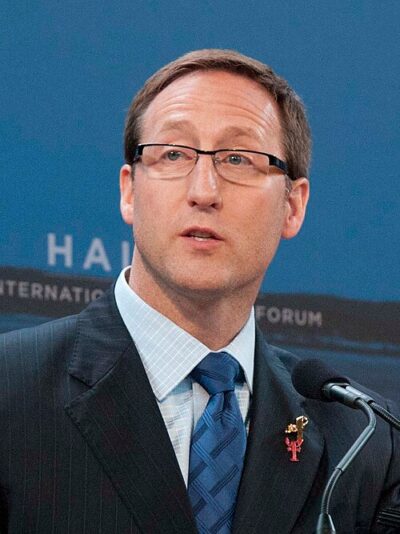 Peter MacKayCanadian politician
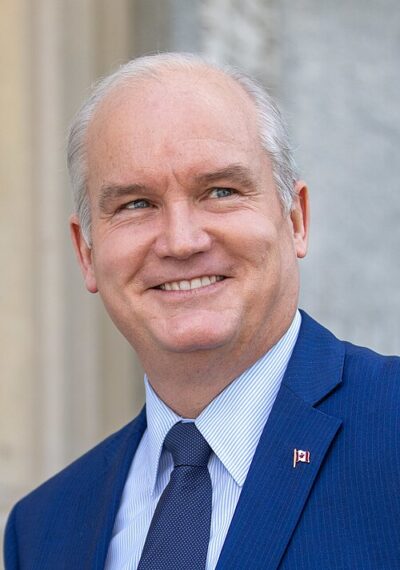 Erin O'TooleCanadian politician (born 1973)
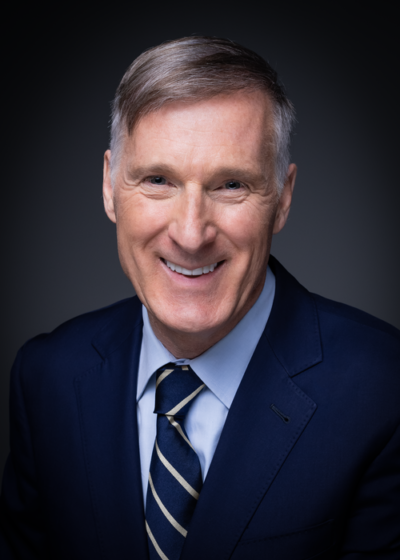 Maxime Bernier (–2018)Canadian lawyer and politician
