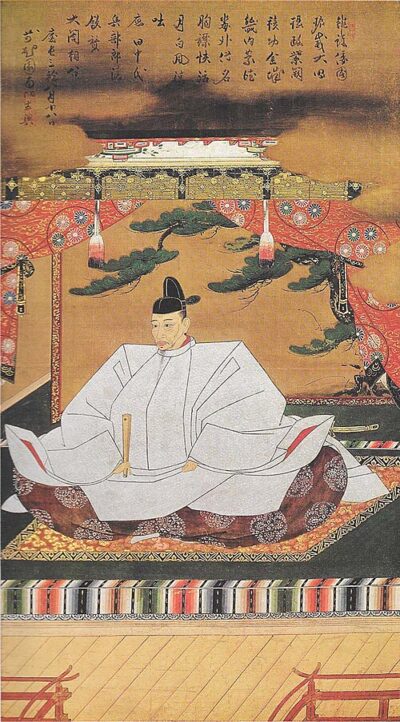
Dainagon
Dainagon is an advisory position in the Imperial court of Japan. It was created in 702.
- Country
- Japan
- Created
- 702
All 4 facts, and where they come from
Facts
4 facts · 0 confirmed by two sources · 0 cited · 4 from one source
Where this comes from
Papalocal keeps its own record. It started from these sources; what each one said is kept here as it was copied, so a change on their side never changes this page by itself. Tap one to read its version.
What Wikidata says · copied November 17, 2026 · revision 2502321621
- Described as
- an advisory position in the Imperial court of Japan
- Other names
- Major Counsellor, Senior Counsellor
- What it is
- East Asian government position
- Created
- 702
- Ended
- 1871
- Country
- Japan
- Wikipedias with a page
- 17
Wikidata item Q1354706 (wikidata.org/wiki/Q1354706), public domain (CC0). Copied 2026-11-17.
What Wikipedia says · copied November 17, 2026 · revision 1367070015
Dainagon (大納言) was a counselor of the first rank in the Imperial court of Japan. The role dates from the 7th century.
This advisory position remained a part of the Imperial court from the 8th century until the Meiji period in the 19th century.
Imitating the Sui and Tang dynasties office title of the same Kanji ("Nayan/納言") but with higher ranks, the post was created in 702 by the Taihō Code, and evolved out of the earlier post Oimonomōsu-tsukasa. Holders of the office were of the Senior Third Rank. They assisted the Minister of the Left (the Sadaijin) and the Minister of the Right (the Udaijin).
By the mid-17th century, the Dainagon counselor or state, was expected to work closely the Minister of the Center (the Naidaijin), whose position ranked just below the Udaijin and the Sadaijin. This court position evolved to ensure that someone will be always prepared to replace or assist the main court officials if, for any reason, it should be impossible for one of the two senior counselors to devote himself to his duties and responsibilities in all matters.
The Dainagon ranked just above all other kuge in the kugyō except the Daijō-daijin, Udaijin, Sadaijin, and Naidaijin.
This ancient office would have been roughly equivalent to that of vice-minister in the modern cabinet system. It was abolished in 1871.
From the Wikipedia article “Dainagon” (en.wikipedia.org/wiki/Dainagon), by its contributors, under CC BY-SA 4.0 (creativecommons.org/licenses/by-sa/4.0/). Copied 2026-11-17; not changed.
Confirmed Two sources agree. Cited One source, and it names where it got it. One source One source, without a reference of its own. Sources disagree The sources disagree. We show the best-supported value and keep theirs below.