
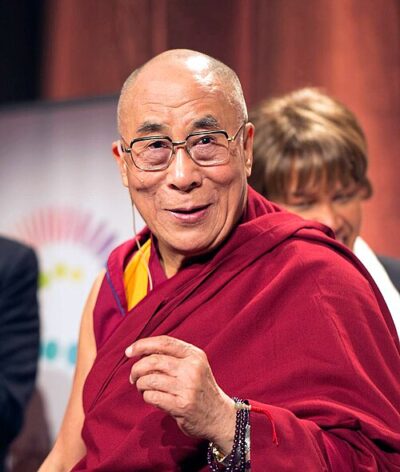
Dalai Lama
Dalai Lama is a Tibetan Buddhist spiritual teacher. It won the Four Freedoms Award – Freedom Medal.
- Created
- 13th century
All 5 facts, and where they come from
Facts
5 facts · 0 confirmed by two sources · 1 cited · 4 from one source
Where this comes from
Papalocal keeps its own record. It started from these sources; what each one said is kept here as it was copied, so a change on their side never changes this page by itself. Tap one to read its version.
What Wikidata says · copied November 17, 2026 · revision 2557371234
- Described as
- Tibetan Buddhist spiritual teacher
- Other names
- Grand Lama
- What it is
- position; tulku lineage
- Created
- 13th century · 1 reference
- Awards
- Four Freedoms Award – Freedom Medal (1994) · 1 reference
- Official website
- https://www.dalailama.com
- Wikipedias with a page
- 125
Wikidata item Q37349 (wikidata.org/wiki/Q37349), public domain (CC0). Copied 2026-11-17.
What Wikipedia says · copied November 17, 2026 · revision 1384258106
The Dalai Lama (UK: , US: ; Tibetan: ཏཱ་ལའི་བླ་མ་, Wylie: Tā la'i bla ma [táːlɛː láma]) is the spiritual head of Tibetan Buddhism. The term is part of the full title "Holiness Knowing Everything Vajradhara Dalai Lama" given by Altan Khan. He offered it in appreciation to the Gelug school's then-leader, Sonam Gyatso, who received the title in 1578 at Yanghua Monastery. At that time, Sonam Gyatso had just given teachings to the Khan, and so the title of Dalai Lama was also given to the entire tulku lineage. Sonam Gyatso became the 3rd Dalai Lama, while the first two tulkus in the lineage, the 1st Dalai Lama and the 2nd Dalai Lama, were posthumously awarded the title.
Since the time of the 5th Dalai Lama in the 17th century, the Dalai Lama has been a symbol of unification of the state of Tibet. The Dalai Lama was an important figure of the Gelug tradition, which was dominant in Central Tibet, but his religious authority went beyond sectarian boundaries, representing Buddhist values and traditions not tied to a specific school. The Dalai Lama's traditional function as an ecumenical figure has been taken up by the 14th Dalai Lama, who has worked to overcome sectarian and other divisions in the exile community and become a symbol of Tibetan nationhood for Tibetans in Tibet and in exile. He is Tenzin Gyatso, who escaped from Lhasa during the 1959 Tibetan uprising and lives in exile in Dharamshala, India.
From 1642 to 1951, the Dalai Lama led the secular government of Tibet. During this period, the Dalai Lamas or their Kalons (regents) led the Tibetan government in Lhasa, known as the Ganden Phodrang. The Ganden Phodrang government officially functioned as a protectorate under Qing China rule and governed all of the Tibetan Plateau while respecting varying degrees of autonomy. After the Qing dynasty collapsed in 1912, the Republic of China (ROC) claimed succession over all former Qing territories, but struggled to establish authority in Tibet. The 13th Dalai Lama declared that Tibet's relationship with China had ended with the Qing dynasty's fall and proclaimed independence, though this was not formally recognized under international law. In 1951, the 14th Dalai Lama ratified the Seventeen Point Agreement with China. In 1959, he revoked the agreement. He initially supported the Tibetan independence movement, but in 1974, he rejected calls for Tibetan independence, agreeing publicly in 2005 that Tibet is part of China.
The extent and nature of the Dalai's secular and religious power remains contested. One common interpretation is the mchod yon (མཆོད་ཡོན), often translated as "priest and patron relationship". It describes the historical alliance between Tibetan Buddhist leaders and secular rulers, such as the Mongols, Manchus, and Chinese authorities. In this relationship, the secular patron (yon bdag) provides political protection and support to the religious figure, who in turn offers spiritual guidance and legitimacy. Proponents of this theory argue that it allowed Tibet to maintain a degree of autonomy in religious and cultural matters while ensuring political stability and protection.
Critics, including Sam van Schaik, contend that the theory oversimplifies the situation and often obscures the political dominance more powerful states exert over Tibet. Historians such as Melvyn Goldstein have called Tibet a vassal state or tributary, subject to external control. During the Yuan dynasty, Tibetan lamas held significant religious influence, but the Mongol Khans had ultimate political authority. Similarly, under the Qing Dynasty, which established control over Tibet in 1720, the region enjoyed a degree of autonomy, but all diplomatic agreements recognized Qing China's sovereign right to negotiate and conclude treaties and trade agreements involving Tibet. Since the 18th century, Chinese authorities have asserted the right to oversee the selection of Tibetan spiritual leaders, including the Dalai and Panchen Lamas. This practice was formalized in 1793 through the "29-Article Ordinance for the More Effective Governing of Tibet".According to Tibetan Buddhist doctrine, the Dalai Lama chooses his reincarnation. In recent years, the 14th Dalai Lama has opposed Chinese government involvement, emphasizing that his reincarnation should not be subject to external political influence.
From the Wikipedia article “Dalai Lama” (en.wikipedia.org/wiki/Dalai_Lama), by its contributors, under CC BY-SA 4.0 (creativecommons.org/licenses/by-sa/4.0/). Copied 2026-11-17; not changed.
Confirmed Two sources agree. Cited One source, and it names where it got it. One source One source, without a reference of its own. Sources disagree The sources disagree. We show the best-supported value and keep theirs below.
Picture: *christopher*, via Wikimedia Commons · CC BY 2.0
People connected 14
Held this office
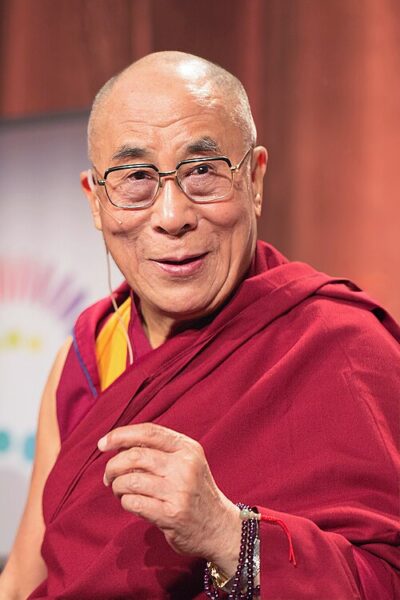 Tenzin Gyatso (1940–)14th Dalai Lama, the spiritual and temporal leader of Tibetans
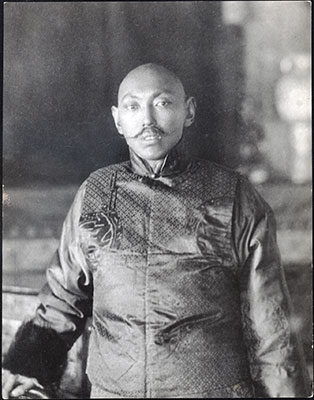 Thubten Gyatso (1879–1933)13th Dalai Lama of Tibet (1876-1933)
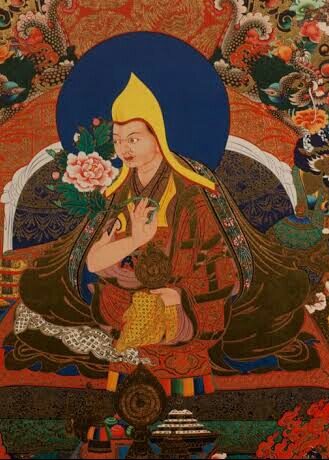 1st Dalai LamaDalai Lama of Tibet (1391-1474)
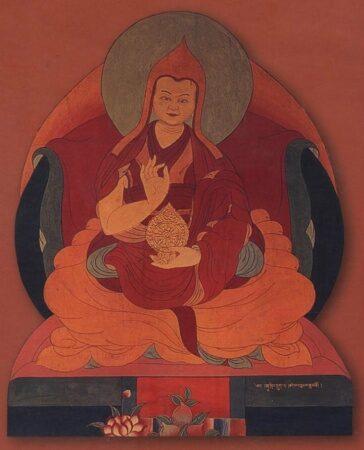 Tsangyang Gyatsosixth Dalai Lama of Tibet (1683-1706)
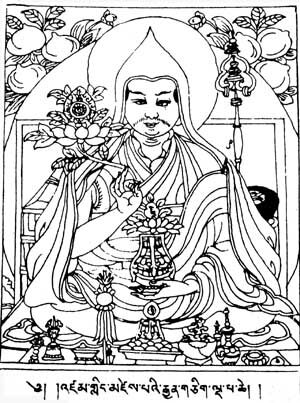 Ngawang Lobzang Gyatsopolitical and religious leader of Tibet (1617–1682)
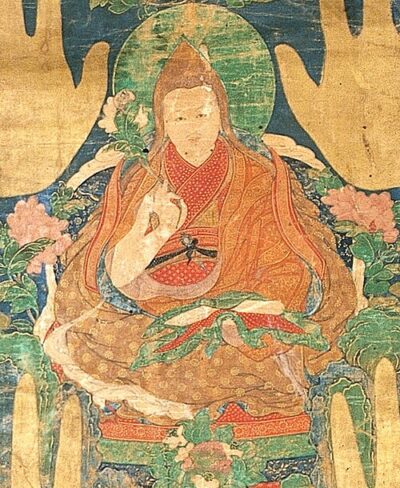 Sonam Gyatso3rd Dalai Lama (1543-1588)
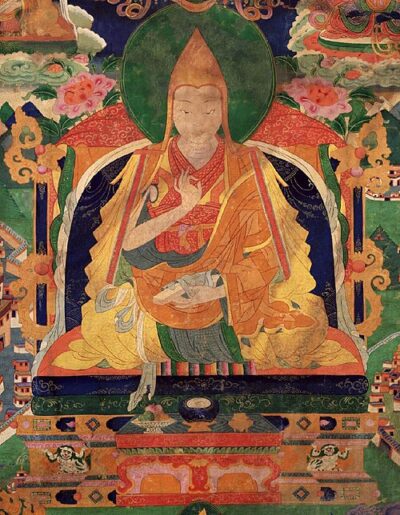 Gedun GyatsoDalai Lama of Tibet (1476-1542)
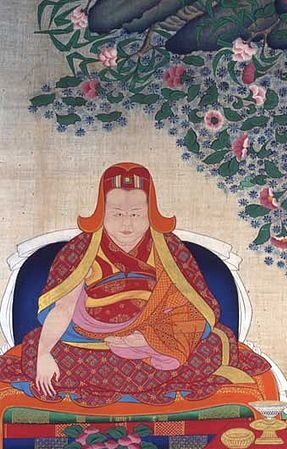 Yonten Gyatso4th Dalai Lama of Tibet (1589-1616)
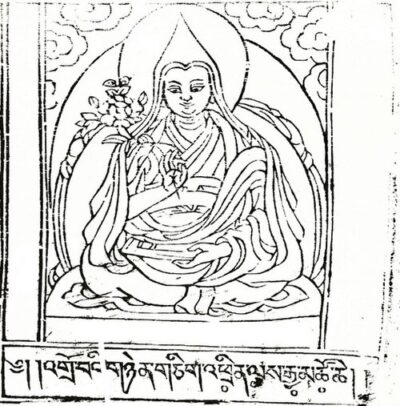 Trinle Gyatso12th Dalai Lama of Tibet (1857-1875)
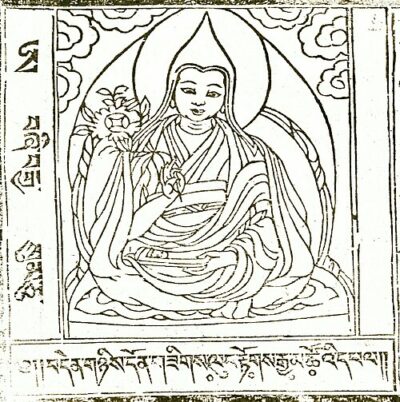 Dalai Lama 09 Lungtok Gyatso9th Dalai Lama (1805-1815)
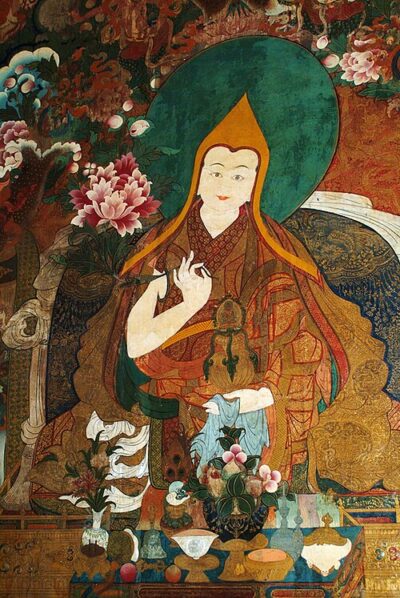 Dalai Lama 11 Khedrub Gyatso11th Dalai Lama (1838–1856)
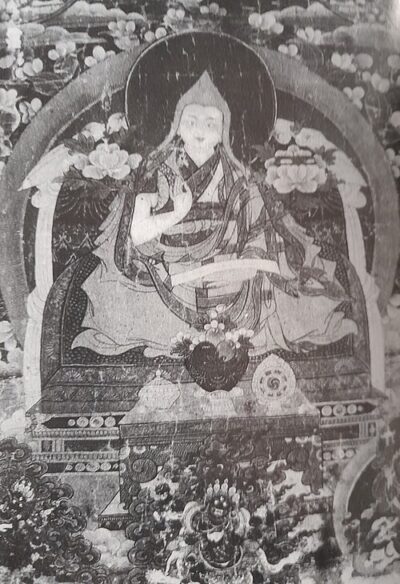 Dalai Lama 10 Tsultrim Gyatso10th Dalai Lama of Tibet (1816-1837)
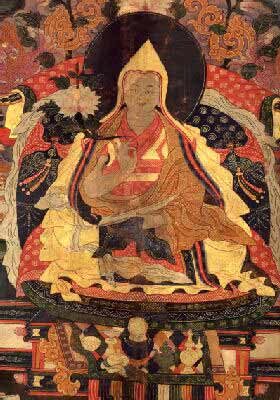 Kelzang Gyatso7th Dalai Lama
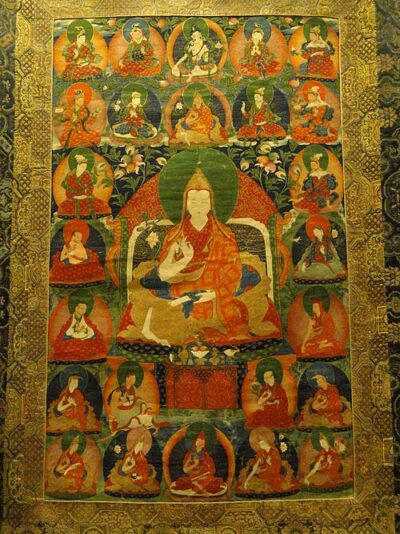 Jamphel Gyatso8th Dalai Lama of Tibet (1758-1804)
