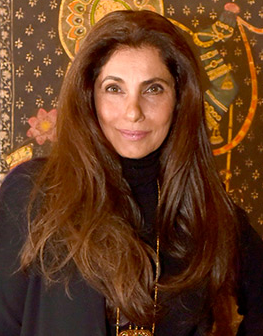
Dil Chahta Hai
Dil Chahta Hai is a 2001 film by Farhan Akhtar. It stars Aamir Khan, Saif Ali Khan and Akshaye Khanna.
- Released
- August 10, 2001
- Directed by
- Farhan Akhtar
- Genre
- buddy film
- Country of origin
- India
All 18 facts, and where they come from
Facts
18 facts · 0 confirmed by two sources · 7 cited · 11 from one source
Where this comes from
Papalocal keeps its own record. It started from these sources; what each one said is kept here as it was copied, so a change on their side never changes this page by itself. Tap one to read its version.
What Wikidata says · copied November 17, 2026 · revision 2563800190
- Described as
- 2001 film by Farhan Akhtar
- Other names
- Dil Chahtha Hain
- What it is
- film
- Directed by
- Farhan Akhtar · 1 reference
- Music by
- Shankar Mahadevan
- Screenplay by
- Farhan Akhtar
- Produced by
- Ritesh Sidhwani
- Starring
- Aamir Khan · 1 reference; Saif Ali Khan · 1 reference; Akshaye Khanna · 1 reference; Preity Zinta · 1 reference; Sonali Kulkarni · 1 reference; Dimple Kapadia · 1 reference
- Genre
- buddy film; coming-of-age film; drama film · 1 reference; romance film · 1 reference
- Released
- August 10, 2001
- Original language
- Hindi
- Country of origin
- India
- Wikipedias with a page
- 26
Wikidata item Q370313 (wikidata.org/wiki/Q370313), public domain (CC0). Copied 2026-11-17.
What Wikipedia says · copied November 17, 2026 · revision 1380715795
Dil Chahta Hai (transl. The Heart Desires) is a 2001 Indian Hindi-language coming of age comedy drama film written and directed by Farhan Akhtar in his directorial debut, and produced by Ritesh Sidhwani under the newly formed Excel Entertainment banner. The film stars Aamir Khan, Saif Ali Khan, and Akshaye Khanna as three inseparable college friends navigating adulthood, relationships, and diverging life paths. It also features Preity Zinta, Sonali Kulkarni, and Dimple Kapadia in pivotal supporting roles. Set in contemporary urban India, the film explores themes of friendship, love, and self-discovery among upper-class youth.
Akhtar wrote the film based on personal diaries detailing his experiences travelling to different cities, with inputs on the story from creative associate Kassim Jagmagia. Shot on location in India and Australia, Dil Chahta Hai was one of the first Hindi films to use sync sound. Cinematography was handled by Ravi K. Chandran, with sound design by Nakul Kamte and H. Sridhar. The music was composed by the trio Shankar–Ehsaan–Loy, with lyrics by Javed Akhtar.
Released theatrically on 10 August 2001, Dil Chahta Hai received widespread critical acclaim for its modern sensibilities, direction, script, music, and performances, particularly those of Saif Ali Khan and Akshaye Khanna. Although it underperformed in rural regions, the film emerged as a commercial success in urban centres and grossed ₹397.2 million (US$4.7 million) worldwide, ranking as the fifth highest-grossing Hindi film of the year. It has since achieved cult status and is regarded as a landmark in Hindi cinema for redefining youth narratives and contemporary storytelling.
At the 49th National Film Awards, Dil Chahta Hai won two awards, including Best Feature Film in Hindi. It received thirteen nominations at the 47th Filmfare Awards, winning seven, including Best Film (Critics), Best Supporting Actor (Khanna) and Best Comedian (Saif Ali Khan). Over time, the film has been credited with launching a new wave of urban Indian cinema and establishing Akhtar as one of the leading filmmakers of his generation.
From the Wikipedia article “Dil Chahta Hai” (en.wikipedia.org/wiki/Dil_Chahta_Hai), by its contributors, under CC BY-SA 4.0 (creativecommons.org/licenses/by-sa/4.0/). Copied 2026-11-17; not changed.
Confirmed Two sources agree. Cited One source, and it names where it got it. One source One source, without a reference of its own. Sources disagree The sources disagree. We show the best-supported value and keep theirs below.