discovery of Neptune
Discovery of Neptune is a human discovery of the planet Neptune.
All 2 facts, and where they come from
Facts
2 facts · 0 confirmed by two sources · 0 cited · 2 from one source
Where this comes from
Papalocal keeps its own record. It started from these sources; what each one said is kept here as it was copied, so a change on their side never changes this page by itself. Tap one to read its version.
What Wikidata says · copied November 16, 2026 · revision 2555866669
- Described as
- human discovery of the planet Neptune
- What it is
- discovery
- Country
- United Kingdom
- Wikipedias with a page
- 22
Wikidata item Q1356165 (wikidata.org/wiki/Q1356165), public domain (CC0). Copied 2026-11-16.
What Wikipedia says · copied November 16, 2026 · revision 1385332160
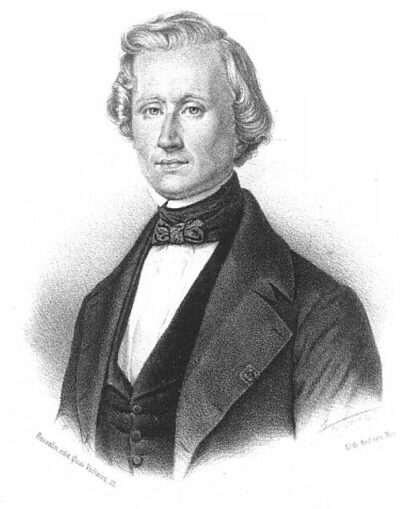
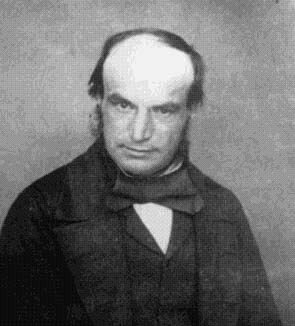
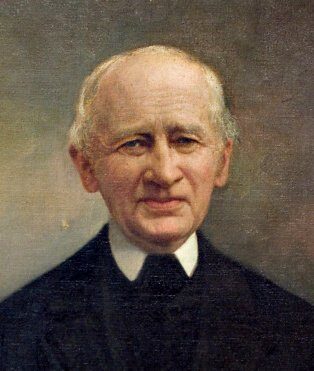
The planet Neptune was mathematically predicted before it was directly observed. With a prediction by Urbain Le Verrier, telescopic observations confirming the existence of a major planet were made on the night of September 23–24, autumnal equinox of 1846, at the Berlin Observatory, by astronomer Johann Gottfried Galle (assisted by Heinrich Louis d'Arrest), working from Le Verrier's calculations. It was a sensational moment of 19th-century science, and dramatic confirmation of Newtonian gravitational theory. In François Arago's apt phrase, Le Verrier had discovered a planet "with the point of his pen".
In retrospect, after it was discovered, it turned out it had been observed many times before but not recognized, and there were others who made calculations about its location which did not lead to its observation. By 1846, the planet Uranus had completed nearly one full orbit since its discovery by William Herschel in 1781, and astronomers had detected a series of irregularities in its path that could not be entirely explained by Newton's law of universal gravitation. These irregularities could, however, be resolved if the gravity of a farther, unknown planet were disturbing its path around the Sun.
In 1845, astronomers Urbain Le Verrier in Paris and John Couch Adams in Cambridge separately began calculations to determine the nature and position of such a planet. Le Verrier's success also led to a tense international dispute over priority, because shortly after the discovery, George Airy, at the time British Astronomer Royal, announced that Adams had also predicted the discovery of the planet. Nevertheless, the Royal Society awarded Le Verrier the Copley medal in 1846 for his achievement, without mention of Adams. The Royal Society, however, also awarded Adams the Copley medal in 1848.
The discovery of Neptune led to the discovery of its moon, Triton, by William Lassell just seventeen days later.
From the Wikipedia article “Discovery of Neptune” (en.wikipedia.org/wiki/Discovery_of_Neptune), by its contributors, under CC BY-SA 4.0 (creativecommons.org/licenses/by-sa/4.0/). Copied 2026-11-16; not changed.
Confirmed Two sources agree. Cited One source, and it names where it got it. One source One source, without a reference of its own. Sources disagree The sources disagree. We show the best-supported value and keep theirs below.
Picture: Wikimedia Commons: Sternwarte Berlin Schinkel.jpg · See Commons file page