Fermi–Dirac statistics
Fermi–Dirac statistics is a behaviour of many identical fermions, particles with half-integer spin.
All 4 facts, and where they come from
Facts
4 facts · 0 confirmed by two sources · 0 cited · 4 from one source
Where this comes from
Papalocal keeps its own record. It started from these sources; what each one said is kept here as it was copied, so a change on their side never changes this page by itself. Tap one to read its version.
What Wikidata says · copied November 16, 2026 · revision 2537716278
- Described as
- behaviour of many identical fermions, particles with half-integer spin
- Other names
- Fermi distribution function, Fermi-Dirac statistics
- What it is
- scientific theory; particle statistics
- Named after
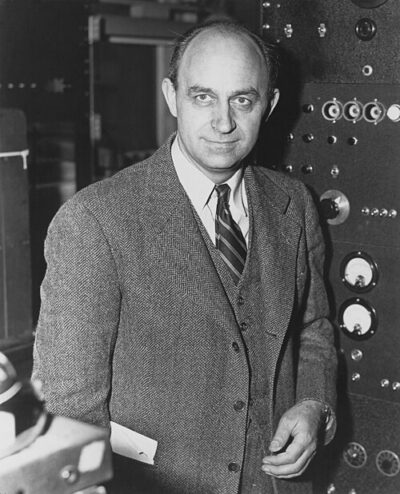
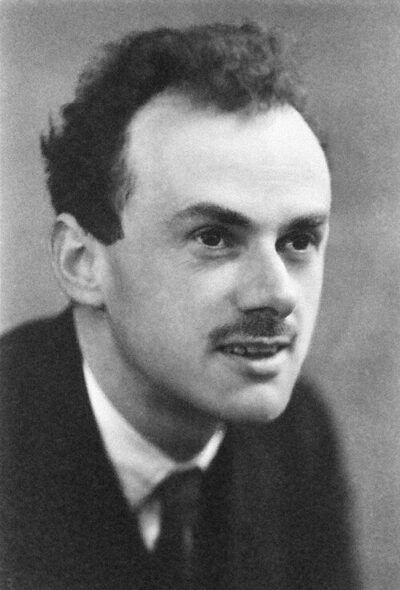
- Enrico Fermi; Paul Dirac
- Wikipedias with a page
- 47
Wikidata item Q274072 (wikidata.org/wiki/Q274072), public domain (CC0). Copied 2026-11-16.
What Wikipedia says · copied November 16, 2026 · revision 1383119416
Fermi–Dirac statistics is a type of quantum statistics that applies to the physics of a system consisting of many non-interacting, identical particles that obey the Pauli exclusion principle. A result is the Fermi–Dirac distribution of particles over energy states. It is named after Enrico Fermi and Paul Dirac, each of whom derived the distribution independently in 1926. Fermi–Dirac statistics is a part of the field of statistical mechanics and uses the principles of quantum mechanics.
Fermi–Dirac statistics applies to identical and indistinguishable particles with half-integer spin (1/2, 3/2, etc.), called fermions, in thermodynamic equilibrium. For the case of negligible interaction between particles, the system can be described in terms of single-particle energy states. A result is the Fermi–Dirac distribution of particles over these states where no two particles can occupy the same state, which has a considerable effect on the properties of the system. Fermi–Dirac statistics is most commonly applied to electrons, a type of fermion with spin 1/2.
A counterpart to Fermi–Dirac statistics is Bose–Einstein statistics, which applies to identical and indistinguishable particles with integer spin (0, 1, 2, etc.) called bosons. In classical physics, Maxwell–Boltzmann statistics is used to describe particles that are identical and treated as distinguishable. For both Bose–Einstein and Maxwell–Boltzmann statistics, more than one particle can occupy the same state, unlike Fermi–Dirac statistics.
From the Wikipedia article “Fermi–Dirac statistics” (en.wikipedia.org/wiki/Fermi–Dirac_statistics), by its contributors, under CC BY-SA 4.0 (creativecommons.org/licenses/by-sa/4.0/). Copied 2026-11-16; not changed.
Confirmed Two sources agree. Cited One source, and it names where it got it. One source One source, without a reference of its own. Sources disagree The sources disagree. We show the best-supported value and keep theirs below.