German nuclear program during World War II
German nuclear program during World War II is a World War II weapons project.
- Country
- Nazi Germany
All 4 facts, and where they come from
Facts
4 facts · 0 confirmed by two sources · 0 cited · 4 from one source
Where this comes from
Papalocal keeps its own record. It started from these sources; what each one said is kept here as it was copied, so a change on their side never changes this page by itself. Tap one to read its version.
What Wikidata says · copied November 17, 2026 · revision 2511706971
- Described as
- World War II weapons project
- Other names
- German nuclear weapons programme, German nuclear weapons program, Virushaus
- What it is
- nuclear program; nuclear weapons program; organization
- Country
- Nazi Germany
- Wikipedias with a page
- 25
Wikidata item Q700162 (wikidata.org/wiki/Q700162), public domain (CC0). Copied 2026-11-17.
What Wikipedia says · copied November 17, 2026 · revision 1381582365
Nazi Germany undertook several research programs relating to nuclear technology, including nuclear weapons and nuclear reactors, before and during World War II. These were variously called Uranverein (Uranium Society) or Uranprojekt (Uranium Project). The first effort started in April 1939, just months after the discovery of nuclear fission in Berlin in December 1938, but ended shortly ahead of the September 1939 German invasion of Poland, for which many German physicists were drafted into the Wehrmacht. A second effort under the administrative purview of the Wehrmacht's Heereswaffenamt began on September 1, 1939, the day of the invasion of Poland. The program eventually expanded into three main efforts: Uranmaschine (nuclear reactor) development, uranium and heavy water production, and uranium isotope separation. Eventually, the German military determined that nuclear fission would not contribute significantly to the war, and in January 1942 the Heereswaffenamt turned the program over to the Reich Research Council (Reichsforschungsrat) while continuing to fund the activity.
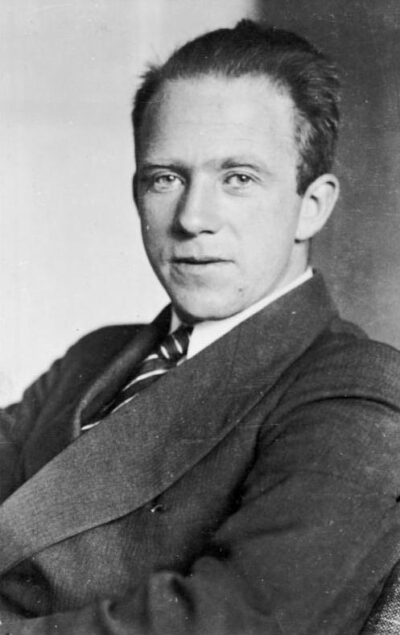
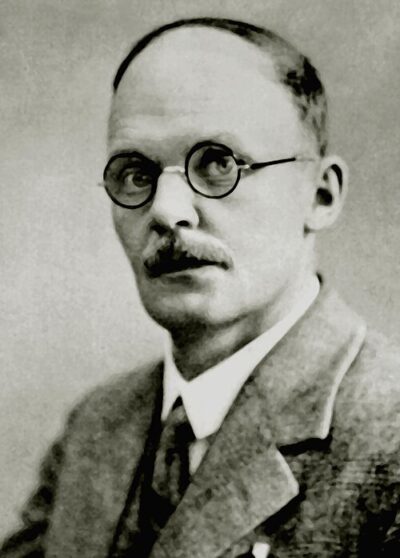
The program was split up among nine major institutes where the directors dominated research and set their own objectives. Subsequently, the number of scientists working on applied nuclear fission began to diminish as many researchers applied their talents to more pressing wartime demands. The most influential people in the Uranverein included Kurt Diebner, Abraham Esau, Walther Gerlach, and Erich Schumann. Schumann was one of the most powerful and influential physicists in Germany. Diebner, throughout the life of the nuclear weapon project, had more control over nuclear fission research than did Walther Bothe, Klaus Clusius, Otto Hahn, Paul Harteck, or Werner Heisenberg. Esau was appointed as Reichsmarschall Hermann Göring's plenipotentiary for nuclear physics research in December 1942, and was succeeded by Walther Gerlach after he resigned in December 1943.
Politicization of German academia under the Nazi regime of 1933–1945 had driven many physicists, engineers, and mathematicians out of Germany as early as 1933. Those of Jewish heritage who did not leave were quickly purged, further thinning the ranks of researchers. The politicization of the universities, along with Wehrmacht demands for more manpower (many scientists and technical personnel were conscripted, despite possessing technical and engineering skills), substantially reduced the number of able German physicists.
Developments took place in several phases, but in the words of historian Mark Walker, it ultimately became "frozen at the laboratory level" with the "modest goal" to "build a nuclear reactor which could sustain a nuclear fission chain reaction for a significant amount of time and to achieve the complete separation of at least tiny amounts of the uranium isotopes". The scholarly consensus is that it failed to achieve these goals, and that despite fears at the time, the Germans had never been close to producing nuclear weapons. The final attempt at constructing a reactor, the 1945 Haigerloch research reactor, did not achieve criticality. With the war in Europe ending in early 1945, various Allied powers competed with each other to obtain surviving components of the German nuclear industry (personnel, facilities, and materiel), as they did with the pioneering V-2 short-range ballistic missile program. The Western Allied effort was the Alsos Mission and the Soviet effort was Russian Alsos. Due to the success of the Manhattan Project, the Western Allies prioritized denying German nuclear scientists and resources to the nascent Soviet atomic bomb project.
From the Wikipedia article “German nuclear program during World War II” (en.wikipedia.org/wiki/German_nuclear_program_during_World_War_II), by its contributors, under CC BY-SA 4.0 (creativecommons.org/licenses/by-sa/4.0/). Copied 2026-11-17; not changed.
Confirmed Two sources agree. Cited One source, and it names where it got it. One source One source, without a reference of its own. Sources disagree The sources disagree. We show the best-supported value and keep theirs below.
Picture: Wikimedia Commons: German Experimental Pile - Haigerloch - April 1945.jpg · See Commons file page