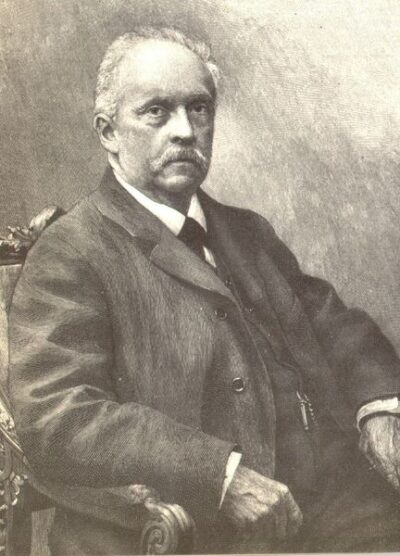
Gibbs–Helmholtz equation
Gibbs–Helmholtz equation is a thermodynamic equation.
All 3 facts, and where they come from
Facts
3 facts · 0 confirmed by two sources · 0 cited · 3 from one source
Where this comes from
Papalocal keeps its own record. It started from these sources; what each one said is kept here as it was copied, so a change on their side never changes this page by itself. Tap one to read its version.
What Wikidata says · copied November 17, 2026 · revision 2524804977
- Described as
- thermodynamic equation
- What it is
- Physics equations
- Named after
- Josiah Willard Gibbs; Hermann von Helmholtz
- Wikipedias with a page
- 17
Wikidata item Q900590 (wikidata.org/wiki/Q900590), public domain (CC0). Copied 2026-11-17.
What Wikipedia says · copied November 17, 2026 · revision 1384015746
The Gibbs–Helmholtz equation is a thermodynamic equation used to calculate changes in the Gibbs free energy of a system as a function of temperature. It was originally presented in an 1882 paper entitled "Die Thermodynamik chemischer Vorgänge" by Hermann von Helmholtz. It describes how the Gibbs free energy, which was presented originally by Josiah Willard Gibbs, varies with temperature. It was derived by Helmholtz first, and Gibbs derived it only 6 years later. The attribution to Gibbs goes back to Wilhelm Ostwald, who first translated Gibbs' monograph into German and promoted it in Europe.
The equation is:where H is the enthalpy, T the absolute temperature and G the Gibbs free energy of the system, all at constant pressure p. The equation states that the change in the G/T ratio at constant pressure as a result of an infinitesimally small change in temperature is a factor H/T2.
Similar equations include
From the Wikipedia article “Gibbs–Helmholtz equation” (en.wikipedia.org/wiki/Gibbs–Helmholtz_equation), by its contributors, under CC BY-SA 4.0 (creativecommons.org/licenses/by-sa/4.0/). Copied 2026-11-17; not changed.
Confirmed Two sources agree. Cited One source, and it names where it got it. One source One source, without a reference of its own. Sources disagree The sources disagree. We show the best-supported value and keep theirs below.