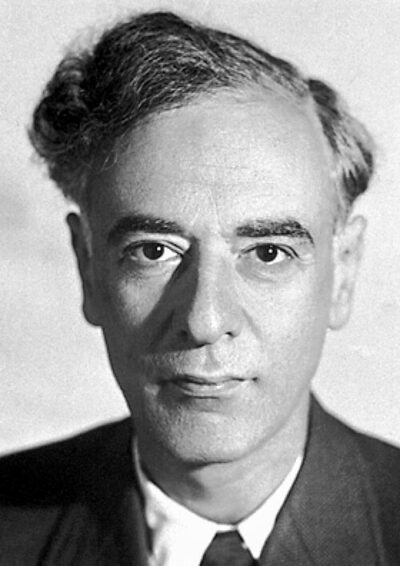
Ginzburg–Landau–Abrikosov–Gor'kov theory
Ginzburg–Landau–Abrikosov–Gor'kov theory is a superconductivity theory.
All 3 facts, and where they come from
Facts
3 facts · 0 confirmed by two sources · 0 cited · 3 from one source
Where this comes from
Papalocal keeps its own record. It started from these sources; what each one said is kept here as it was copied, so a change on their side never changes this page by itself. Tap one to read its version.
What Wikidata says · copied November 17, 2026 · revision 2454695426
- Described as
- superconductivity theory
- What it is
- physical theory
- Named after
- Vitaly Ginzburg; Lev Landau
- Wikipedias with a page
- 17
Wikidata item Q900905 (wikidata.org/wiki/Q900905), public domain (CC0). Copied 2026-11-17.
What Wikipedia says · copied November 17, 2026 · revision 1380644396
In physics, Ginzburg–Landau theory, often called Landau–Ginzburg theory, named after Vitaly Ginzburg and Lev Landau, is a mathematical physical theory used to describe superconductivity. In its initial form, it was postulated as a phenomenological model which could describe type-I superconductors without examining their microscopic properties. Alexei Abrikosov later used the theory to describe type-II superconductors as well. One GL-type superconductor is YBCO, and generally all cuprates.
Later, a version of Ginzburg–Landau theory was derived from the Bardeen–Cooper–Schrieffer microscopic theory by Lev Gor'kov, thus showing that it also appears in a limit of the microscopic theory and giving it a microscopic interpretation of all its parameters. The theory can also be given a general geometric setting, placing it in the context of Riemannian geometry, where in many cases exact solutions can be given. This general setting then extends to quantum field theory and string theory, again owing to its solvability, and its close relation to other, similar systems.
Ginzburg was awarded a third of the 2003 Nobel prize in physics for his development of the theory. Abrikosov was awarded another third of this prize for his description of type-II superconductors using the theory.
From the Wikipedia article “Ginzburg–Landau theory” (en.wikipedia.org/wiki/Ginzburg–Landau_theory), by its contributors, under CC BY-SA 4.0 (creativecommons.org/licenses/by-sa/4.0/). Copied 2026-11-17; not changed.
Confirmed Two sources agree. Cited One source, and it names where it got it. One source One source, without a reference of its own. Sources disagree The sources disagree. We show the best-supported value and keep theirs below.