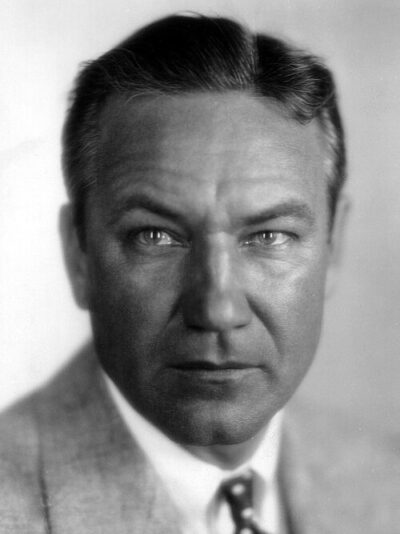
Gone with the Wind
Gone with the Wind is a 1939 film directed by Victor Fleming. It was directed by George Cukor and Sam Wood. It stars Clark Gable, Vivien Leigh and Leslie Howard. It won the Academy Award for Best Picture and 7 more.
- Released
- 1939
- Directed by
- Victor Fleming
- Genre
- romance film
- Country of origin
- United States
All 37 facts, and where they come from
Facts
37 facts · 0 confirmed by two sources · 10 cited · 27 from one source
Where this comes from
Papalocal keeps its own record. It started from these sources; what each one said is kept here as it was copied, so a change on their side never changes this page by itself. Tap one to read its version.
What Wikidata says · copied November 16, 2026 · revision 2568202790
- Described as
- 1939 film directed by Victor Fleming
- Other names
- GWTW
- What it is
- film
- Directed by
- Victor Fleming; George Cukor · 1 reference; Sam Wood · 1 reference
- Music by
- Max Steiner
- Screenplay by
- Sidney Howard; Ben Hecht; Jo Swerling; John Van Druten
- Produced by
- David O. Selznick
- Starring
- Clark Gable; Vivien Leigh; Leslie Howard; Olivia de Havilland; Hattie McDaniel; Butterfly McQueen; Thomas Mitchell; Barbara O'Neil; Laura Hope Crews; Ona Munson
- Genre
- romance film; drama film; historical film; war film · 1 reference
- Released
- December 15, 1939 · 1 reference
- Original language
- English
- Country of origin
- United States
- Based on
- Gone with the Wind
- Awards
- Academy Award for Best Picture (1940) · 1 reference; Academy Award for Best Actress (1940) · 1 reference; Academy Award for Best Supporting Actress (1940) · 2 references; Academy Award for Best Director (1940) · 2 references; Academy Award for Best Production Design (1940) · 2 references; Academy Award for Best Film Editing (1940) · 2 references; Academy Award for Best Writing, Adapted Screenplay (1940) · 2 references; Academy Award for Best Cinematography, Color (1940) · 1 reference
- Official website
- https://www.warnerbros.com/movies/gone-wind
- Wikipedias with a page
- 97
Wikidata item Q2875 (wikidata.org/wiki/Q2875), public domain (CC0). Copied 2026-11-16.
What Wikipedia says · copied November 16, 2026 · revision 1385824965
Gone with the Wind is a 1939 American epic historical romance film adapted from the 1936 novel by Margaret Mitchell. It was produced by David O. Selznick of Selznick International Pictures and directed by Victor Fleming. Set in the American South during the Civil War and Reconstruction, the film tells the story of Scarlett O'Hara (Vivien Leigh), the strong-willed daughter of a Georgia plantation owner, following her romantic pursuit of Ashley Wilkes (Leslie Howard), who is married to his cousin Melanie Hamilton (Olivia de Havilland), and her subsequent marriage to Rhett Butler (Clark Gable).
The production was troubled. The start of filming was delayed for two years until January 1939 because Selznick was determined to secure Gable for the role of Rhett, and filming concluded in July. The role of Scarlett was challenging to cast, and 1,400 unknown women were interviewed for the part. Sidney Howard's initial screenplay underwent many revisions by several writers to reduce it to a suitable length. The original director, George Cukor, was fired shortly after filming began and was replaced by Fleming, who in turn was briefly replaced by Sam Wood while taking some time off due to exhaustion. Post-production concluded in November 1939, just a month before its premiere.
Gone With the Wind received generally positive reviews upon its release on December 15, 1939. While the casting was widely praised, the long running time received criticism. At the 12th Academy Awards, Gone with the Wind received ten Academy Awards (eight competitive, two honorary) from thirteen nominations, including wins for Best Picture, Best Director (Fleming), Best Adapted Screenplay (posthumously awarded to Sidney Howard), Best Actress (Leigh), and Best Supporting Actress (Hattie McDaniel, becoming the first African-American to win an Academy Award). It set records for the total number of wins and nominations at the time.
Gone with the Wind was immensely popular when first released. It became the highest-earning film made up to that point and held the record for over a quarter of a century. When adjusted for monetary inflation, it remains the highest-grossing film in history. It has been re-released periodically since and is ingrained in popular culture. Although the film has been criticized as historical negationism, glorifying slavery and the Lost Cause of the Confederacy myth, it has been credited with triggering changes in how African-Americans were depicted cinematically. Gone with the Wind is regarded as one of the greatest films of all time, and in 1989, it became one of the twenty-five inaugural films selected for preservation in the United States National Film Registry.
From the Wikipedia article “Gone with the Wind (film)” (en.wikipedia.org/wiki/Gone_with_the_Wind_(film)), by its contributors, under CC BY-SA 4.0 (creativecommons.org/licenses/by-sa/4.0/). Copied 2026-11-16; not changed.
Confirmed Two sources agree. Cited One source, and it names where it got it. One source One source, without a reference of its own. Sources disagree The sources disagree. We show the best-supported value and keep theirs below.
Picture: Wikimedia Commons: Clark Gable and Vivien Leigh in Gone with the Wind.jpg · See Commons file page