Hallelujah!
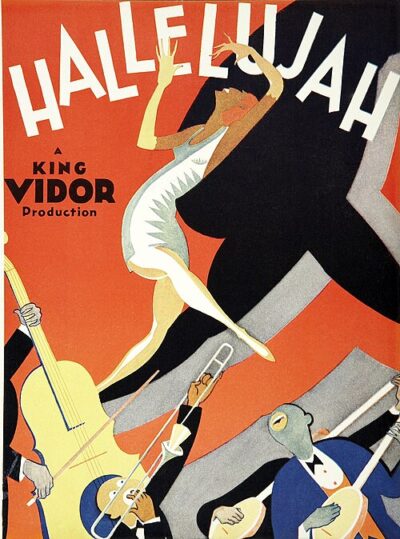
Hallelujah! is a 1929 film by King Vidor. It stars Nina Mae McKinney, Victoria Spivey and Sam McDaniel.
- Released
- 1929
- Directed by
- King Vidor
- Genre
- musical film
- Country of origin
- United States
All 14 facts, and where they come from
Facts
14 facts · 0 confirmed by two sources · 0 cited · 14 from one source
Where this comes from
Papalocal keeps its own record. It started from these sources; what each one said is kept here as it was copied, so a change on their side never changes this page by itself. Tap one to read its version.
What Wikidata says · copied November 17, 2026 · revision 2563696464
- Described as
- 1929 film by King Vidor
- Other names
- Hallelujah
- What it is
- film
- Directed by
- King Vidor
- Music by
- Irving Berlin
- Screenplay by
- Wanda Tuchock
- Produced by
- Irving Thalberg
- Starring
- Nina Mae McKinney; Victoria Spivey; Sam McDaniel
- Genre
- musical film; drama film
- Released
- 1929; August 20, 1929 · 1 reference; September 8, 1930 · 1 reference
- Original language
- English
- Country of origin
- United States
- Named after
- hallelujah · 1 reference
- Wikipedias with a page
- 22
Wikidata item Q1571464 (wikidata.org/wiki/Q1571464), public domain (CC0). Copied 2026-11-17.
What Wikipedia says · copied November 17, 2026 · revision 1370237239
Hallelujah is a 1929 American pre-Code musical film directed by King Vidor, and starring Daniel L. Haynes and Nina Mae McKinney.
Filmed in Tennessee and Arkansas and chronicling the troubled quest of a sharecropper, Zeke Johnson (Haynes), and his relationship with the seductive Chick (McKinney), Hallelujah was one of the first films with an all-African American cast produced by a major studio. (Although frequently touted as Hollywood's first all-black cast musical, that distinction more properly belongs to Hearts in Dixie, which premiered several months earlier.) It was intended for a general audience and was considered so risky a venture by MGM that they required King Vidor to invest his own salary in the production. Vidor expressed an interest in "showing the Southern Negro as he is" and attempted to present a relatively non-stereotyped view of African-American life.
Hallelujah was King Vidor's first sound film, and combined sound recorded on location and sound recorded post-production in Hollywood. King Vidor was nominated for a Best Director Oscar for the film.
In 2008, Hallelujah was selected for preservation in the United States National Film Registry by the Library of Congress as being "culturally, historically, or aesthetically significant." In February 2020, the film was shown at the 70th Berlin International Film Festival, as part of a retrospective dedicated to King Vidor's career.
The film contains two scenes of "trucking": a contemporary dance craze where the participant makes movements backward and forward, but with no actual change of position, while moving the arms like a piston on a locomotive wheel.
Hallelujah entered the public domain on January 1, 2025.
From the Wikipedia article “Hallelujah (1929 film)” (en.wikipedia.org/wiki/Hallelujah_(1929_film)), by its contributors, under CC BY-SA 4.0 (creativecommons.org/licenses/by-sa/4.0/). Copied 2026-11-17; not changed.
Confirmed Two sources agree. Cited One source, and it names where it got it. One source One source, without a reference of its own. Sources disagree The sources disagree. We show the best-supported value and keep theirs below.
Picture: Al Hirschfeld, via Wikimedia Commons · Public domain