

Hoover Institution
The Hoover Institution is an American public policy think tank and research institution. It was founded in 1919 by Herbert Hoover. Its headquarters are in Stanford University. It stands for conservatism and libertarianism. It won the National Humanities Medal.
- Founded
- 1919
- Founded by
- Herbert Hoover
- Headquarters
- Stanford University
- Industry
- research
- Country
- United States
All 18 facts, and where they come from
Facts
18 facts · 0 confirmed by two sources · 5 cited · 13 from one source
Where this comes from
Papalocal keeps its own record. It started from these sources; what each one said is kept here as it was copied, so a change on their side never changes this page by itself. Tap one to read its version.
What Wikidata says · copied November 16, 2026 · revision 2562563872
- Described as
- American public policy think tank and research institution
- Other names
- Hoover Institution on War, Revolution, and Peace, Hoover Institution Library and Archives, Hoover Institution on War Revolution and Peace
- What it is
- think tank; nonprofit organization; research center · 1 reference
- Founded
- 1919 · 2 references
- Founded by
- Herbert Hoover
- Headquarters
- Stanford University
- Located in
- Santa Clara County · 1 reference
- Country
- United States · 1 reference
- Industry
- research
- Part of
- Stanford University · 1 reference
- Field
- economic policy; education policy; energy policy
- Ideology
- conservatism · 1 reference; libertarianism
- Awards
- National Humanities Medal · 1 reference
- Named after
- Herbert Hoover
- Official website
- https://hoover.org
- Wikipedias with a page
- 24
Wikidata item Q1147088 (wikidata.org/wiki/Q1147088), public domain (CC0). Copied 2026-11-16.
What Wikipedia says · copied November 16, 2026 · revision 1383928041
The Hoover Institution on War, Revolution, and Peace (formerly the Hoover Institute and Library on War, Revolution, and Peace), commonly known as the Hoover Institution, is an American public policy think tank which promotes personal and economic liberty, free enterprise, and limited government. While the institution is officially a unit of Stanford University, it maintains an independent board of overseers and relies on its own income and donations. It is widely described as conservative, although its directors have contested the idea that it is partisan.
The institution began in 1919 as a library founded by Stanford alumnus Herbert Hoover prior to his presidency in order to house his archives gathered during World War I. The well-known Hoover Tower was built to house the archives, then known as the Hoover War Collection (now the Hoover Institution Library and Archives), and contained material related to World War I, World War II, and other global events. The collection was renamed and transformed into a research institution ("think tank") during the mid-20th century. Its mission, as described by Herbert Hoover in 1959, is "to recall the voice of experience against the making of war, and by the study of these records and their publication, to recall man's endeavors to make and preserve peace, and to sustain for America the safeguards of the American way of life."
It has staffed numerous jobs in Washington for Republican presidents from Richard Nixon to Donald Trump. It has provided work for people who previously had important government jobs. Notable Hoover fellows and alumni include Nobel Prize laureates Henry Kissinger, Milton Friedman, and Gary Becker; economist Thomas Sowell; scholars Niall Ferguson and Richard Epstein; former Speaker of the House of Representatives Newt Gingrich; and former secretary of defense James N. Mattis. In 2020, former secretary of state Condoleezza Rice became the institution's director. It divides its fellows into separate research teams to work on various subjects, including Economic Policy, History, Education, and Law. It publishes research by its own publishing house, the Hoover Institution Press.
In 2021, Hoover was ranked as the 10th most influential think tank in the world by Academic Influence. It was ranked 22nd on the "Top Think Tanks in United States" and 1st on the "Top Think Tanks to Look Out For" lists of the Think Tanks and Civil Societies Program that same year.
From the Wikipedia article “Hoover Institution” (en.wikipedia.org/wiki/Hoover_Institution), by its contributors, under CC BY-SA 4.0 (creativecommons.org/licenses/by-sa/4.0/). Copied 2026-11-16; not changed.
Confirmed Two sources agree. Cited One source, and it names where it got it. One source One source, without a reference of its own. Sources disagree The sources disagree. We show the best-supported value and keep theirs below.
Picture: Wikimedia Commons: Stanford University Main Quad (cropped).jpg · See Commons file page
People connected 4
Worked here
 Thomas Sowell (1980–)American economist, social theorist, political philosopher and author
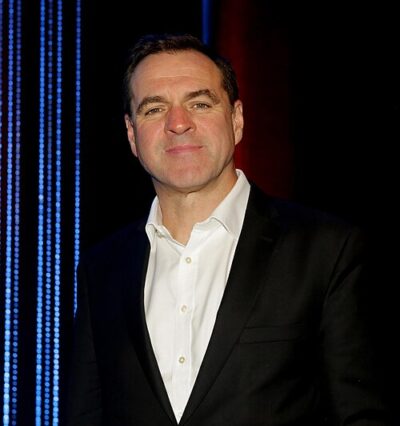 Niall Ferguson (2016–2018)British historian
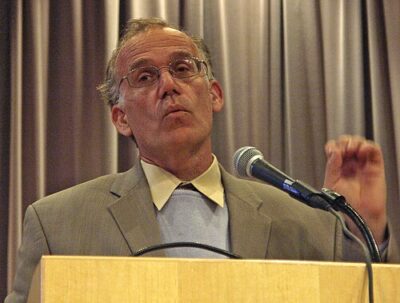 Victor Davis HansonAmerican classicist and military historian
