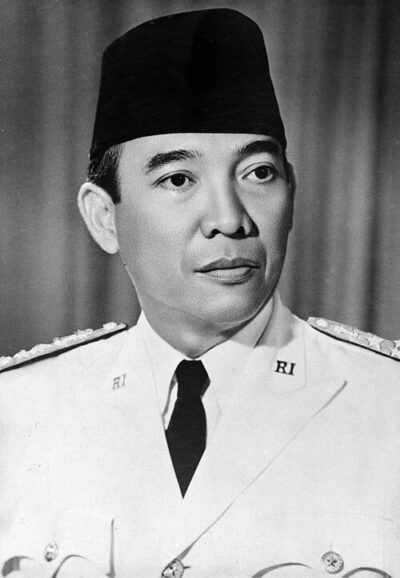
Indonesian National Party
The Indonesian National Party is a former political party in Indonesia. It was founded in 1927. Its headquarters are in Jakarta. It stands for Marhaenism and nationalism.
- Country
- Dutch East Indies
- Founded
- July 4, 1927
- Ideology
- Marhaenism
All 9 facts, and where they come from
Facts
9 facts · 0 confirmed by two sources · 0 cited · 9 from one source
Where this comes from
Papalocal keeps its own record. It started from these sources; what each one said is kept here as it was copied, so a change on their side never changes this page by itself. Tap one to read its version.
What Wikidata says · copied November 17, 2026 · revision 2551254025
- Described as
- former political party in Indonesia
- Other names
- Partido Nacional Indonesio
- What it is
- political party
- Followed by
- Partai Indonesia
- Founded
- July 4, 1927
- Ended
- 1931
- Headquarters
- Jakarta
- Country
- Dutch East Indies; Indonesia
- Ideology
- Marhaenism; nationalism
- Wikipedias with a page
- 17
Wikidata item Q1965221 (wikidata.org/wiki/Q1965221), public domain (CC0). Copied 2026-11-17.
What Wikipedia says · copied November 17, 2026 · revision 1375490958
The Indonesian National Party (Indonesian: Partai Nasional Indonesia, PNI) was the name used by several nationalist political parties in Indonesia from 1927 until 1973. The first PNI was established by future President Sukarno. After independence, the new PNI supplied a number of prime ministers, and participated in the majority of cabinets in the 1950s and 1960s. The party was fused into the Indonesian Democratic Party in 1973. In the years following the reforms of the late 1990s, a number of parties claiming to be the continuation of previous PNIs stood in elections, but gained only a handful of seats.
From the Wikipedia article “Indonesian National Party” (en.wikipedia.org/wiki/Indonesian_National_Party), by its contributors, under CC BY-SA 4.0 (creativecommons.org/licenses/by-sa/4.0/). Copied 2026-11-17; not changed.
Confirmed Two sources agree. Cited One source, and it names where it got it. One source One source, without a reference of its own. Sources disagree The sources disagree. We show the best-supported value and keep theirs below.