
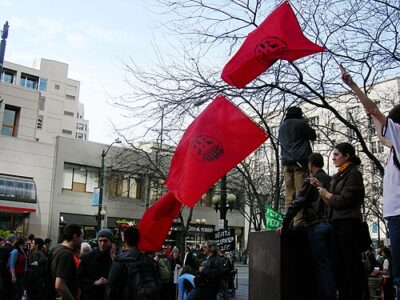
Industrial Workers of the World
Industrial Workers of the World is an international union founded in 1905. It was founded by William Dudley Haywood. Its headquarters are in Chicago. It stands for revolutionary syndicalism, anarcho-syndicalism and democratic socialism.
- Founded
- June 27, 1905
- Founded by
- William Dudley Haywood
- Headquarters
- Chicago (2 times) (1905–)
- Country
- Canada
All 13 facts, and where they come from
Facts
13 facts · 0 confirmed by two sources · 3 cited · 10 from one source
Where this comes from
Papalocal keeps its own record. It started from these sources; what each one said is kept here as it was copied, so a change on their side never changes this page by itself. Tap one to read its version.
What Wikidata says · copied November 16, 2026 · revision 2564628449
- Described as
- international union founded in 1905
- Other names
- IWW, I.W.W., Wobblies, The Wobblies
- What it is
- labor union; international organization
- Founded
- June 27, 1905
- Founded by
- William Dudley Haywood · 1 reference
- Headquarters
- Chicago (2 times) (1905–) · 2 references
- Country
- Canada · 1 reference; United States · 1 reference
- Ideology
- revolutionary syndicalism; anarcho-syndicalism; democratic socialism; labourism
- Also called
- Wobblies
- Official website
- https://www.iww.org/
- Wikipedias with a page
- 40
Wikidata item Q1046722 (wikidata.org/wiki/Q1046722), public domain (CC0). Copied 2026-11-16.
What Wikipedia says · copied November 16, 2026 · revision 1385531168
The Industrial Workers of the World (IWW), whose members are nicknamed "Wobblies", is an international labor union founded in Chicago, Illinois, United States, in 1905. Its ideology combines general unionism with industrial unionism, as it is a general union, subdivided between the various industries which employ its members. The philosophy and tactics of the IWW are described as "revolutionary industrial unionism", with ties to socialist, syndicalist, and anarchist labor movements.
In the 1910s and early 1920s, the IWW achieved many of its short-term goals, particularly in the American West, and cut across traditional guild and union lines to organize workers in a variety of trades and industries. At their peak in August 1917, IWW membership was estimated at more than 150,000, with active wings in the United States, the United Kingdom, Canada, Australia and New Zealand. However, the extremely high rate of IWW membership turnover during this era (estimated at 133% between 1905 and 1915) makes it difficult for historians to state membership totals with any certainty, as workers tended to join the IWW in large numbers for relatively short periods (e.g. during labor strikes and periods of generalized economic distress).
Membership declined dramatically in the late 1910s and 1920s. There were conflicts with other labor groups, particularly the American Federation of Labor (AFL), which regarded the IWW as too radical, while the IWW regarded the AFL as too conservative and opposed their decision to divide workers on the basis of their trades. Membership also declined due to government crackdowns on radical, anarchist, and socialist groups during the First Red Scare after World War I. In Canada, the IWW was outlawed by the federal government by an Order in Council on September 24, 1918.
Likely the most decisive factor in the decline in IWW membership and influence was a 1924 schism in the organization, from which the IWW never fully recovered. During the 1950s, the IWW faced near-extinction due to persecution under the Second Red Scare, although the union would later experience a resurgence in the context of the New Left in the 1960s and 1970s.
The IWW promotes the concept of "One Big Union", and contends that all workers should be united as a social class to supplant capitalism and wage labor with industrial democracy. It is known for the Wobbly Shop model of workplace democracy, through which workers elect their own managers and other forms of grassroots democracy (self-management) are implemented. The IWW does not require its members to work in a represented workplace, nor does it exclude membership in another labor union, with the exception of police officers.
From the Wikipedia article “Industrial Workers of the World” (en.wikipedia.org/wiki/Industrial_Workers_of_the_World), by its contributors, under CC BY-SA 4.0 (creativecommons.org/licenses/by-sa/4.0/). Copied 2026-11-16; not changed.
Confirmed Two sources agree. Cited One source, and it names where it got it. One source One source, without a reference of its own. Sources disagree The sources disagree. We show the best-supported value and keep theirs below.
Picture: Joe Mabel, via Wikimedia Commons · CC BY-SA 3.0
People connected 6
Members
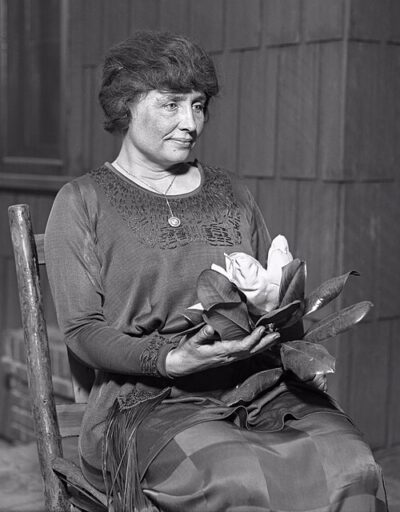 Helen Keller (1912–)American deafblind author, political activist, lecturer, scholar (1880-1968)
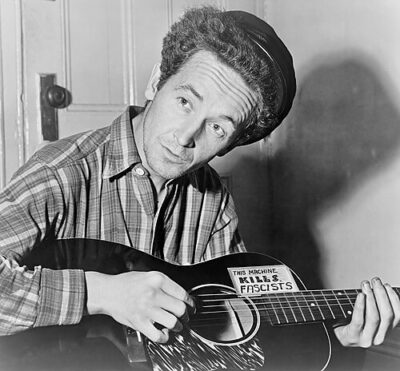 Woody GuthrieAmerican singer-songwriter (1912–1967)
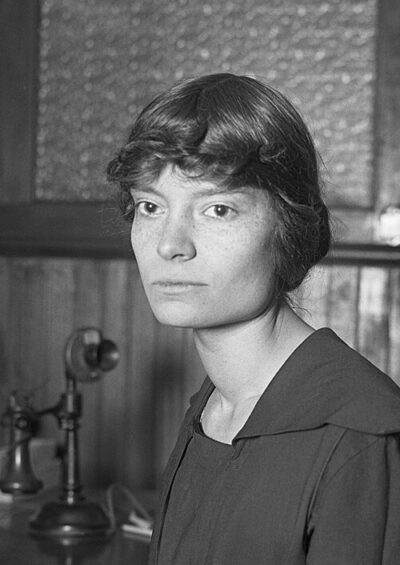 Dorothy DayAmerican journalist, social activist, and Catholic convert (1897-1980)
 David GraeberAmerican anthropologist and anarchist (1961-2020)
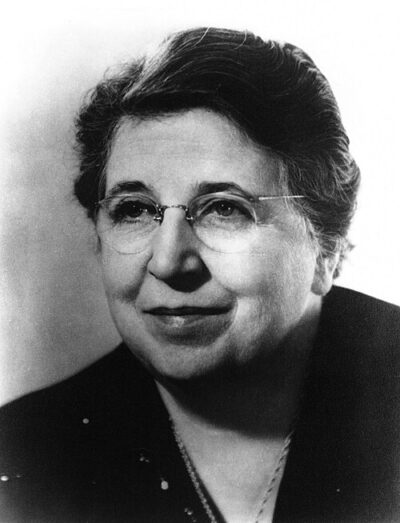 Elizabeth Gurley Flynn (1907–1916)American politician (1890-1964)
 Jeff MonsonAmerican mixed martial artist
