
International Society on General Relativity and Gravitation
International Society on General Relativity and Gravitation is a learned society. It was founded in 1971.
- Founded
- 1971
- Industry
- higher education
All 8 facts, and where they come from
Facts
8 facts · 0 confirmed by two sources · 3 cited · 5 from one source
Where this comes from
Papalocal keeps its own record. It started from these sources; what each one said is kept here as it was copied, so a change on their side never changes this page by itself. Tap one to read its version.
What Wikidata says · copied November 17, 2026 · revision 2478678500
- Described as
- learned society
- Other names
- ISGRG, International Society for General Relativity and Gravitation, International Committee on General Relativity and Gravitation, GRG, GRG Society, Society for General Relativity and Gravitation
- What it is
- learned society
- Founded
- 1971 · 1 reference
- Industry
- higher education
- Chair
- Nils Andersson (2019–) · 1 reference; Eric Poisson (2016–2019) · 1 reference
- Field
- general relativity; gravity
- Official website
- http://www.isgrg.org/
- Wikipedias with a page
- 3
Wikidata item Q4288285 (wikidata.org/wiki/Q4288285), public domain (CC0). Copied 2026-11-17.
What Wikipedia says · copied November 17, 2026 · revision 1360299634
The International Society on General Relativity and Gravitation (ISGRG) is a learned society established in 1971 with the goal to promote research on general relativity (GR) and gravitation. To that end, it encourages communication between relativity researchers, in particular by organizing the triennial international GR conferences, sponsoring the Hyperspace website, and publishing the journal General Relativity and Gravitation. The society also serves as the Affiliated Commission 2 (AC.2) of the International Union of Pure and Applied Physics.
The society's president is always a prominent gravitational physicist. In the past, the office has been held by Christian Møller (1971–74), Nathan Rosen (1974–77), Peter Bergmann (1977–80), Yvonne Choquet-Bruhat (1980–83), Dennis Sciama (1983–86), Ezra Ted Newman (1986–89), George Ellis (1989–92), Roger Penrose (1992–95), Jürgen Ehlers (1995–98), Werner Israel (1998–2001), Robert Wald (2001–04), Clifford Will (2004–07), Abhay Ashtekar (2007–10), Malcolm A. H. MacCallum (2010–13), Gary Horowitz (2013–16), Eric Poisson (2016–19), and Nils Andersson (2019- 2022).
The current president is Emanuele Berti.
The society awards two thesis prizes every three years. One is the Bergmann-Wheeler prize for an outstanding PhD thesis in the broad area of quantum gravity. The other is the Jürgen Ehlers prize for an outstanding PhD thesis in numerical or mathematical relativity. It also awards the International Union of Pure and Applied Physics Young Scientist Prize in Gravitational Physics every year.
From the Wikipedia article “International Society on General Relativity and Gravitation” (en.wikipedia.org/wiki/International_Society_on_General_Relativity_and_Gravitation), by its contributors, under CC BY-SA 4.0 (creativecommons.org/licenses/by-sa/4.0/). Copied 2026-11-17; not changed.
Confirmed Two sources agree. Cited One source, and it names where it got it. One source One source, without a reference of its own. Sources disagree The sources disagree. We show the best-supported value and keep theirs below.
People connected 7
Members
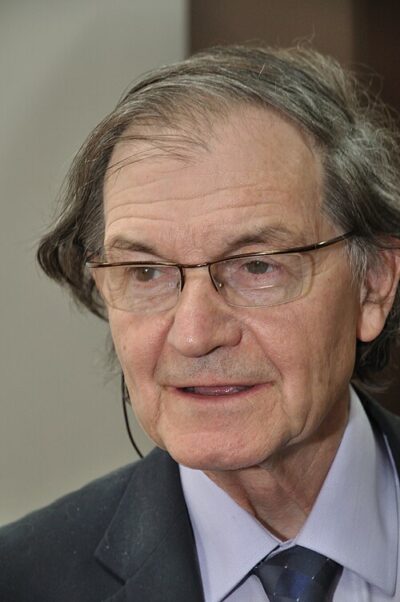 Roger PenroseEnglish mathematical physicist, recreational mathematician and philosopher
- NNathan RosenAmerican-Israeli physicist
 Yvonne Choquet-BruhatFrench mathematician and physicist
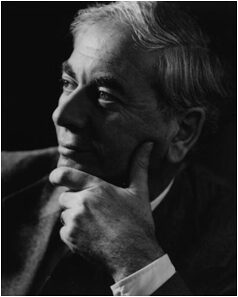 Dennis W. SciamaBritish physicist (1926–1999)
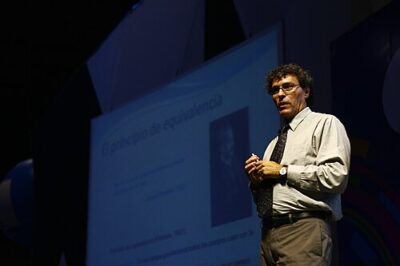 Miguel AlcubierreMexican theoretical physicist (born 1964)
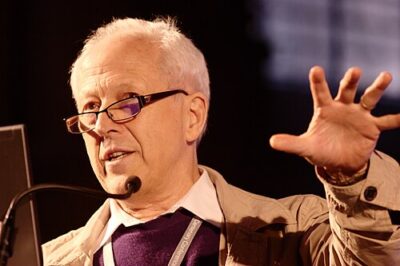 George F. R. Elliscosmologist from South Africa
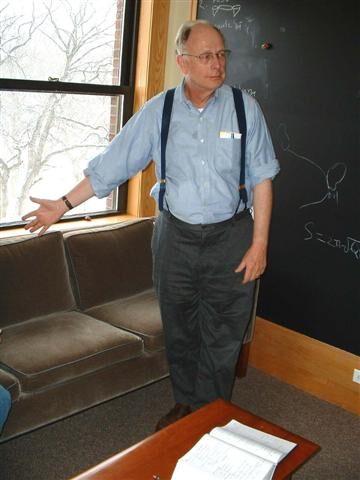 James Hartle (1986–1995)American physicist (1939-2023)
