Jude the Obscure
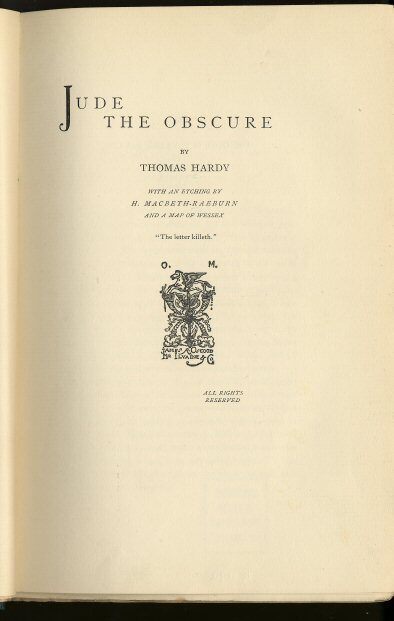
Jude the Obscure is a 1895 novel by Thomas Hardy.
- Published
- 1895
- Written by
- Thomas Hardy
- Country of origin
- United Kingdom
All 8 facts, and where they come from
Facts
8 facts · 0 confirmed by two sources · 0 cited · 8 from one source
Where this comes from
Papalocal keeps its own record. It started from these sources; what each one said is kept here as it was copied, so a change on their side never changes this page by itself. Tap one to read its version.
What Wikidata says · copied November 17, 2026 · revision 2536875234
- Described as
- 1895 novel by Thomas Hardy
- What it is
- literary work
- Written by
- Thomas Hardy
- Published
- 1895
- Language
- English
- Country of origin
- United Kingdom
- Comes after
- Tess of the d'Urbervilles
- Followed by
- The Well-Beloved
- Named after
- Jude Fawley
- Wikipedias with a page
- 19
Wikidata item Q1248773 (wikidata.org/wiki/Q1248773), public domain (CC0). Copied 2026-11-17.
What Wikipedia says · copied November 17, 2026 · revision 1384223956
Jude the Obscure is a novel by Thomas Hardy which began as a magazine serial in December 1894 and was first published in book form in November 1895 (though the title page says 1896). The protagonist, Jude Fawley, is a working-class young man; he is a stonemason who dreams of becoming a scholar. The other main character is his cousin, Sue Bridehead, who is also his central love interest. The novel is concerned in particular with issues of class, education, religion, morality and marriage. It was Hardy's 14th and last published novel.
From the Wikipedia article “Jude the Obscure” (en.wikipedia.org/wiki/Jude_the_Obscure), by its contributors, under CC BY-SA 4.0 (creativecommons.org/licenses/by-sa/4.0/). Copied 2026-11-17; not changed.
Confirmed Two sources agree. Cited One source, and it names where it got it. One source One source, without a reference of its own. Sources disagree The sources disagree. We show the best-supported value and keep theirs below.
Picture: Wikimedia Commons · Public domain