

Kazan Federal University
Kazan Federal University is a Russian university. It was founded in 1804 by Alexander I of Russia. It has 2,300 employees. 44,992 students study there. It won the Order of the Red Banner of Labour and 1 more.
- Founded
- November 5, 1804
- Founded by
- Alexander I of Russia
- Headquarters
- Kazan
- Employees
- 2,300
- Country
- Russia
All 15 facts, and where they come from
Facts
15 facts · 0 confirmed by two sources · 4 cited · 11 from one source
Where this comes from
Papalocal keeps its own record. It started from these sources; what each one said is kept here as it was copied, so a change on their side never changes this page by itself. Tap one to read its version.
What Wikidata says · copied November 17, 2026 · revision 2552576965
- Described as
- Russian university
- Other names
- Kazan (Volga region) Federal University, Kazan State University
- What it is
- federal university; open-access publisher · 1 reference; building complex
- Founded
- November 5, 1804 · 1 reference
- Founded by
- Alexander I of Russia
- Headquarters
- Kazan
- Located in
- Kazan
- Country
- Russia · 1 reference; Russian Empire
- Employees
- 2,300 · 1 reference
- Part of
- Ministry of Science and Higher Education · 1 reference
- Students
- 44,992 · 1 reference
- Awards
- Order of the Red Banner of Labour (1955); Order of Lenin (1979)
- Official website
- https://kpfu.ru/
- Wikipedias with a page
- 54
Wikidata item Q113788 (wikidata.org/wiki/Q113788), public domain (CC0). Copied 2026-11-17.
What Wikipedia says · copied November 17, 2026 · revision 1381316349
Kazan Federal University (Russian: Казанский (Приволжский) федеральный университет; Tatar: Казан (Идел буе) федераль университеты, romanized: Qazan (İdel buyı) federal universitetı) is a public research university located in Kazan, Russia.
The university was founded in 1804 as Imperial Kazan University, which makes it the second oldest continuously existing tertiary education institution in Russia. Founder of non-Euclidean geometry Nikolai Ivanovich Lobachevsky served there as the rector from 1827 until 1846. In 1925, the university was renamed in honour of its student Vladimir Ilyich Ulyanov (Lenin). The university is known as the birthplace of organic chemistry due to works by Aleksandr Butlerov, Vladimir Markovnikov, Aleksandr Arbuzov, and the birthplace of electron spin resonance discovered by Evgeny Zavoisky.
In 2011, Kazan University received a federal status. It is also one of 18 Russian universities that were initially selected to participate in the Project 5-100, coordinated by the Government of the Russian Federation and aimed to improve their international competitiveness among the world's leading research and educational centers. In 2021, KFU joined Priority 2030, Russia's new academic excellence project.
As of early 2023, the university comprised 20 primary educational units, 3 of which were territorial branches, including one branch in Uzbekistan. More than 52,000 students were enrolled in over 600 degree programs at undergraduate and postgraduate level (including doctoral and double-degree programs with partner universities); the number of international students was about 11,500 from 101 countries. Current research priorities are biomedicine, materials science, hydrocarbon industry, new energy sources, IT and cyber-physical systems, and comprehensive development of human potential.
From the Wikipedia article “Kazan Federal University” (en.wikipedia.org/wiki/Kazan_Federal_University), by its contributors, under CC BY-SA 4.0 (creativecommons.org/licenses/by-sa/4.0/). Copied 2026-11-17; not changed.
Confirmed Two sources agree. Cited One source, and it names where it got it. One source One source, without a reference of its own. Sources disagree The sources disagree. We show the best-supported value and keep theirs below.
Picture: Wikimedia Commons: Kazan State University from the 2 Korpus.jpg · See Commons file page
People connected 13
Worked here
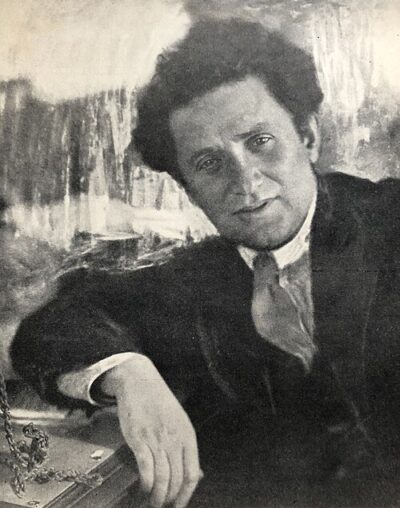 Grigory ZinovievRussian revolutionary (1883-1936)
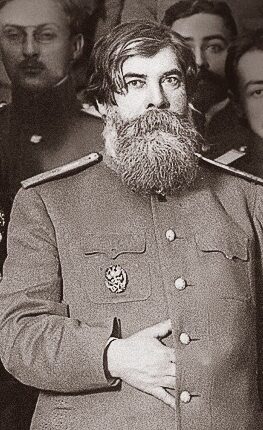 Vladimir Bekhterev (1893)Russian neurologist
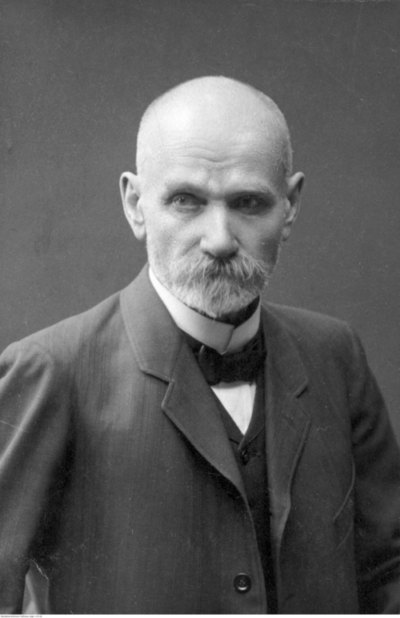 Jan Baudouin de Courtenay (1875–)Polish linguist and slavist (1845-1929)
 Alexander Bunge (1832–1836)Baltic German botanist (1803–1890)
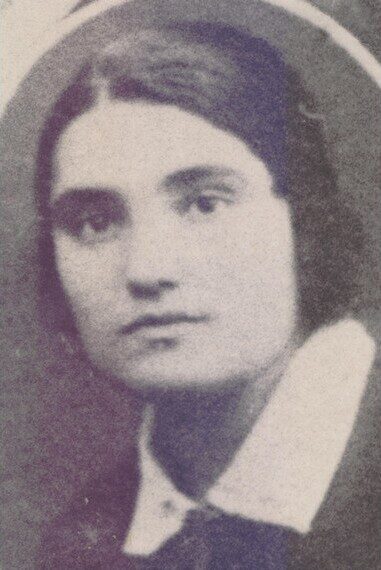 Yevgenia GinzburgRussian author of Jewish ancestry
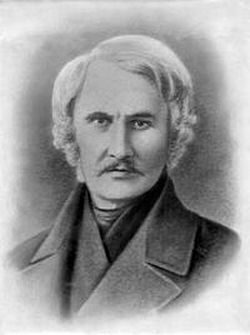 Eduard Friedrich Eversmann (1828–1860)German zoologist, explorer and university teacher (1794-1860)
 Alexander KovalevskyRussian zoologist (1840-1901)
 Aleksandr ArbuzovRussian chemist (1877-1968)
 Nikolai Chebotaryov (1928–1947)Russian mathematician (1894–1947)
Studied here
- Yevgenia GinzburgRussian author of Jewish ancestry
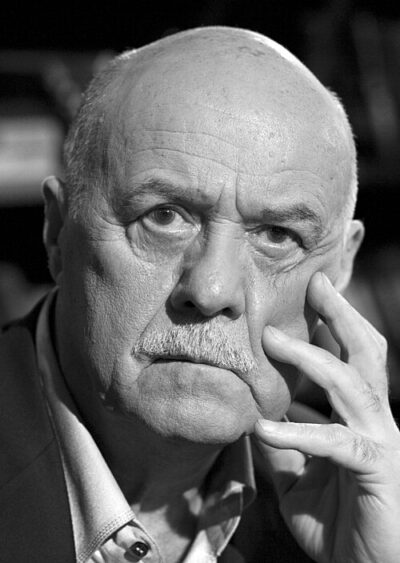 Stanislav GovorukhinSoviet and Russian film director, screenwriter and actor (1936-2018)
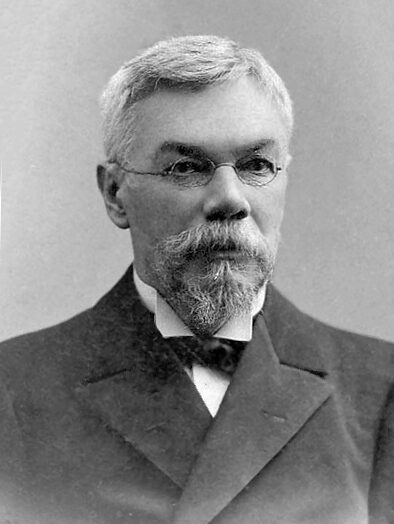 Alexander Mikhaylovich ZaytsevRussian chemist (1841–1910)
 Mikhail Lavrentyev (1918–1921)Russian mathematician (1900-1980)
 Yuliya ZaripovaRussian middle-distance runner
