Kelvin–Helmholtz mechanism
Kelvin–Helmholtz mechanism is a process of energy release of a contracting star or planet.
All 3 facts, and where they come from
Facts
3 facts · 0 confirmed by two sources · 0 cited · 3 from one source
Where this comes from
Papalocal keeps its own record. It started from these sources; what each one said is kept here as it was copied, so a change on their side never changes this page by itself. Tap one to read its version.
What Wikidata says · copied November 17, 2026 · revision 2236209548
- Described as
- process of energy release of a contracting star or planet
- Other names
- Kelvin-Helmholtz mechanism
- What it is
- mechanism
- Named after
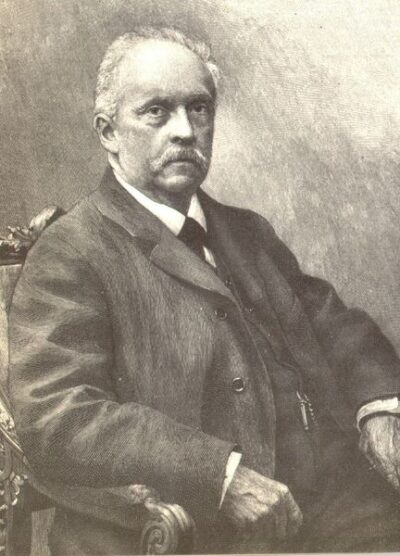
- William Thomson, 1st Baron Kelvin; Hermann von Helmholtz
- Wikipedias with a page
- 26
Wikidata item Q477816 (wikidata.org/wiki/Q477816), public domain (CC0). Copied 2026-11-17.
What Wikipedia says · copied November 17, 2026 · revision 1288258550
The Kelvin–Helmholtz mechanism is an astronomical process that occurs when the surface of a star or a planet cools. The cooling causes the internal pressure to drop, and the star or planet shrinks as a result. This compression, in turn, heats the core of the star/planet. This mechanism is evident on Jupiter and Saturn and on brown dwarfs whose central temperatures are not high enough to undergo hydrogen fusion. It is estimated that Jupiter radiates more energy through this mechanism than it receives from the Sun, but Saturn might not. Jupiter has been estimated to shrink at a rate of approximately 1 mm/year by this process, corresponding to an internal flux of 7.485 W/m2.
The mechanism was originally proposed by Kelvin and Helmholtz in the late nineteenth century to explain the source of energy of the Sun. By the mid-nineteenth century, conservation of energy had been accepted, and one consequence of this law of physics is that the Sun must have some energy source to continue to shine. Because nuclear reactions were unknown, the main candidate for the source of solar energy was gravitational contraction.
However, it soon was recognized by Sir Arthur Eddington and others that the total amount of energy available through this mechanism only allowed the Sun to shine for millions of years rather than the billions of years that the geological and biological evidence suggested for the age of the Earth. (Kelvin himself had argued that the Earth was millions, not billions, of years old.) The true source of the Sun's energy remained uncertain until the 1930s, when it was shown by Hans Bethe to be nuclear fusion.
From the Wikipedia article “Kelvin–Helmholtz mechanism” (en.wikipedia.org/wiki/Kelvin–Helmholtz_mechanism), by its contributors, under CC BY-SA 4.0 (creativecommons.org/licenses/by-sa/4.0/). Copied 2026-11-17; not changed.
Confirmed Two sources agree. Cited One source, and it names where it got it. One source One source, without a reference of its own. Sources disagree The sources disagree. We show the best-supported value and keep theirs below.