

KGB
KGB is a main Soviet security agency from 1954 to 1991. Its headquarters are in Moscow. It has 480,000 employees (1991).
- Founded
- March 13, 1954
- Headquarters
- Moscow
- Employees
- 480,000 (1991)
- Country
- Soviet Union
All 16 facts, and where they come from
Facts
16 facts · 0 confirmed by two sources · 2 cited · 14 from one source
Where this comes from
Papalocal keeps its own record. It started from these sources; what each one said is kept here as it was copied, so a change on their side never changes this page by itself. Tap one to read its version.
What Wikidata says · copied November 17, 2026 · revision 2553733838
- Described as
- main Soviet security agency from 1954 to 1991
- Other names
- Committee for State Security, Committee for State Security of the USSR, Committee for State Security of the Soviet Union, CSS of the USSR, State Security Committee of the USSR, State Security Committee of the Soviet Union, SSC of the USSR, USSR KGB, K.G.B., Russia (1923- U.S.S.R.)., KA-GKE-BE, KGB SSSR
- What it is
- security agency; Committee of National Security · 1 reference; State Committee of the Soviet Union
- Comes after
- Ministry for State Security
- Followed by
- Inter-republican Security Service of the USSR
- Founded
- March 13, 1954 · 1 reference
- Ended
- December 3, 1991
- Headquarters
- Moscow · 1 reference
- Located in
- Russian Soviet Federative Socialist Republic
- Country
- Soviet Union
- Chair
- Ivan Serov (1954–1958); Vladimir Semichastny (1961–1967)
- Employees
- 480,000 (1991)
- Part of
- Council of Ministers of the USSR · 1 reference
- Field
- counterintelligence
- Office of
- Soviet Union
- Wikipedias with a page
- 96
Wikidata item Q80919 (wikidata.org/wiki/Q80919), public domain (CC0). Copied 2026-11-17.
What Wikipedia says · copied November 17, 2026 · revision 1385795946
The Committee for State Security (Russian: Комитет государственной безопасности, romanised: Komitet gosudarstvennoy bezopasnosti, IPA: [kəmʲɪˈtʲed ɡəsʊˈdarstvʲɪn(ː)əj bʲɪzɐˈpasnəsʲtʲɪ]), abbreviated as KGB (Russian: КГБ, IPA: [ˌkɛɡɛˈbɛ]; ) was the main security agency of the Soviet Union from 1954 to 1991. It was the direct successor of preceding Soviet secret police agencies including the Cheka, OGPU, and NKVD. Attached to the Council of Ministers, it was the chief government agency of "union-republican jurisdiction", carrying out internal security, foreign intelligence, counter-intelligence and secret police functions. Similar agencies operated in each of the republics of the Soviet Union aside from the Russian SFSR, where the KGB was headquartered, with many associated ministries, state committees and state commissions.
The agency was a military service governed by army laws and regulations, in the same fashion as the Soviet Army or the MVD Internal Troops. While most of the KGB archives remain classified, two online documentary sources are available. Its main functions were foreign intelligence, counter-intelligence, operative-investigative activities, guarding the state border of the USSR, guarding the Soviet leadership, preserving the security of government communications as well as combating dissent and separatism within Soviet society.
On 3 December 1991, the KGB was officially dissolved. It was succeeded in Russia by the Foreign Intelligence Service (SVR) and what would later become the Federal Security Service (FSB). Following the 1991–1992 South Ossetia War, the self-proclaimed Republic of South Ossetia established its own KGB, keeping the unreformed name. In addition, Belarus established its successor to the KGB of the Byelorussian SSR in 1991, the Belarusian KGB, also keeping the unreformed name.
From the Wikipedia article “KGB” (en.wikipedia.org/wiki/KGB), by its contributors, under CC BY-SA 4.0 (creativecommons.org/licenses/by-sa/4.0/). Copied 2026-11-17; not changed.
Confirmed Two sources agree. Cited One source, and it names where it got it. One source One source, without a reference of its own. Sources disagree The sources disagree. We show the best-supported value and keep theirs below.
Picture: Wikimedia Commons: RIAN archive 142949 Lubyanka Square in Moscow.jpg · See Commons file page
People connected 11
Worked here
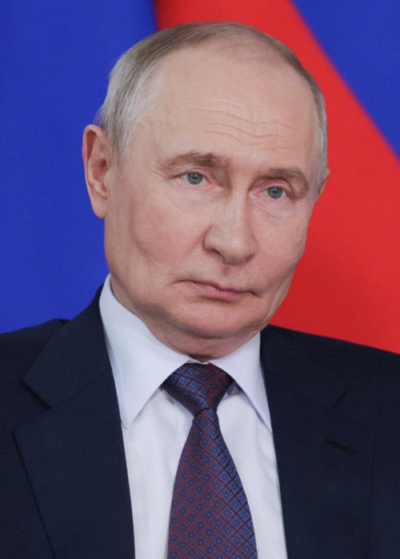 Vladimir Putin (1975–1991)President of the Russian Federation
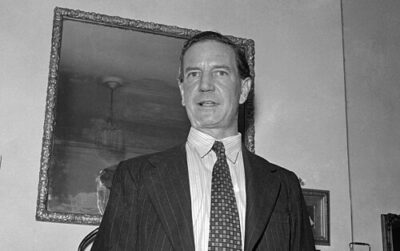 Kim PhilbyKGB mole for the Soviet Union (1912–1988)
 George BlakeBritish spy, a double agent in the service of the Soviet Union
 Rashid NurgalievRussian military officer and politician
 Guy BurgessBritish-born radio producer, intelligence and Foreign Office officer and double agent
- YYuri BezmenovRussian journalist and whistleblower
Military branch
- Vladimir Putin (1975–1991)President of the Russian Federation
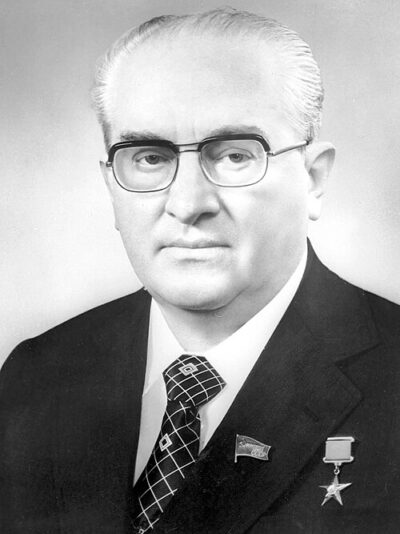 Yuri AndropovGeneral Secretary of the Communist Party of the Soviet Union (1914–1984)
- AAlexander Litvinenkoex-KGB agent and FSB lieutenant-colonel (1962-2006)
 Sergei IvanovRussian senior official and politician (1953–2026)
 Alexander BortnikovRussian official, FSB director
- BBoris PugoSoviet politician (1937-1991)
