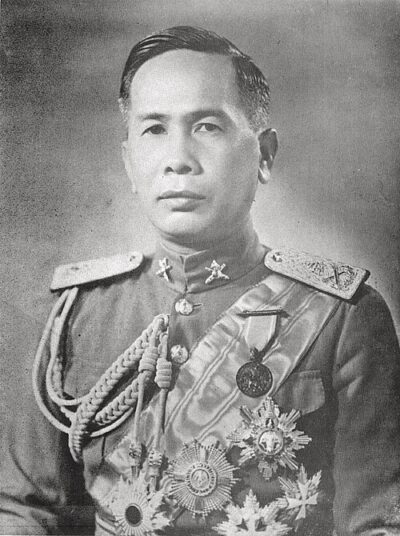
Khana Ratsadon
Khana Ratsadon is a Thai political group who staged the Siamese revolution of 1932. It was founded in 1927 by Pridi Banomyong and Prayoon Pamornmontri. Its headquarters are in Bangkok. It stands for constitutionalism, anti-communism and liberalism.
- Country
- Thailand (1932–)
- Founded
- February 5, 1927
- Ideology
- constitutionalism
All 14 facts, and where they come from
Facts
14 facts · 0 confirmed by two sources · 0 cited · 14 from one source
Where this comes from
Papalocal keeps its own record. It started from these sources; what each one said is kept here as it was copied, so a change on their side never changes this page by itself. Tap one to read its version.
What Wikidata says · copied November 17, 2026 · revision 2505964550
- Described as
- Thai political group who staged the Siamese revolution of 1932
- What it is
- political party; organization; club
- Founded
- February 5, 1927
- Ended
- November 8, 1947
- Founded by
- Pridi Banomyong; Prayoon Pamornmontri
- Headquarters
- Bangkok · 1 reference
- Country
- Thailand (1932–) · 1 reference; Rattanakosin Kingdom (–1932)
- Ideology
- constitutionalism; anti-communism; liberalism; nationalism
- Wikipedias with a page
- 14
Wikidata item Q1127720 (wikidata.org/wiki/Q1127720), public domain (CC0). Copied 2026-11-17.
What Wikipedia says · copied November 17, 2026 · revision 1377864017
The Khana Ratsadon (Thai: คณะราษฎร, lit. 'People's Committee' or 'People's Party', pronounced [kʰā.náʔ râːt.sā.dɔ̄ːn]), or simply the Khanarad (คณะราษ), was a Siamese group of military and civil officers, and later a political party, which staged a bloodless revolution against King Prajadhipok's government and transformed the country's absolute monarchy to constitutional monarchy on 24 June 1932.
From the Wikipedia article “Khana Ratsadon” (en.wikipedia.org/wiki/Khana_Ratsadon), by its contributors, under CC BY-SA 4.0 (creativecommons.org/licenses/by-sa/4.0/). Copied 2026-11-17; not changed.
Confirmed Two sources agree. Cited One source, and it names where it got it. One source One source, without a reference of its own. Sources disagree The sources disagree. We show the best-supported value and keep theirs below.