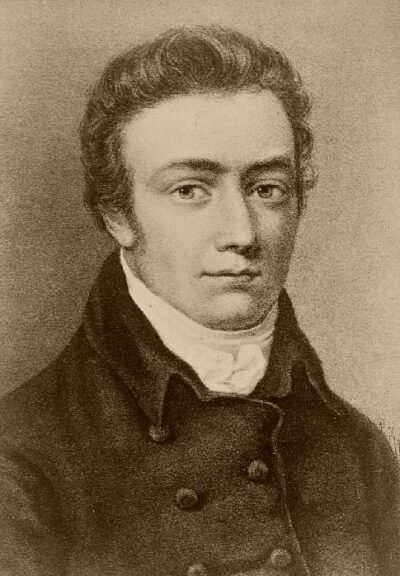
Kubla Khan
Kubla Khan is a poem by Samuel Taylor Coleridge. It came out in 1816.
- Published
- 1816
- Written by
- Samuel Taylor Coleridge
- Genre
- poetry
- Country of origin
- United Kingdom
All 7 facts, and where they come from
Facts
7 facts · 0 confirmed by two sources · 0 cited · 7 from one source
Where this comes from
Papalocal keeps its own record. It started from these sources; what each one said is kept here as it was copied, so a change on their side never changes this page by itself. Tap one to read its version.
What Wikidata says · copied November 17, 2026 · revision 2555908049
- Described as
- poem by Samuel Taylor Coleridge
- Other names
- Kubla Khan or, A Vision in a Dream. A Fragment
- What it is
- literary work
- Written by
- Samuel Taylor Coleridge
- Genre
- poetry · 1 reference
- Published
- 1816
- Language
- English
- Country of origin
- United Kingdom
- Named after
- Kublai Khan
- Wikipedias with a page
- 31
Wikidata item Q1089037 (wikidata.org/wiki/Q1089037), public domain (CC0). Copied 2026-11-17.
What Wikipedia says · copied November 17, 2026 · revision 1385525080
Kubla Khan: or A Vision in a Dream () is a poem written by Samuel Taylor Coleridge, completed in 1797 and published in 1816. It is sometimes given the subtitles "A Vision in a Dream" and "A Fragment." According to Coleridge's preface to Kubla Khan, the poem was composed one night after he experienced an opium-influenced dream after reading a work describing Xanadu, the summer capital of the Mongol-led Yuan dynasty of China founded by Kublai Khan (Emperor Shizu of Yuan). Upon waking, he set about writing lines of poetry that came to him from the dream until he was interrupted by "a person on business from Porlock". The poem could, according to Coleridge, not be completed according to its original 200–300 line plan, as the interruption caused him to forget the lines. He left it unpublished and kept it for private readings for his friends until 1816 when, at the prompting of Lord Byron, it was published.
Some of Coleridge's contemporaries denounced the poem and questioned his story of its origin. It was not until years later that critics began to openly admire the poem. Most modern critics now view Kubla Khan as one of Coleridge's three great poems, along with The Rime of the Ancient Mariner and Christabel. The poem is considered one of the most famous examples of Romanticism in English poetry, and is one of the most frequently anthologized poems in the English language. The manuscript is a permanent exhibit at the British Library in London.
From the Wikipedia article “Kubla Khan” (en.wikipedia.org/wiki/Kubla_Khan), by its contributors, under CC BY-SA 4.0 (creativecommons.org/licenses/by-sa/4.0/). Copied 2026-11-17; not changed.
Confirmed Two sources agree. Cited One source, and it names where it got it. One source One source, without a reference of its own. Sources disagree The sources disagree. We show the best-supported value and keep theirs below.
Picture: Wikimedia Commons: Kubla Khan titlepage.jpg · See Commons file page