Laplace–Beltrami operator
Laplace–Beltrami operator is a differential operator.
All 4 facts, and where they come from
Facts
4 facts · 0 confirmed by two sources · 0 cited · 4 from one source
Where this comes from
Papalocal keeps its own record. It started from these sources; what each one said is kept here as it was copied, so a change on their side never changes this page by itself. Tap one to read its version.
What Wikidata says · copied November 17, 2026 · revision 2400050066
- Described as
- differential operator
- What it is
- differential operator; mathematical concept
- Named after
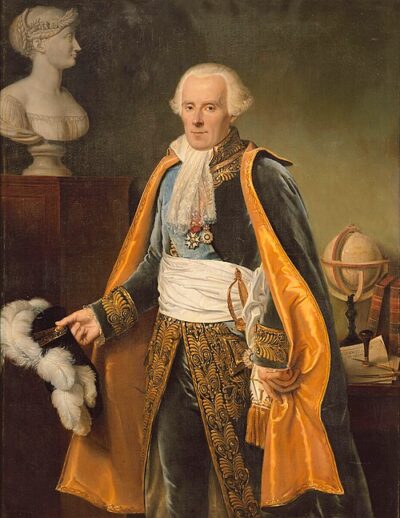
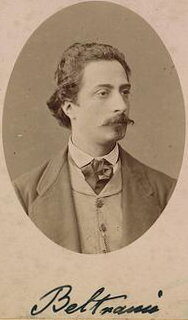
- Pierre-Simon Laplace; Eugenio Beltrami
- Wikipedias with a page
- 11
Wikidata item Q1071846 (wikidata.org/wiki/Q1071846), public domain (CC0). Copied 2026-11-17.
What Wikipedia says · copied November 17, 2026 · revision 1372813528
In differential geometry, the Laplace–Beltrami operator is a generalization of the Laplace operator to functions defined on submanifolds in Euclidean space and, even more generally, on Riemannian and pseudo-Riemannian manifolds. It is named after Pierre-Simon Laplace and Eugenio Beltrami.
For any twice-differentiable real-valued function f defined on Euclidean space Rn, the Laplace operator (also known as the Laplacian) takes f to the divergence of its gradient vector field, which is the sum of the n pure second derivatives of f with respect to each vector of an orthonormal basis for Rn. Like the Laplacian, the Laplace–Beltrami operator is defined as the divergence of the gradient, and is a linear operator taking functions into functions. The operator can be extended to operate on tensors as the divergence of the covariant derivative. Alternatively, the operator can be generalized to operate on differential forms using the divergence and exterior derivative. The resulting operator is called the Laplace–de Rham operator (named after Georges de Rham).
From the Wikipedia article “Laplace–Beltrami operator” (en.wikipedia.org/wiki/Laplace–Beltrami_operator), by its contributors, under CC BY-SA 4.0 (creativecommons.org/licenses/by-sa/4.0/). Copied 2026-11-17; not changed.
Confirmed Two sources agree. Cited One source, and it names where it got it. One source One source, without a reference of its own. Sources disagree The sources disagree. We show the best-supported value and keep theirs below.