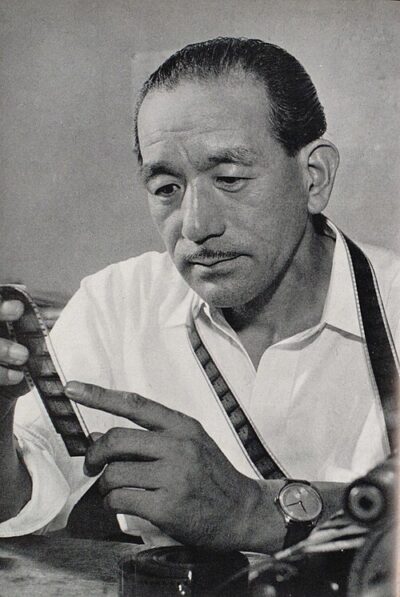
Late Spring
Late Spring is a 1949 film by Yasujiro Ozu. It stars Chishū Ryū, Setsuko Hara and Haruko Sugimura. It is part of Noriko Trilogy.
- Released
- September 13, 1949
- Directed by
- Yasujirō Ozu
- Genre
- drama film
- Country of origin
- Japan
All 15 facts, and where they come from
Facts
15 facts · 0 confirmed by two sources · 4 cited · 11 from one source
Where this comes from
Papalocal keeps its own record. It started from these sources; what each one said is kept here as it was copied, so a change on their side never changes this page by itself. Tap one to read its version.
What Wikidata says · copied November 17, 2026 · revision 2568996005
- Described as
- 1949 film by Yasujiro Ozu
- Other names
- Banshun
- What it is
- film
- Directed by
- Yasujirō Ozu
- Screenplay by
- Kōgo Noda; Yasujirō Ozu; Kazuo Hirotsu
- Starring
- Chishū Ryū; Setsuko Hara; Haruko Sugimura; Yumeji Tsukioka; Kuniko Miyake
- Genre
- drama film · 1 reference
- Released
- September 13, 1949 · 1 reference; July 21, 1972 · 1 reference
- Original language
- Japanese
- Country of origin
- Japan · 2 references
- Part of the series
- Noriko Trilogy · 2 references
- Wikipedias with a page
- 27
Wikidata item Q743203 (wikidata.org/wiki/Q743203), public domain (CC0). Copied 2026-11-17.
What Wikipedia says · copied November 17, 2026 · revision 1386088634
Late Spring (晩春, Banshun) is a 1949 Japanese drama film directed by Yasujirō Ozu and written by Ozu and Kogo Noda, based on the short novel Father and Daughter (Chichi to musume) by the 20th-century novelist and critic Kazuo Hirotsu. The film was written and shot during the Allied Powers' Occupation of Japan and was subject to the Occupation's official censorship requirements. Starring Chishū Ryū, who was featured in almost all of the director's films, and Setsuko Hara, marking her first of six appearances in Ozu's work, it is the first installment of Ozu's so-called "Noriko trilogy", succeeded by Early Summer (Bakushu, 1951) and Tokyo Story (Tokyo Monogatari, 1953); in each of which Hara portrays a young woman named Noriko, though the three Norikos are distinct, unrelated characters, linked primarily by their status as single women in postwar Japan.
Late Spring belongs to the type of Japanese cinema known as shōshimin-eiga, a genre that deals with the ordinary daily lives of working class and middle class people of modern times. The film is frequently regarded as the first in the director's final creative period, "the major prototype of the [director's] 1950s and 1960s work". These films are characterized by, among other traits, an exclusive focus on stories about families during Japan's immediate postwar era, a tendency towards very simple plots and the use of a generally static camera.
Late Spring was released on September 19, 1949, to critical acclaim in the Japanese press. In the following year, it was awarded the prestigious Kinema Junpo critics' award as the best Japanese production released in 1949. In 1972, the film was commercially released in the United States, again to very positive reviews. Late Spring has been referred to as the director's "most perfect" work, as "the definitive film of Ozu's master filmmaking approach and language" and has been called "one of the most perfect, most complete, and most successful studies of character ever achieved in Japanese cinema". The film has been considered one of the greatest films of all time.
From the Wikipedia article “Late Spring” (en.wikipedia.org/wiki/Late_Spring), by its contributors, under CC BY-SA 4.0 (creativecommons.org/licenses/by-sa/4.0/). Copied 2026-11-17; not changed.
Confirmed Two sources agree. Cited One source, and it names where it got it. One source One source, without a reference of its own. Sources disagree The sources disagree. We show the best-supported value and keep theirs below.
Picture: Wikimedia Commons: Banshu 01.jpg · See Commons file page