Lee–Yang theory
Lee–Yang theory is a statistical mechanics model for phase transitions.
All 3 facts, and where they come from
Facts
3 facts · 0 confirmed by two sources · 0 cited · 3 from one source
Where this comes from
Papalocal keeps its own record. It started from these sources; what each one said is kept here as it was copied, so a change on their side never changes this page by itself. Tap one to read its version.
What Wikidata says · copied November 16, 2026 · revision 2421521971
- Described as
- statistical mechanics model for phase transitions
- What it is
- scientific theory
- Named after
- Tsung-Dao Lee; Chen-ning Yang
- Wikipedias with a page
- 1
Wikidata item Q104825743 (wikidata.org/wiki/Q104825743), public domain (CC0). Copied 2026-11-16.
What Wikipedia says · copied November 16, 2026 · revision 1365272786
In statistical mechanics, Lee–Yang theory, sometimes also known as Yang–Lee theory, is a scientific theory which seeks to describe phase transitions in large physical systems in the thermodynamic limit based on the properties of small, finite-size systems. The theory revolves around the complex zeros of partition functions of finite-size systems and how these may reveal the existence of phase transitions in the thermodynamic limit.
Lee–Yang theory constitutes an indispensable part of the theories of phase transitions. Originally developed for the Ising model, the theory has been extended and applied to a wide range of models and phenomena, including protein folding, percolation, complex networks, and molecular zippers.
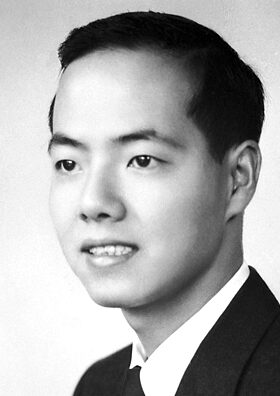
The theory is named after the Nobel laureates Tsung-Dao Lee and Yang Chen-Ning, who were awarded the 1957 Nobel Prize in Physics for their unrelated work on parity non-conservation in weak interaction.
From the Wikipedia article “Lee–Yang theory” (en.wikipedia.org/wiki/Lee–Yang_theory), by its contributors, under CC BY-SA 4.0 (creativecommons.org/licenses/by-sa/4.0/). Copied 2026-11-16; not changed.
Confirmed Two sources agree. Cited One source, and it names where it got it. One source One source, without a reference of its own. Sources disagree The sources disagree. We show the best-supported value and keep theirs below.