
Ludlamshöhle
Ludlamshöhle is a literary society in Vienna (1819-1826). It was founded by Ignaz Franz Castelli and August von Gymnich. Its headquarters are in Haidvogels Gasthaus.
- Founded
- 1819
- Founded by
- Ignaz Franz Castelli
- Headquarters
- Haidvogels Gasthaus
All 8 facts, and where they come from
Facts
8 facts · 0 confirmed by two sources · 1 cited · 7 from one source
Where this comes from
Papalocal keeps its own record. It started from these sources; what each one said is kept here as it was copied, so a change on their side never changes this page by itself. Tap one to read its version.
What Wikidata says · copied November 17, 2026 · revision 2510518554
- Described as
- literary society in Vienna (1819-1826)
- What it is
- literary society
- Founded
- 1819
- Ended
- April 18, 1826
- Founded by
- Ignaz Franz Castelli; August von Gymnich
- Headquarters
- Haidvogels Gasthaus
- Chair
- Karl Schwarz · 1 reference
- Named after
- Ludlam's Cave
- Wikipedias with a page
- 2
Wikidata item Q1702801 (wikidata.org/wiki/Q1702801), public domain (CC0). Copied 2026-11-17.
What Wikipedia says · copied November 17, 2026 · revision 1316495152
The Ludlamshöhle was a literary society founded by the Austrian playwright Ignaz Franz Castelli together with August von Gymnich in Vienna, Austria, in 1819, which existed until 18 April 1826.
The society was named after the theatre play Ludlam's Höhle by Adam Oehlenschläger. After the first performance on December 15, 1817, a group of "literati" (already existing since 1816) met in the "Haidvogels Gasthaus" (Schlossergäßchen, Vienna) to discuss the performance. As this play had failed with the audience that evening, Castelli suggested giving the group the name "Ludlamshöhle" as a consolation for the Danish writer. The adjoining room in "Haidvogel's Gasthaus", where the daily meeting at the regulars' table took place, was declared a clubhouse.
The Ludlamshöhle did not pursue any political or artistic goals; the regulars' table every evening served without exception for social gatherings. From today's point of view, the Ludlamshöhle is a prime example of the Biedermeier sociability.
During the night of 18–19 April 1826, this society was suspected (unjustified by anything) of "endangering the state" and was banned. By order of the Viennese police chief Alois von Persa, more than 30 policemen occupied the inn, arrested those present and confiscated all manuscripts found. The private flats of the arrested "Ludlamites" were also searched until the early hours of the morning. Some of their members continued to suffer years of spying and other harassment. It was precisely this excessive action by the authorities that led to the mythification of the group and its members in the following years.
A new member had to prove to the amusement of all that he was capable of increasing the pleasure of the society by joining. He was then examined in the subjects Ludlam History, Ludlam Finance and Frivolity Science, with several whispering seconds being given to the subject. After passing the exam, the new member was given a "Ludlam name" and the "recording song" was sung together. Various songs for the society have been preserved by Antonio Salieri, including the texts Es lebe Ludlam and O Gott, o Gott! d´Ludlam ist todt.
After 1848, an attempt was made to revive the Ludlamshöhle, but it was a failure.
In 1949, the writers Franz Karl Franchy, Egon Hajek, Theodor Mayer, Friedrich Schreyvogel and Karl Wache joined in Vienna to form a society called "Neue Ludlamshöhle" which lasted until 1972.
From the Wikipedia article “Ludlamshöhle” (en.wikipedia.org/wiki/Ludlamshöhle), by its contributors, under CC BY-SA 4.0 (creativecommons.org/licenses/by-sa/4.0/). Copied 2026-11-17; not changed.
Confirmed Two sources agree. Cited One source, and it names where it got it. One source One source, without a reference of its own. Sources disagree The sources disagree. We show the best-supported value and keep theirs below.
People connected 9
Members
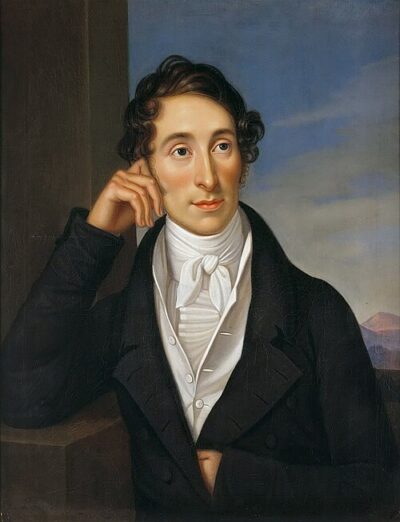 Carl Maria von WeberGerman Romantic composer (1786–1826)
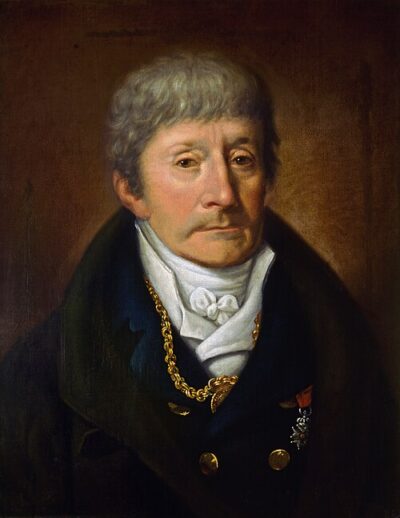 Antonio SalieriItalian composer and teacher (1750–1825)
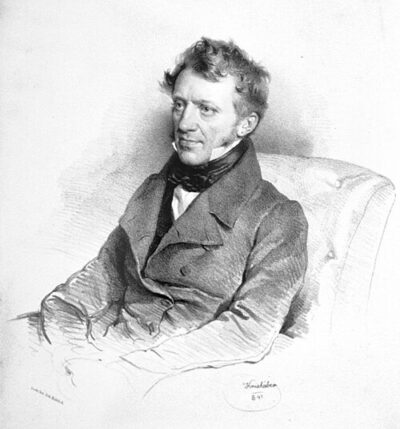 Franz GrillparzerAustrian dramatist and poet (1791-1872)
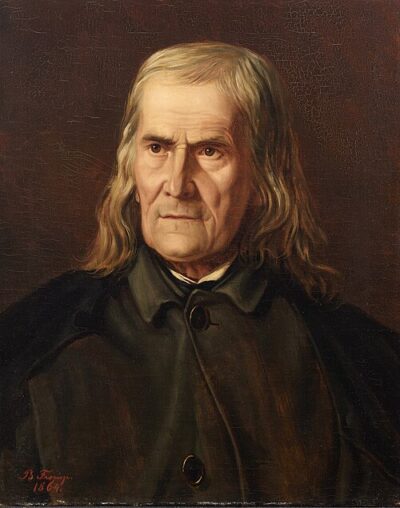 Friedrich RückertGerman poet, translator, and professor of Oriental languages (1788–1866)
 Ernst ChladniGerman physicist, mathematician and musician (1756 – 1827)
 Adam OehlenschlägerDanish poet and playwright (1779–1850)
 Ignaz MoschelesBohemian conductor, music educator, composer and pianist (1794–1870)
 Per Daniel Amadeus AtterbomSwedish poet (1790–1855)
 Mauro GiulianiItalian guitarist, cellist, singer, and composer
