myth of the clean Wehrmacht
Myth of the clean Wehrmacht is a post World War II myth.
All 3 facts, and where they come from
Facts
3 facts · 0 confirmed by two sources · 0 cited · 3 from one source
Where this comes from
Papalocal keeps its own record. It started from these sources; what each one said is kept here as it was copied, so a change on their side never changes this page by itself. Tap one to read its version.
What Wikidata says · copied November 17, 2026 · revision 2544692563
- Described as
- post World War II myth
- Other names
- Mythos der sauberen Wehrmacht
- What it is
- myth; historical negationism · 1 reference
- Named after
- Wehrmacht
- Wikipedias with a page
- 24
Wikidata item Q973290 (wikidata.org/wiki/Q973290), public domain (CC0). Copied 2026-11-17.
What Wikipedia says · copied November 17, 2026 · revision 1384094966
The myth of the clean Wehrmacht (German: Mythos der sauberen Wehrmacht) is the pseudohistorical and negationist notion that Nazi Germany's regular armed forces (the Wehrmacht) were not involved in the Holocaust or other war crimes during World War II. The myth, heavily promoted by West German authors and military personnel after World War II, denies the culpability of the German military command in the planning and perpetration of war crimes. Even where war crimes and the waging of an extermination campaign, particularly in the Soviet Union—the populace of which was viewed by the Nazis as "sub-humans" ruled by "Jewish Bolshevik" conspirators—have been acknowledged, they are ascribed to the "Party soldiers corps", the Schutzstaffel (SS), but not the regular German military.
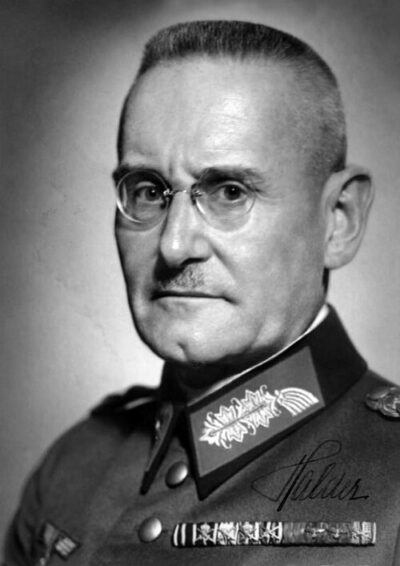
The myth began during the war, being promoted in the Wehrmacht's official propaganda and by soldiers of all ranks seeking to portray their institution in the best possible light; as prospects for victory faded, these soldiers began to portray themselves as victims. After Germany's defeat, the verdict of the International Military Tribunal (1945–1946) was misrepresented as exonerating the Wehrmacht. Franz Halder and other Wehrmacht leaders signed the Generals' memorandum entitled "The German Army from 1920 to 1945", which laid out the key elements of the myth, attempting to exculpate the Wehrmacht from war crimes.
The victorious Western Allies were becoming increasingly concerned with the growing Cold War against their former ally, the Soviet Union, and wanted West Germany to begin rearming to counter the perceived Soviet threat. In 1950, West German chancellor Konrad Adenauer and former officers met secretly at Himmerod Abbey to discuss West Germany's rearmament and agreed upon the Himmerod memorandum. This memorandum laid out the conditions under which West Germany would rearm: their war criminals must be released, the "defamation" of the German soldier must cease and foreign public opinion of the Wehrmacht must be raised. The Supreme Commander of NATO, U.S. General of the Army Dwight D. Eisenhower, having previously stated his belief that the "Wehrmacht and the "Hitler gang" (Nazi Party) were all the same", explicitly reversed this position during a 1951 visit to Germany when he claimed that there was "a real difference between the German soldier and Hitler and his criminal group". From there on, the United States began to facilitate German rearmament in light of their deep concern over Soviet dominance of Eastern Europe. The British became reluctant to pursue further trials and released already-convicted criminals early.
As Adenauer courted the votes of veterans and enacted amnesty laws, Halder began working for the U.S. Army Historical Division. His role was to assemble and supervise former Wehrmacht officers to create a multi-volume operational account of the Eastern Front. He oversaw the writings of 700 former German officers and disseminated the myth through this network. Wehrmacht officers and generals produced exculpatory memoirs distorting the historical record. These writings proved enormously popular, especially the memoirs of Heinz Guderian and Erich von Manstein, and further disseminated the myth among a German public eager to cast off the shame of Nazism.
The year 1995 proved to be a turning point in German public consciousness. The Hamburg Institute for Social Research's Wehrmacht exhibition, which showed 1,380 graphic pictures of "ordinary" Wehrmacht troops complicit in war crimes, sparked a long-running public debate and reappraisal of the myth. Hannes Heer wrote that the war crimes had been covered up by scholars and former soldiers. German historian Wolfram Wette called the clean Wehrmacht thesis a "collective perjury". The wartime generation maintained the myth with vigour and determination. They suppressed information and manipulated government policy. After their passing, there was insufficient motive to maintain the deceit in which the Wehrmacht denied having been a full partner in the Nazis' industrialised genocide.
From the Wikipedia article “Myth of the clean Wehrmacht” (en.wikipedia.org/wiki/Myth_of_the_clean_Wehrmacht), by its contributors, under CC BY-SA 4.0 (creativecommons.org/licenses/by-sa/4.0/). Copied 2026-11-17; not changed.
Confirmed Two sources agree. Cited One source, and it names where it got it. One source One source, without a reference of its own. Sources disagree The sources disagree. We show the best-supported value and keep theirs below.