Wehrmacht
The Wehrmacht is a unified armed forces of Nazi Germany from 1935 to 1945. Its headquarters are in Wünsdorf.
- Founded
- May 21, 1935
- Headquarters
- Wünsdorf
- Country
- Nazi Germany
All 9 facts, and where they come from
Facts
9 facts · 0 confirmed by two sources · 0 cited · 9 from one source
Where this comes from
Papalocal keeps its own record. It started from these sources; what each one said is kept here as it was copied, so a change on their side never changes this page by itself. Tap one to read its version.
What Wikidata says · copied November 16, 2026 · revision 2568006312
- Described as
- unified armed forces of Nazi Germany from 1935 to 1945
- Other names
- Armed Forces of Germany
- What it is
- armed forces
- Comes after
- Reichswehr
- Followed by
- Bundeswehr
- Founded
- May 21, 1935
- Ended
- August 20, 1946
- Headquarters
- Wünsdorf
- Country
- Nazi Germany; allied-occupied Germany · 1 reference
- Part of
- Nazi Germany
- Wikipedias with a page
- 85
Wikidata item Q128781 (wikidata.org/wiki/Q128781), public domain (CC0). Copied 2026-11-16.
What Wikipedia says · copied November 16, 2026 · revision 1385980770
The Wehrmacht (German pronunciation: [ˈveːɐ̯maxt] , lit. 'defence force') were the unified armed forces of Nazi Germany from 1935 to 1945. It consisted of the Heer (army), the Kriegsmarine (navy) and the Luftwaffe (air force). The designation "Wehrmacht" replaced the previously used term Reichswehr (Reich Defence) and was the manifestation of the Nazi regime's efforts to rearm Germany to a greater extent than the Treaty of Versailles permitted.
After the Nazi rise to power in 1933, one of Adolf Hitler's most overt and bellicose moves was to establish the Wehrmacht, a modern offensively-capable armed force, fulfilling the Nazi regime's long-term goals of regaining lost territory as well as gaining new territory and dominating its neighbours. This required the reinstatement of conscription and massive investment and defence spending on the arms industry.
The Wehrmacht formed the heart of Germany's politico-military power. In the early part of the Second World War, the Wehrmacht employed combined arms tactics (close-cover air-support, tanks and infantry) to devastating effect in what became known as Blitzkrieg (lightning war). Its campaigns in France (1940), the Soviet Union (1941) and North Africa (1941/42) are regarded by historians as acts of boldness. At the same time, the extent of advances strained the Wehrmacht's capacity to the breaking point, culminating in its first major defeat in the Battle of Moscow (1941); by late 1942, Germany was losing the initiative in all theatres. The Wehrmacht's increasingly overextended fronts could not withstand the Allies' growing numerical and material superiority, making weaknesses in German grand strategy, defensive doctrine, and logistics apparent.
Closely cooperating with the SS and their Einsatzgruppen death squads, the German armed forces committed numerous war crimes (despite later denials and promotion of the myth of the clean Wehrmacht). The majority of the war crimes took place in the Soviet Union, Poland, Yugoslavia, Greece, and Italy, as part of the war of annihilation against the Soviet Union, the Holocaust and Nazi security warfare. Only a few of the Wehrmacht's upper leadership went on trial for war crimes, despite evidence suggesting that more were involved in illegal actions. According to Ian Kershaw, most of the three million Wehrmacht soldiers who invaded the USSR participated in war crimes, such as the widespread abuse of captured Soviet prisoners of war.
During World War II about 18 million men served in the Wehrmacht. By the time the war ended in Europe in May 1945, German forces (consisting of the Heer, the Kriegsmarine, the Luftwaffe, the Waffen-SS, the Volkssturm, and foreign collaborator units) had lost approximately 11,300,000 men, about 5,318,000 of whom were missing, killed or died in captivity.
From the Wikipedia article “Wehrmacht” (en.wikipedia.org/wiki/Wehrmacht), by its contributors, under CC BY-SA 4.0 (creativecommons.org/licenses/by-sa/4.0/). Copied 2026-11-16; not changed.
Confirmed Two sources agree. Cited One source, and it names where it got it. One source One source, without a reference of its own. Sources disagree The sources disagree. We show the best-supported value and keep theirs below.
Picture: Wikimedia Commons: Balkenkreuz.svg · See Commons file page
People connected 5
Military branch
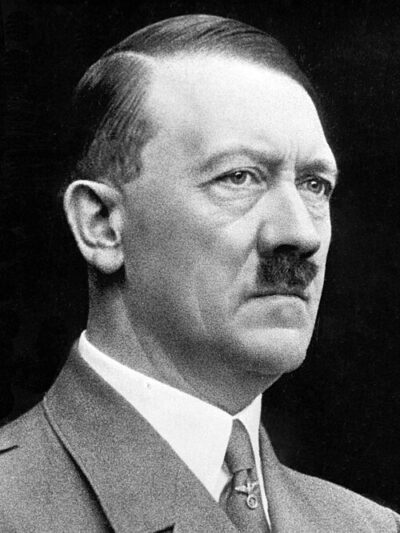 Adolf HitlerDictator of Germany from 1933 to 1945 (1889–1945)
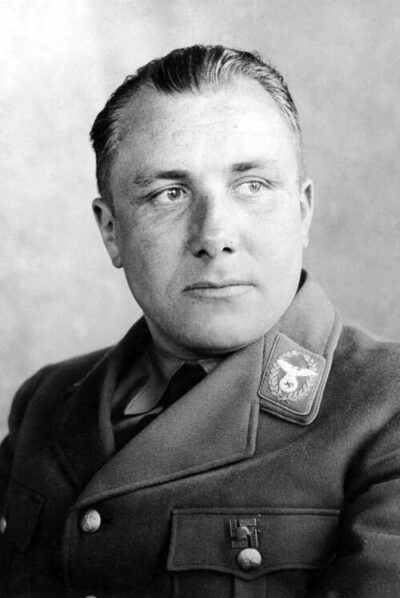 Martin BormannGerman Nazi Party official and head of the Nazi Party Chancellery (1900–1945)
 Baldur von SchirachGerman Nazi politician and convicted war criminal (1907–1974)
- WWalter ModelGerman field marshal (1891-1945)