
National Prize for Arts and Sciences
National Prize for Arts and Sciences is an award in Mexico. It is given by federal government of Mexico.
- Given by
- federal government of Mexico
- Country
- Mexico
All 5 facts, and where they come from
Facts
5 facts · 0 confirmed by two sources · 0 cited · 5 from one source
Where this comes from
Papalocal keeps its own record. It started from these sources; what each one said is kept here as it was copied, so a change on their side never changes this page by itself. Tap one to read its version.
What Wikidata says · copied November 17, 2026 · revision 2547796244
- Described as
- award in Mexico
- What it is
- science award; literary award; visual arts award
- Country
- Mexico
- Given by
- federal government of Mexico
- Wikipedias with a page
- 7
Wikidata item Q518740 (wikidata.org/wiki/Q518740), public domain (CC0). Copied 2026-11-17.
What Wikipedia says · copied November 17, 2026 · revision 1380650531
The National Prize for Arts and Sciences (Spanish: Premio Nacional de Ciencias y Artes) is awarded annually by the Government of Mexico in six categories. It is part of the Mexican Honours System and was established in 1945 by President Manuel Ávila Camacho to promote the country's artistic, scientific, and technological advancement.
It is awarded yearly to one or more persons that meets the conditions of the prize, in one of the following categories:Linguistics and literature
Fine Arts
History, Social Sciences and Philosophy
Popular arts and traditions
Physics, Mathematics and Natural Sciences
Technology and Design
In the case of the Popular arts and traditions category, the prize can also be awarded to groups, non-governmental organizations and institutions.
In 2015, the prize was divided between National Prize for Arts and Literature (Spanish: Premio Nacional de Artes y Literatura) and National Prize for Science – José Mario Molina Pasquel y Henríquez (Spanish: Premio Nacional de Ciencias). The former is awarded by the Secretariat of Culture and the latter by Secretariat of Public Education.
The prize is a gold medal, a rosette, a diploma signed by the President of Mexico and over $823,313.95 pesos (Approximately $40,000 US dollars).
Prior to 1945, a National Literature Prize (Spanish: Premio Nacional de Literatura) was established by the Secretariat of Public Education, which ceased to be awarded after the creation of the present prize.
In a controversial move, in 2020 Bertha Cecilia Navarro y Solares, movie producer, was awarded an "extraordinary distinction."
For a complete list of winners in tabular format, see the corresponding article in Spanish.
From the Wikipedia article “National Prize for Arts and Sciences (Mexico)” (en.wikipedia.org/wiki/National_Prize_for_Arts_and_Sciences_(Mexico)), by its contributors, under CC BY-SA 4.0 (creativecommons.org/licenses/by-sa/4.0/). Copied 2026-11-17; not changed.
Confirmed Two sources agree. Cited One source, and it names where it got it. One source One source, without a reference of its own. Sources disagree The sources disagree. We show the best-supported value and keep theirs below.
People connected 16
Won it
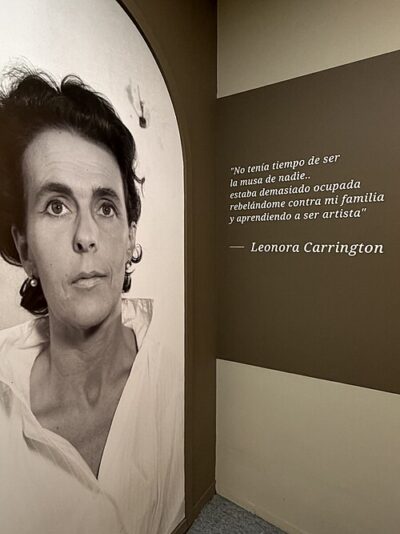 Leonora Carrington (2005)British-born Mexican artist, painter and novelist (1917–2011)
 Elena Poniatowska (2002)French-born Mexican journalist and author
 Sergio Pitol (1993)Mexican politician and writer (1933–2018)
 José Emilio Pacheco (1992)Mexican writer (1939-2014)
 Fernando del Paso (1991)Mexican writer (1935–2018)
 Consuelo Velázquez (1989)Mexican concert pianist, songwriter and recording artist (1916-2005)
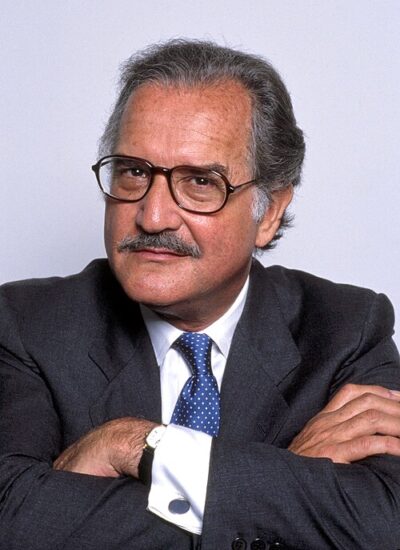 Carlos Fuentes (1984)Mexican writer (1928–2012)
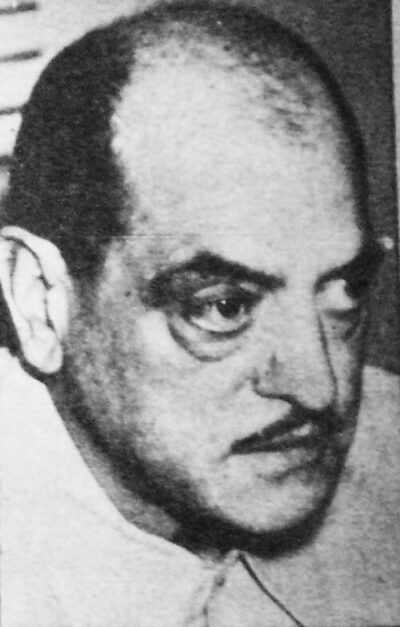 Luis Buñuel (1977)Spanish-Mexican filmmaker (1900–1983)
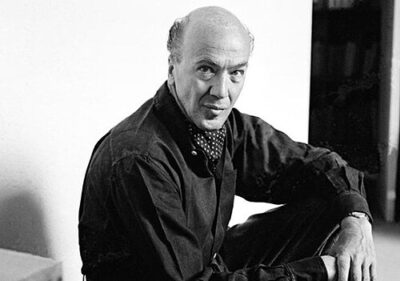 Luis Barragán (1976)Mexican architect (1902-1988)
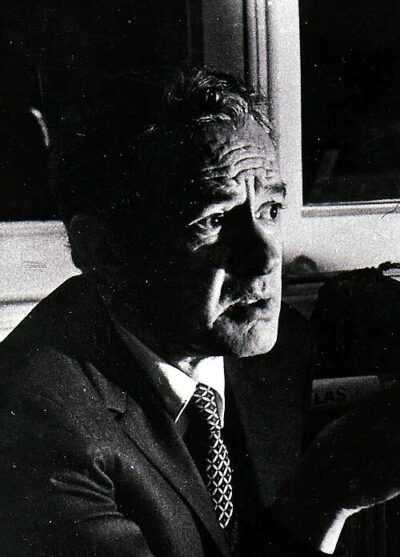 Juan Rulfo (1970)Mexican writer (1917–1986)
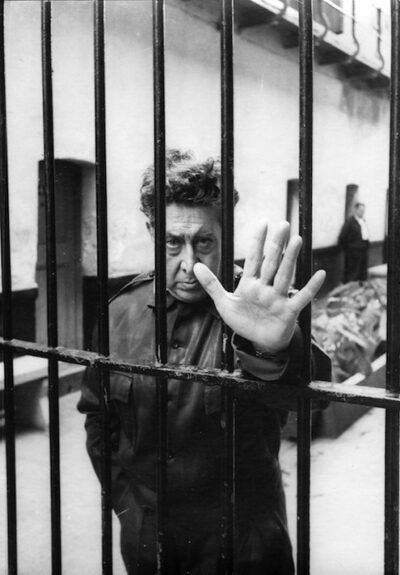 David Alfaro Siqueiros (1966)Mexican painter and muralist (1908–1974)
 Carlos Chávez (1958)Mexican composer (1899-1978)
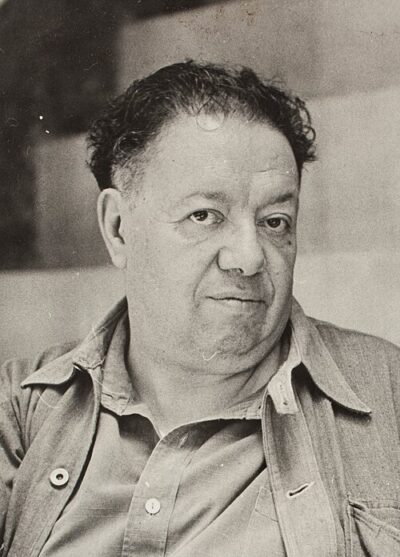 Diego Rivera (1950)Mexican muralist (1886–1957)
 Mariano Azuela (1949)Mexican author and physician (1873–1952)
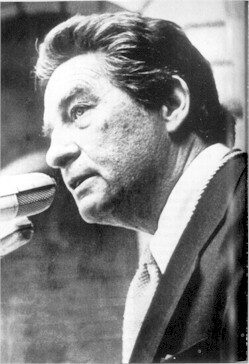 Octavio Paz (1945)Mexican writer, poet an diplomat (1914–1998)
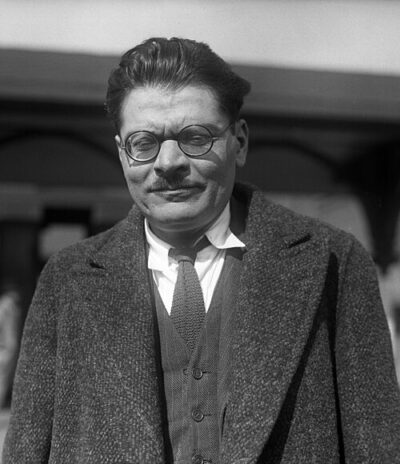 José Clemente Orozco (1940)Mexican artist (1883–1949)
