
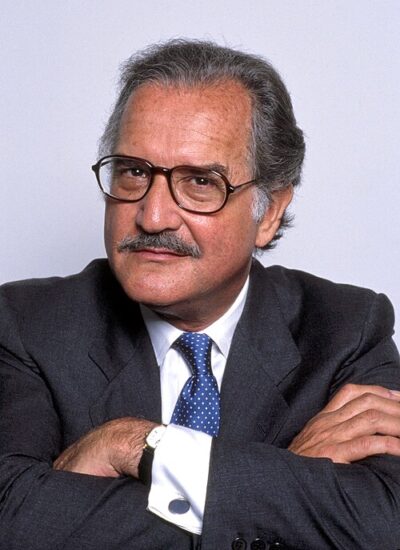
Carlos Fuentes
Carlos Fuentes was a Mexican writer. Born November 11, 1928, in Panama City. Died May 15, 2012, in Mexico City. Positions held include ambassador of Mexico to France (1975–1978). Known for The Death of Artemio Cruz, Terra Nostra and The Hydra Head. Educated at National Autonomous University of Mexico and The Grange School, Santiago. Awards include Grand Cross of the Order of Isabella the Catholic, Princess of Asturias Literary Prize and Four Freedoms Award – Freedom of Speech.
Facts
50 facts · 2 confirmed by two sources · 13 cited · 35 from one source
Where this comes from
Papalocal keeps its own record. It started from these sources; what each one said is kept here as it was copied, so a change on their side never changes this page by itself. Tap one to read its version.
What Wikidata says · copied November 16, 2026 · revision 2559575343
- Described as
- Mexican writer (1928–2012)
- Other names
- Charlos, Carlos Fuentes Macías
- Born
- November 11, 1928 · 18 references
- Died
- May 15, 2012 · 16 references
- Born in
- Panama City · 2 references
- Died in
- Mexico City · 2 references
- Buried in
- Montparnasse Cemetery · 1 reference
- Citizen of
- Mexico
- Occupation
- writer · 5 references; screenwriter · 1 reference; diplomat; novelist; lawyer; journalist; poet lawyer; prose writer
- Positions held
- ambassador of Mexico to France (1975–1978)
- Worked for
- Brown University · 3 references; Princeton University · 2 references; Harvard University · 1 reference; Columbia University; University of Pennsylvania · 1 reference
- Education
- National Autonomous University of Mexico; The Grange School, Santiago; Graduate Institute of International Studies (–1950) · 1 reference
- Member of
- Colegio Nacional; Academia Mexicana de la Lengua; American Academy of Arts and Sciences; Order of Isabella the Catholic
- Genre
- theatre
- Known for
- The Death of Artemio Cruz; Terra Nostra; The Hydra Head; The Old Gringo
- Awards
- Grand Cross of the Order of Isabella the Catholic (2009) · 2 references; Princess of Asturias Literary Prize (1994); Four Freedoms Award – Freedom of Speech (2006); Rómulo Gallegos Prize (1977); Xavier Villaurrutia Award (1975) · 1 reference; Miguel de Cervantes Prize (1987); Menéndez Pelayo International Prize (1992); National Prize for Arts and Sciences (1984) · 1 reference; Common Wealth Award of Distinguished Service (2002); Grinzane Cavour Prize (1994); Belisario Domínguez Medal of Honor (1999); Alfonso Reyes International Prize (1979) · 1 reference; Prix Formentor (2011); Honorary doctor of the Free University of Berlin (2004); honorary doctorate from the University of Cambridge
- Spouse
- Rita Macedo (1957–1972); Silvia Lemus (1976–2012) · 1 reference
- Children
- Carlos Fuentes Lemus
- Wikipedias with a page
- 81
Wikidata item Q154691 (wikidata.org/wiki/Q154691), public domain (CC0). Copied November 16, 2026.
What Wikipedia says · copied November 16, 2026 · revision 1378385300
Carlos Fuentes Macías (; Spanish: [ˈkaɾlos ˈfwentes] ; November 11, 1928 – May 15, 2012) was a Mexican novelist, essayist and ambassador to France. Among his works are The Death of Artemio Cruz (1962), Aura (1962), Terra Nostra (1975), The Old Gringo (1985) and Christopher Unborn (1987). In his obituary, The New York Times described Fuentes as "one of the most admired writers in the Spanish-speaking world" and an important influence on the Latin American Boom, the "explosion of Latin American literature in the 1960s and '70s", while The Guardian called him "Mexico's most celebrated novelist". His many literary honors include the Miguel de Cervantes Prize as well as Mexico's highest award, the Belisario Domínguez Medal of Honor (1999). He was often named as a likely candidate for the Nobel Prize in Literature, though he never won.
- Born, in its opening lines
- November 11, 1928
- Died, in its opening lines
- May 15, 2012
From the Wikipedia article “Carlos Fuentes” (en.wikipedia.org/wiki/Carlos_Fuentes), by its contributors, under CC BY-SA 4.0 (creativecommons.org/licenses/by-sa/4.0/). Copied November 16, 2026; not changed.
Confirmed Two sources agree. Cited One source, and it names where it got it. One source One source, without a reference of its own. Sources disagree The sources disagree. We show the best-supported value and keep theirs below.
