Navier–Stokes equations
Navier–Stokes equations is a system of nonlinear partial differential equations describing the motion of viscous fluids.
All 3 facts, and where they come from
Facts
3 facts · 0 confirmed by two sources · 0 cited · 3 from one source
Where this comes from
Papalocal keeps its own record. It started from these sources; what each one said is kept here as it was copied, so a change on their side never changes this page by itself. Tap one to read its version.
What Wikidata says · copied November 17, 2026 · revision 2551134338
- Described as
- system of nonlinear partial differential equations describing the motion of viscous fluids
- Other names
- Navier-Stokes equations, Navier-Stokes equation
- What it is
- system of differential equations
- Named after
- Claude-Louis Navier; Sir George Stokes, 1st Baronet
- Wikipedias with a page
- 49
Wikidata item Q201321 (wikidata.org/wiki/Q201321), public domain (CC0). Copied 2026-11-17.
What Wikipedia says · copied November 17, 2026 · revision 1384258122
The Navier–Stokes equations ( nav-YAY STOHKS) describe the motion of viscous fluids. This system of partial differential equations was named after Claude-Louis Navier and George Gabriel Stokes, who developed them over a few decades of progressive work, from 1822 (Navier) to 1842–1850 (Stokes). Siméon Denis Poisson independently achieved the same results.
The Navier–Stokes equations mathematically express momentum balance for Newtonian fluids and make use of the conservation of mass. They are sometimes accompanied by an equation of state relating pressure, temperature and density. They arise from applying Newton's second law to fluid motion, together with the assumption that the stress in the fluid is the sum of a diffusing viscous term (proportional to the gradient of velocity) and a pressure term—hence describing viscous flow. The Navier–Stokes equations generalize the Euler equations which only consider inviscid flow.
The Navier–Stokes equations are of great scientific and engineering interest because they may be used to model a wide variety of scenarios. In their full or simplified forms, they can assist in the design of aircraft and cars, the study of blood flow, the design of power stations, the analysis of pollution, and many other problems. Coupled with Maxwell's equations, they comprise the fundamentals of magnetohydrodynamics.
The Navier–Stokes equations are also of great interest to pure mathematics. The Navier–Stokes existence and smoothness problem concerns whether they have smooth (meaning infinitely differentiable) or bounded solutions in three-dimensional Euclidean space, as opposed to a breakdown with unbounded solutions. This is one of seven Millennium Prize Problems, notable open mathematics problems for which the Clay Mathematics Institute offered $1 million prizes in 2000 for correct solutions. In September 2026, OpenAI announced a claimed counterexample to the existence and smoothness problem. The announcement was followed by a priority dispute, and the claimed counterexample has yet to be independently verified.
From the Wikipedia article “Navier–Stokes equations” (en.wikipedia.org/wiki/Navier–Stokes_equations), by its contributors, under CC BY-SA 4.0 (creativecommons.org/licenses/by-sa/4.0/). Copied 2026-11-17; not changed.
Confirmed Two sources agree. Cited One source, and it names where it got it. One source One source, without a reference of its own. Sources disagree The sources disagree. We show the best-supported value and keep theirs below.
People connected 3
Known for it
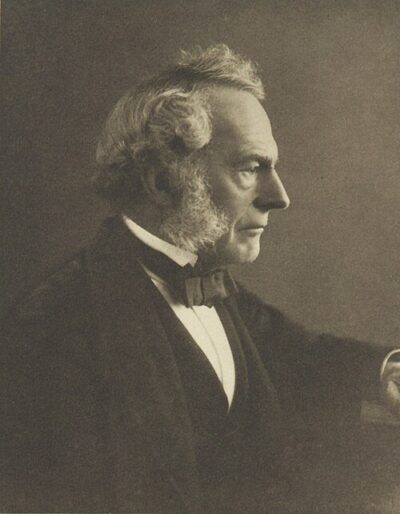 Sir George Stokes, 1st BaronetIrish mathematician and physicist (1819–1903)
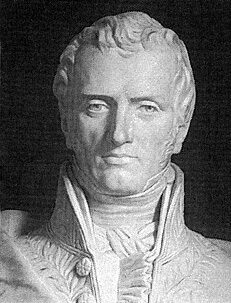 Claude-Louis NavierFrench engineer and physicist (1785–1836)