New Michael Palace
New Michael Palace is a building in Saint Petersburg, Russia. It came out in 1857.
- Came out
- 1857
All 6 facts, and where they come from
Facts
6 facts · 0 confirmed by two sources · 1 cited · 5 from one source
Where this comes from
Papalocal keeps its own record. It started from these sources; what each one said is kept here as it was copied, so a change on their side never changes this page by itself. Tap one to read its version.
What Wikidata says · copied November 17, 2026 · revision 2558196348
- Described as
- building in Saint Petersburg, Russia
- Other names
- Novo-Mihailovsky Palace
- What it is
- palace
- Came out
- 1857
- Located in
- Saint Petersburg
- Country
- Russia · 1 reference; Russian Empire
- Owned by
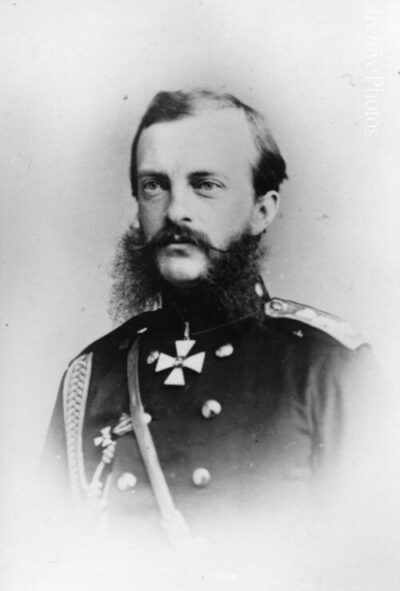
- Grand Duke Michael Nikolaevich of Russia
- Wikipedias with a page
- 11
Wikidata item Q3361196 (wikidata.org/wiki/Q3361196), public domain (CC0). Copied 2026-11-17.
What Wikipedia says · copied November 17, 2026 · revision 1366048287
The New Michael Palace (Russian: Ново-Михайловский дворец, romanized: Novo-Mikhailovsky Dvorets) was the third Saint Petersburg palace designed by Andrei Stackenschneider for Nicholas I's children. It was built between 1857 and 1862 on the Palace Embankment, between the Hermitage Museum buildings (to the west) and the Marble Palace (to the east).
The palace was commissioned by Grand Duke Michael Nikolaevich of Russia on the occasion of his wedding to Cecilie of Baden. The design is a Revivalist medley of quotations from the Renaissance, Baroque, and the Louis XVI styles. The Rococo interiors are ornate yet airy. The statuary is by David Jensen. Some of the paintings are by Michael Zichy.
A residential wing of the palace (the so-called Equerry Wing) fronts on Millionnaya Street. Its decoration is not as riotous, but the distinctive curvilinear façade reflects the Italianate taste of the 1740s. The wing has its origin in the Baroque palace of Chancellor Tcherkassky whose design has been attributed to Pyotr Yeropkin.
After the Russian Revolution the palace housed a branch of the Communist Academy. Then in 1949 it was occupied by the Institute of Oriental Studies (IOS), later the Leningrad branch of the IOS, and it is currently occupied by its successor, the Institute of Oriental Manuscripts.
The building stands well preserved thanks to a major restoration effort of 2005–2009. The former stables were recently reconstructed with funds provided by Qaboos bin Said al Said in order to house some 1,000,000 Oriental books and manuscripts from the institute's collection.
From the Wikipedia article “New Michael Palace” (en.wikipedia.org/wiki/New_Michael_Palace), by its contributors, under CC BY-SA 4.0 (creativecommons.org/licenses/by-sa/4.0/). Copied 2026-11-17; not changed.
Confirmed Two sources agree. Cited One source, and it names where it got it. One source One source, without a reference of its own. Sources disagree The sources disagree. We show the best-supported value and keep theirs below.
Picture: Wikimedia Commons: Spb 06-2012 Palace Embankment various 06.jpg · See Commons file page