
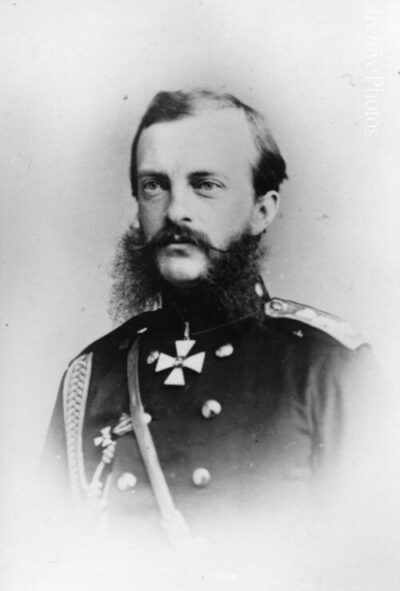
Grand Duke Michael Nikolaevich of Russia
Grand Duke Michael Nikolaevich of Russia was a Russian grand duke and field marshal (1832-1909); the fourth son and seventh child of Nicholas I of Russia and Charlotte of Prussia. Born October 13, 1832, in Peterhof. Died December 18, 1909, in Cannes. Positions held include Viceroy of the Caucasus (1862–1881) and member of the State Council of the Russian Empire. Known for New Michael Palace. Awards include Knight of the Order of St. Alexander Nevsky, Order of Saint Anna, 1st class and Order of the White Eagle.
Facts
45 facts · 1 confirmed by two sources · 0 cited · 43 from one source · 1 where the sources disagree
What’s different
- Born: we show October 13, 1832 (Sources disagree). Wikipedia says October 25, 1832
Where this comes from
Papalocal keeps its own record. It started from these sources; what each one said is kept here as it was copied, so a change on their side never changes this page by itself. Tap one to read its version.
What Wikidata says · copied November 16, 2026 · revision 2553944638
- Described as
- Russian grand duke and field marshal (1832-1909); the fourth son and seventh child of Nicholas I of Russia and Charlotte of Prussia
- Other names
- Grand Duke Mikhail Nikolaevich of Russia, Michael Nikolaevich of Russia, Mikhail Nikolaevich of Russia, Mikhail Romanov, Michael Romanov
- Born
- October 13, 1832 · 1 reference
- Died
- December 18, 1909 · 2 references
- Born in
- Peterhof
- Died in
- Cannes
- Buried in
- Peter and Paul Cathedral
- Citizen of
- Russian Empire
- Occupation
- military personnel; politician
- Positions held
- Viceroy of the Caucasus (1862–1881); member of the State Council of the Russian Empire
- Known for
- New Michael Palace
- Awards
- Knight of the Order of St. Alexander Nevsky; Order of Saint Anna, 1st class; Order of the White Eagle; Order of Saint Stanislaus, 1st class; Order of St. Vladimir, 1st class; Order of the Star of Romania; Order of St. Andrew; Gold Sword for Bravery; Order of St. George, 4th class; Order of the Red Eagle 1st Class; Order of St. George, 2nd class; Order of the Black Eagle · 1 reference; Pour le Mérite · 1 reference; House Order of Hohenzollern · 1 reference; Order of Saint Hubert · 1 reference
- Spouse
- Princess Cecilie of Baden (1857–1891) · 1 reference
- Children
- Grand Duke Nicholas Mikhailovich of Russia; Grand Duchess Anastasia Mikhailovna of Russia; Grand Duke Michael Mikhailovich of Russia; Grand Duke George Mikhailovich of Russia; Grand Duke Alexander Mikhailovich of Russia; Grand Duke Sergei Mikhailovich of Russia; Grand Duke Alexei Mikhailovich of Russia
- Father
- Nicholas I of Russia
- Mother
- Alexandra Feodorovna
- Siblings
- Grand Duchess Maria Nikolaevna of Russia; Olga Nikolaevna of Russia; Grand Duchess Alexandra Nikolaevna of Russia; Grand Duchess Elizabeth Nikolaevna of Russia; Grand Duke Nicholas Nikolaevich of Russia; Alexander II of Russia; Grand Duke Konstantin Nikolayevich of Russia
- Military branch
- artillery branch
- Military rank
- general field marshal (1878–)
- Wikipedias with a page
- 33
Wikidata item Q161199 (wikidata.org/wiki/Q161199), public domain (CC0). Copied November 16, 2026.
What Wikipedia says · copied November 16, 2026 · revision 1379841497
Grand Duke Michael Nikolaevich of Russia (Russian: Михаил Николаевич; 25 October 1832 – 18 December 1909) was a Russian field marshal, the fourth son and seventh child of Emperor Nicholas I of Russia and Charlotte of Prussia. He was the first owner of the New Michael Palace on the Palace Quay in Saint Petersburg.
- Born, in its opening lines
- October 25, 1832
- Died, in its opening lines
- December 18, 1909
From the Wikipedia article “Grand Duke Michael Nikolaevich of Russia” (en.wikipedia.org/wiki/Grand_Duke_Michael_Nikolaevich_of_Russia), by its contributors, under CC BY-SA 4.0 (creativecommons.org/licenses/by-sa/4.0/). Copied November 16, 2026; not changed.
Confirmed Two sources agree. Cited One source, and it names where it got it. One source One source, without a reference of its own. Sources disagree The sources disagree. We show the best-supported value and keep theirs below.
