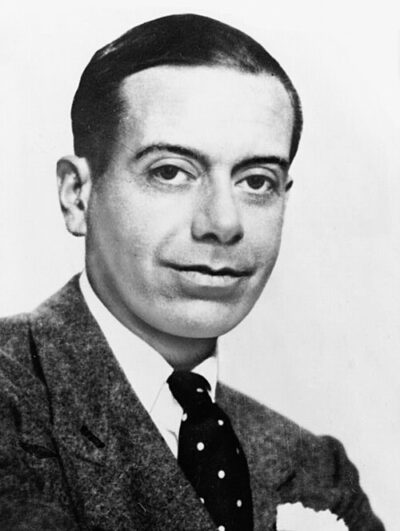
Night and Day
Night and Day is a 1932 song by Cole Porter. It is performed by Fred Astaire, Bing Crosby and Joe Henderson.
- Released
- November 18, 1932
- Performed by
- Fred Astaire
- Genre
- popular music
All 9 facts, and where they come from
Facts
9 facts · 0 confirmed by two sources · 3 cited · 6 from one source
Where this comes from
Papalocal keeps its own record. It started from these sources; what each one said is kept here as it was copied, so a change on their side never changes this page by itself. Tap one to read its version.
What Wikidata says · copied November 16, 2026 · revision 2569468368
- Described as
- 1932 song by Cole Porter
- What it is
- musical work/composition
- Performed by
- Bing Crosby · 1 reference; Joe Henderson · 1 reference; Sergio Mendes & Brasil '66; Jackie DeShannon · 1 reference
- Music by
- Cole Porter · 1 reference
- Genre
- popular music · 1 reference
- Released
- November 18, 1932 · 1 reference
- Language
- English
- Wikipedias with a page
- 11
Wikidata item Q1477068 (wikidata.org/wiki/Q1477068), public domain (CC0). Copied 2026-11-16.
What Wikipedia says · copied November 16, 2026 · revision 1381943735
"Night and Day" is a popular song by Cole Porter that was written for the 1932 musical Gay Divorce. It is perhaps Porter's most popular contribution to the Great American Songbook and has been recorded by dozens of musicians. NPR says "within three months of the show's opening, more than 30 artists had recorded the song."
Fred Astaire introduced "Night and Day" on November 29, 1932, when Gay Divorce opened at the Ethel Barrymore Theatre.
The song was so associated with Porter that when Hollywood filmed his life story in 1946, with Cary Grant, the movie was entitled Night and Day.
From the Wikipedia article “Night and Day (song)” (en.wikipedia.org/wiki/Night_and_Day_(song)), by its contributors, under CC BY-SA 4.0 (creativecommons.org/licenses/by-sa/4.0/). Copied 2026-11-16; not changed.
Confirmed Two sources agree. Cited One source, and it names where it got it. One source One source, without a reference of its own. Sources disagree The sources disagree. We show the best-supported value and keep theirs below.