Ninety-five Theses
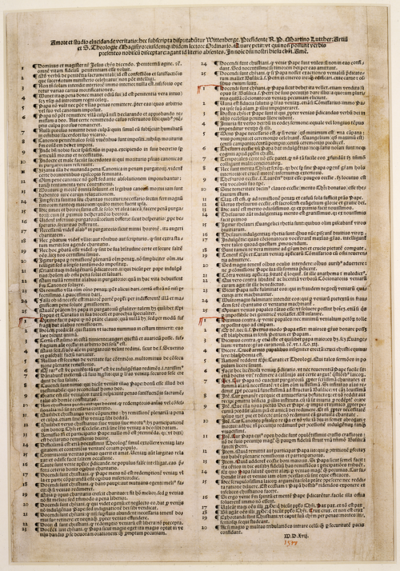
Ninety-five Theses is a disputation by Martin Luther on indulgences. It came out in 1517.
- Released
- October 31, 1517
- Written by
- Martin Luther
- Country of origin
- Electorate of Saxony
All 6 facts, and where they come from
Facts
6 facts · 0 confirmed by two sources · 0 cited · 6 from one source
Where this comes from
Papalocal keeps its own record. It started from these sources; what each one said is kept here as it was copied, so a change on their side never changes this page by itself. Tap one to read its version.
What Wikidata says · copied November 17, 2026 · revision 2563017817
- Described as
- disputation by Martin Luther on indulgences
- Other names
- 95 Theses, Ninety-Five Theses on the Power of Indulgences, Disputation on the Power and Efficacy of Indulgences, Ninety-Five Theses on the Power and Efficacy of Indulgences, Disputation Concerning the Value of Indulgences
- What it is
- text; document
- Written by
- Martin Luther
- Released
- October 31, 1517
- Language
- Ecclesiastical Latin
- Country of origin
- Electorate of Saxony
- Wikipedias with a page
- 76
Wikidata item Q157506 (wikidata.org/wiki/Q157506), public domain (CC0). Copied 2026-11-17.
What Wikipedia says · copied November 17, 2026 · revision 1384223726
The Ninety-five Theses or Disputation on the Power and Efficacy of Indulgences is a list of propositions for an academic disputation written in 1517 by Martin Luther, then a professor of moral theology at the University of Wittenberg, Germany. The Theses are retrospectively considered to have launched the Protestant Reformation and the birth of Protestantism, despite various quasi- or proto-Protestant groups having existed previously.
The Theses aired contemporary theological misgivings about the theory and practice of indulgences and their relation to repentance, penance and papal authority. This was triggered by Catholic clergy who were selling plenary indulgences, which were certificates supposed to reduce the punishment in purgatory required for sins committed by the saved purchasers or their loved ones.
In the Theses, Luther claimed that the repentance required by Christ in order for sins to be forgiven involves inner spiritual repentance rather than merely external sacramental confession. He argued that indulgences led Christians to avoid true repentance and sorrow for sin, believing that they could forgo it by obtaining an indulgence. These indulgences, according to Luther, discouraged Christians from giving to the poor and performing other acts of mercy, which he attributed to a belief that indulgence certificates were more spiritually valuable. Though Luther claimed that his positions on indulgences accorded with those of Pope Leo X, the Theses challenge a 14th-century papal bull stating that the pope could use the treasury of merit and the good deeds of past saints to forgive temporal punishment for sins. The Theses are framed as propositions to be argued in debate rather than necessarily representing Luther's opinions, but Luther later clarified his views in the Explanations of the Disputation Concerning the Value of Indulgences.
From the Wikipedia article “Ninety-five Theses” (en.wikipedia.org/wiki/Ninety-five_Theses), by its contributors, under CC BY-SA 4.0 (creativecommons.org/licenses/by-sa/4.0/). Copied 2026-11-17; not changed.
Confirmed Two sources agree. Cited One source, and it names where it got it. One source One source, without a reference of its own. Sources disagree The sources disagree. We show the best-supported value and keep theirs below.
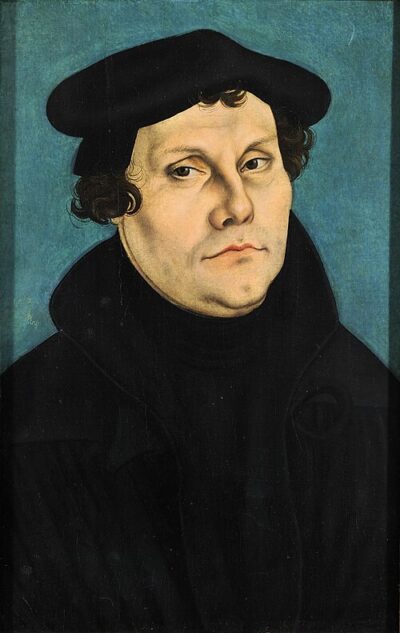
Picture: Martin Luther, via Wikimedia Commons · Public domain