

non-Euclidean geometry
non-Euclidean geometry is a two geometries based on axioms closely related to those specifying Euclidean geometry.
All 2 facts, and where they come from
Facts
2 facts · 0 confirmed by two sources · 0 cited · 2 from one source
Where this comes from
Papalocal keeps its own record. It started from these sources; what each one said is kept here as it was copied, so a change on their side never changes this page by itself. Tap one to read its version.
What Wikidata says · copied November 17, 2026 · revision 2566673401
- Described as
- two geometries based on axioms closely related to those specifying Euclidean geometry
- What it is
- branch of mathematics
- Named after
- Euclid
- Wikipedias with a page
- 65
Wikidata item Q233858 (wikidata.org/wiki/Q233858), public domain (CC0). Copied 2026-11-17.
What Wikipedia says · copied November 17, 2026 · revision 1360873892
In mathematics, non-Euclidean geometry consists of two geometries based on axioms closely related to those that specify Euclidean geometry. As Euclidean geometry lies at the intersection of metric geometry and affine geometry, non-Euclidean geometry arises by either replacing the parallel postulate with an alternative, or consideration of quadratic forms other than the definite quadratic forms associated with metric geometry. In the former case, one obtains hyperbolic geometry and elliptic geometry, the traditional non-Euclidean geometries. When isotropic quadratic forms are admitted, then there are affine planes associated with the planar algebras, which give rise to kinematic geometries that have also been called non-Euclidean geometry.
From the Wikipedia article “Non-Euclidean geometry” (en.wikipedia.org/wiki/Non-Euclidean_geometry), by its contributors, under CC BY-SA 4.0 (creativecommons.org/licenses/by-sa/4.0/). Copied 2026-11-17; not changed.
Confirmed Two sources agree. Cited One source, and it names where it got it. One source One source, without a reference of its own. Sources disagree The sources disagree. We show the best-supported value and keep theirs below.
Picture: Wikimedia Commons: Euclidian and non euclidian geometry.png · See Commons file page
People connected 3
Field
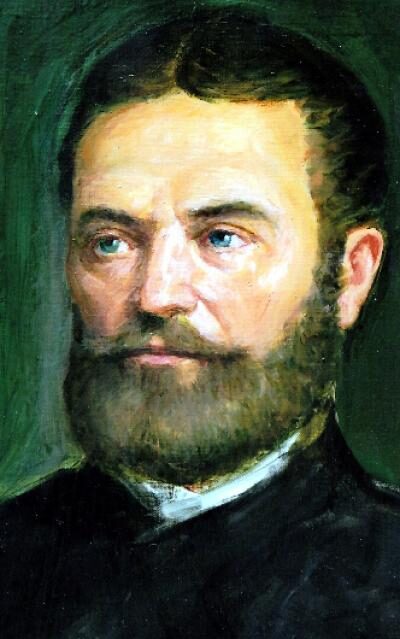 János BolyaiHungarian mathematician (1802–1860)
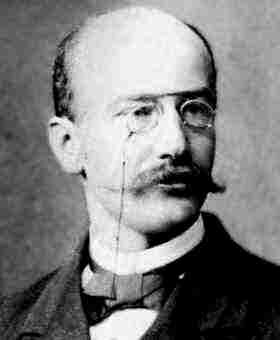 Ferdinand von LindemannGerman mathematician (1852–1939)
 Marcel Grossmannmathematician (1878-1936)
