
Panhellenic Socialist Movement
The Panhellenic Socialist Movement is a political party in Greece. It was founded in 1974 by Andreas Papandreou. Its headquarters are in Athens. It stands for social democracy and pro-Europeanism.
- Country
- Greece
- Founded
- September 3, 1974
- Ideology
- social democracy
- Chair
- Nikos Androulakis (2021–)
All 9 facts, and where they come from
Facts
9 facts · 0 confirmed by two sources · 0 cited · 9 from one source
Where this comes from
Papalocal keeps its own record. It started from these sources; what each one said is kept here as it was copied, so a change on their side never changes this page by itself. Tap one to read its version.
What Wikidata says · copied November 16, 2026 · revision 2460570785
- Described as
- political party in Greece
- What it is
- political party
- Founded
- September 3, 1974
- Founded by
- Andreas Papandreou
- Headquarters
- Athens
- Country
- Greece
- Chair
- Nikos Androulakis (2021–)
- Ideology
- social democracy; pro-Europeanism
- Official website
- https://pasok.gr
- Wikipedias with a page
- 47
Wikidata item Q203934 (wikidata.org/wiki/Q203934), public domain (CC0). Copied 2026-11-16.
What Wikipedia says · copied November 16, 2026 · revision 1385936520
The Panhellenic Socialist Movement, known mostly by its acronym PASOK, was a social-democratic political party in Greece. Following the collapse of the Greek military dictatorship of 1967–1974, PASOK was founded on 3 September 1974 as a socialist party by Andreas Papandreou. The largest left-of-center party in Greece between 1977 and 2012, it was the dominant political party of the country from 1981 to 2004, under party founder Andreas Papandreou and Costas Simitis. After the Metapolitefsi and until 2012 it was one of the two major parties in the country, along with New Democracy, its main political rival.
Last elected to power in 2009, PASOK lost much of its popular support as a result of the Greek debt crisis. PASOK was the ruling party when the economic crisis began, and it negotiated the first Greek bailout package with the European troika, which necessitated harsh austerity measures. This caused a significant loss in the party's popularity. It was part of two coalition governments from 2011 to 2015, during which further austerity measures were taken in response to the crisis. Due to these measures and the crisis, PASOK went from being the largest party in the Hellenic Parliament with 160 seats (43.92% of the popular vote) in the 2009 election to being the smallest party with 13 seats (4.68% of the popular vote) in the January 2015 election. This decline became known as Pasokification.
To halt the party's decline, Fofi Gennimata was elected as the new president of the party and formed a political alliance known as the Democratic Alignment (DISY). In the September 2015 election, DISY was the fourth most voted-for party. In 2018, PASOK merged into a new political alliance of centre-left parties, again led by Gennimata, called the Movement for Change (KINAL), becoming the third largest party in the parliament in the 2019 election. After the death of Gennimata and the election of the new Party President Nikos Androulakis, PASOK (running under the new PASOK-KINAL umbrella) improved its electoral outcome, achieving a 11.84% share of the popular vote in the June 2023 election. In October 2024, Androulakis was re-elected as president of PASOK. After a decade of poor electoral outcomes, PASOK – Movement for Change has retained its position as one of the main Greek political parties, and became a unitary political party on 29 March 2026 after the merger of its component parties including PASOK and KIDISO.
Originally a broadly statist and Eurosceptic party of the newly demarginalised Greek left-wing, PASOK's politics have changed significantly. In the years following its ascension to power in the 1981 elections, it pursued a transformative social agenda of economic and social liberalisation in regards to labour rights, the political and social rift following the Greek Civil War (1946–1949), education, and individual rights. Under Papandreou, it began shifting towards pro-European Union and moderate policies, a shift that accelerated after Simitis succeeded the ailing Papandreou in 1996 and resulted in Greece completing the adoption of the euro as its currency in 2002. PASOK was often accused of populism and contributing to political polarisation, and especially after its rapid downfall, was associated with economic mismanagement, clientelism, and corruption. Many of its members crossed the floor to other parties and coalitions, mainly New Democracy and Syriza, prior to its return as the leading opposition party.
From the Wikipedia article “PASOK” (en.wikipedia.org/wiki/PASOK), by its contributors, under CC BY-SA 4.0 (creativecommons.org/licenses/by-sa/4.0/). Copied 2026-11-16; not changed.
Confirmed Two sources agree. Cited One source, and it names where it got it. One source One source, without a reference of its own. Sources disagree The sources disagree. We show the best-supported value and keep theirs below.
People connected 6
Party members
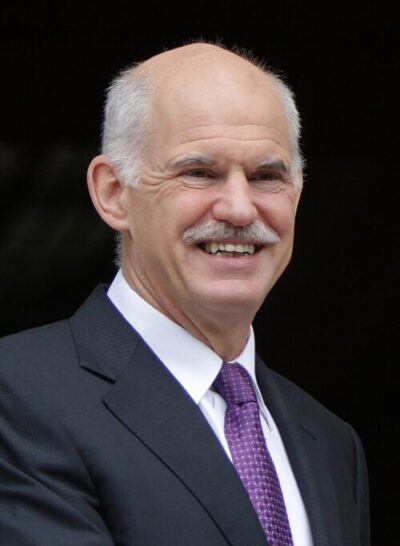 Giorgos PapandreouGreek politician, president of the Socialist International
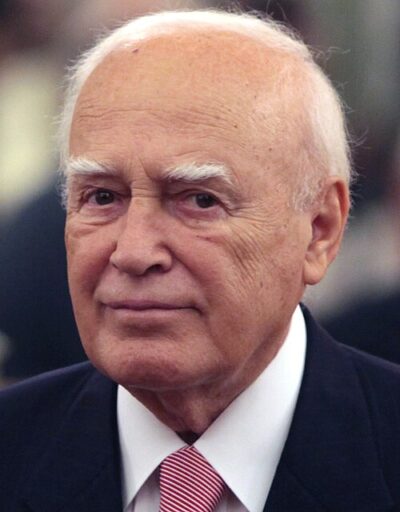 Karolos Papoulias6th President of Greece (1929–2021)
 Melina MercouriGreek actress, singer and politician. Minister of Culture of Greece (1920-1994)
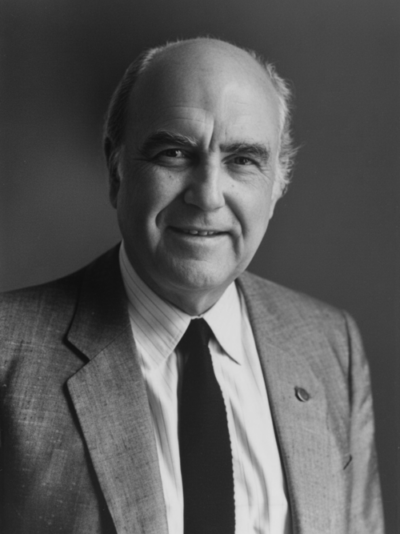 Andreas PapandreouGreek economist and politician (1919–1996)
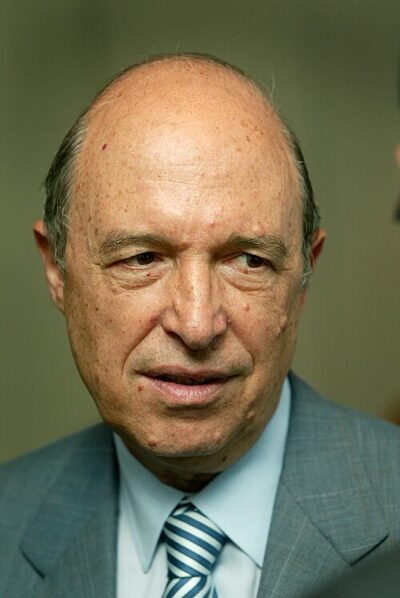 Costas SimitisGreek jurist, economist, academic and politician (1936–2025)
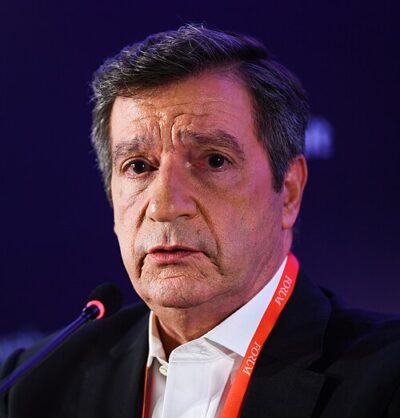 Georgios KaminisGreek politician
