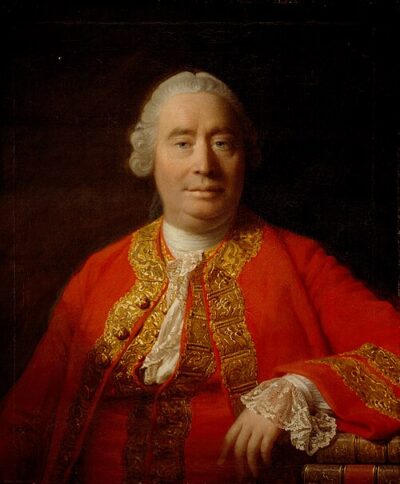
Philosophical Essays Concerning Human Understanding
Philosophical Essays Concerning Human Understanding is a philosophical treatise by David Hume. It came out in 1748.
- Published
- 1748
- Written by
- David Hume
- Genre
- essay
All 7 facts, and where they come from
Facts
7 facts · 0 confirmed by two sources · 0 cited · 7 from one source
Where this comes from
Papalocal keeps its own record. It started from these sources; what each one said is kept here as it was copied, so a change on their side never changes this page by itself. Tap one to read its version.
What Wikidata says · copied November 17, 2026 · revision 2515900968
- Described as
- philosophical treatise by David Hume
- Other names
- An Enquiry Concerning Human Understanding, Enquiry Concerning Human Understanding, Hume, David, 1711-1776. Inquiry concerning human understanding, Hume, David, 1711-1776. Enquiry concerning human understanding
- What it is
- written work
- Written by
- David Hume · 1 reference
- Genre
- essay · 1 reference
- Published
- 1748
- Language
- English
- Comes after
- A Treatise of Human Nature · 1 reference
- Followed by
- An Enquiry Concerning the Principles of Morals · 1 reference
- Wikipedias with a page
- 21
Wikidata item Q1306656 (wikidata.org/wiki/Q1306656), public domain (CC0). Copied 2026-11-17.
What Wikipedia says · copied November 17, 2026 · revision 1384220638
An Enquiry Concerning Human Understanding is a book by the Scottish empiricist philosopher David Hume, published in English in 1748 under the title Philosophical Essays Concerning Human Understanding until a 1757 edition came up with the now-familiar name. It was a revision of an earlier effort, Hume's A Treatise of Human Nature, published anonymously in London in 1739–40. Hume was disappointed with the reception of the Treatise, which "fell dead-born from the press," as he put it, and so tried again to disseminate his more developed ideas to the public by writing a shorter and more polemical work.
The end product of his labours was the Enquiry. The Enquiry dispensed with much of the material from the Treatise, in favour of clarifying and emphasizing its most important aspects. For example, Hume's views on personal identity do not appear. However, more vital propositions, such as Hume's argument for the role of habit in a theory of knowledge, are retained.
This book has proven highly influential, both in the years that would immediately follow and today. Immanuel Kant points to it as the book which woke him from his self-described "dogmatic slumber." The Enquiry is widely regarded as a classic in modern philosophical literature.
From the Wikipedia article “An Enquiry Concerning Human Understanding” (en.wikipedia.org/wiki/An_Enquiry_Concerning_Human_Understanding), by its contributors, under CC BY-SA 4.0 (creativecommons.org/licenses/by-sa/4.0/). Copied 2026-11-17; not changed.
Confirmed Two sources agree. Cited One source, and it names where it got it. One source One source, without a reference of its own. Sources disagree The sources disagree. We show the best-supported value and keep theirs below.
Picture: Wikimedia Commons: Hume 1748 Human Understanding.jpg · See Commons file page