Planck constant
Planck constant is a physical constant representing the quantum of action.
All 4 facts, and where they come from
Facts
4 facts · 0 confirmed by two sources · 0 cited · 4 from one source
Where this comes from
Papalocal keeps its own record. It started from these sources; what each one said is kept here as it was copied, so a change on their side never changes this page by itself. Tap one to read its version.
What Wikidata says · copied November 16, 2026 · revision 2550985248
- Described as
- physical constant representing the quantum of action
- Other names
- Planck's constant
- What it is
- physical constant; UCUM constant; action
- Named after
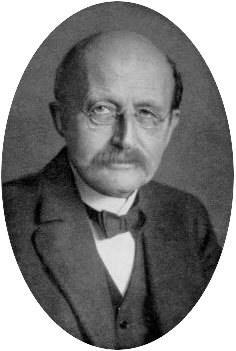
- Max Planck
- Wikipedias with a page
- 85
Wikidata item Q122894 (wikidata.org/wiki/Q122894), public domain (CC0). Copied 2026-11-16.
What Wikipedia says · copied November 16, 2026 · revision 1381739206
The Planck constant, or Planck's constant, denoted by h, is a fundamental physical constant of foundational importance in quantum mechanics: a photon's energy is equal to its frequency multiplied by the Planck constant, and a particle's momentum is equal to the wavenumber of the associated matter wave (the reciprocal of its wavelength) multiplied by the Planck constant.
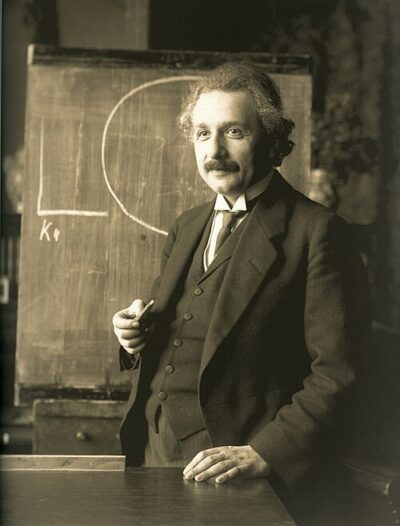
The constant was postulated by Max Planck in 1900 as a proportionality constant needed to explain experimental black-body radiation. Planck later referred to the constant as the "quantum of action". In 1905, Albert Einstein associated the "quantum" or minimal element of the energy to the electromagnetic wave itself. Max Planck received the 1918 Nobel Prize in Physics "in recognition of the services he rendered to the advancement of Physics by his discovery of energy quanta".
In metrology, the Planck constant is used, together with other constants, to define the kilogram, the SI unit of mass. The SI units are defined such that the Planck constant has the exact value h = 6.62607015×10⁻³⁴ J⋅Hz−1 when it is expressed in SI units.
The closely-related reduced Planck constant, denoted ℏ (h-bar), equal to the Planck constant divided by 2π: ℏ=h2π, is commonly used in quantum physics equations. It relates the energy of a photon to its angular frequency, and the linear momentum of a particle to the angular wavenumber of its associated matter wave. As h has an exact defined value, the value of ℏ can be calculated to arbitrary precision: ℏ = 1.054571817...×10−34 J⋅s. As a proportionality constant in relationships involving angular quantities, the unit of ℏ may be given as J·s/rad, with the same numerical value, as the radian is the natural dimensionless unit of angle.
From the Wikipedia article “Planck constant” (en.wikipedia.org/wiki/Planck_constant), by its contributors, under CC BY-SA 4.0 (creativecommons.org/licenses/by-sa/4.0/). Copied 2026-11-16; not changed.
Confirmed Two sources agree. Cited One source, and it names where it got it. One source One source, without a reference of its own. Sources disagree The sources disagree. We show the best-supported value and keep theirs below.
Picture: Wikimedia Commons: U+210E.svg · See Commons file page