
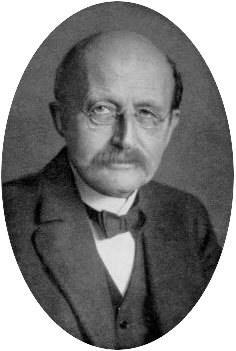
Max Planck
Max Planck was a German theoretical physicist. Born April 23, 1858, in Kiel. Died October 4, 1947, in Göttingen. Positions held include Geheimrat (1908–) and professor (1885–). Known for Planck's law and Planck constant. Educated at LMU Munich and Maximiliansgymnasium München. Awards include Nobel Prize in Physics, Adlerschild des Deutschen Reiches and Max Planck Medal.
Facts
69 facts · 2 confirmed by two sources · 25 cited · 42 from one source
Where this comes from
Papalocal keeps its own record. It started from these sources; what each one said is kept here as it was copied, so a change on their side never changes this page by itself. Tap one to read its version.
What Wikidata says · copied November 16, 2026 · revision 2568739847
- Described as
- German theoretical physicist (1858–1947)
- Born
- April 23, 1858 · 18 references
- Died
- October 4, 1947 · 17 references
- Born in
- Kiel · 4 references
- Died in
- Göttingen · 5 references
- Buried in
- Göttingen City Cemetery · 2 references
- Cause of death
- myocardial infarction
- Name at birth
- Maximilian Karl Ernst Ludwig Planck · 2 references
- Citizen of
- German Reich
- Occupation
- theoretical physicist; university teacher · 1 reference; physicist · 2 references; philosopher · 1 reference
- Positions held
- Geheimrat (1908–) · 1 reference; professor (1885–) · 1 reference
- Political party
- German People's Party
- Worked for
- LMU Munich (1880–1885); Kiel University (1885–1889); Frederick William University Berlin (1889–1927); Humboldt-Universität zu Berlin · 1 reference
- Education
- LMU Munich (1874–); Maximiliansgymnasium München; Frederick William University Berlin
- Member of
- AGV München · 1 reference; Deutsche Physikalische Gesellschaft; Royal Prussian Academy of Sciences; Kaiser Wilhelm Society; Emergency Association of German Science; Accademia Nazionale dei Lincei (1914–) · 1 reference; Royal Society of London; Bavarian Academy of Sciences and Humanities; Saxon Academy of Sciences and Humanities (1929–); Royal Netherlands Academy of Arts and Sciences
- Instrument
- piano; cello; organ
- Known for
- Planck's law; Planck constant
- Awards
- Nobel Prize in Physics (1918) · 2 references; Adlerschild des Deutschen Reiches (1928); Max Planck Medal (1929); Goethe Prize of the City of Frankfurt (1945); Copley Medal (1929) · 1 reference; Pour le Mérite for Sciences and Arts order (1915); Lorentz Medal (1927); Harnack medal (1933); Helmholtz Medal (1914); Bavarian Maximilian Order for Science and Art (1925); Liebig Medal (1921) · 1 reference; Franklin Medal (1927); honorary doctor of the University of Athens; honorary doctorate from the University of Cambridge; honorary doctorate of the University of Glasgow
- Field
- theoretical physics; physics · 1 reference; thermodynamics · 1 reference; philosophy · 1 reference; quantum theory · 1 reference
- Spouse
- Marie Merck (1887–) · 2 references
- Children
- Erwin Planck · 1 reference; Karl Planck · 1 reference; Hermann Planck · 1 reference
- Father
- Wilhelm von Planck · 2 references
- Mother
- Emma Karoline Patzig · 1 reference
- Siblings
- Hugo Planck · 2 references; Otto Planck · 1 reference; Adelbert Planck · 1 reference
- Religion
- Lutheranism
- Lived in
- Kiel; Munich
- Wikipedias with a page
- 184
Wikidata item Q9021 (wikidata.org/wiki/Q9021), public domain (CC0). Copied November 16, 2026.
What Wikipedia says · copied November 16, 2026 · revision 1381610274
Max Karl Ernst Ludwig Planck (; German: [ˈmaks ˈplaŋk] ; 23 April 1858 – 4 October 1947) was a German theoretical physicist. Planck made many contributions to theoretical physics, primarily in his role as the originator of quantum theory and one of the founders of modern physics, which revolutionized understanding of atomic and subatomic processes. He is known for the Planck constant, h, which is of foundational importance for quantum physics, and which he used to derive a set of units, now called Planck units, expressed in terms of physical constants. The Planck relation, E= hν, states that the energy of a photon is proportional to its frequency.
Planck was twice President of the Kaiser Wilhelm Society. In 1948 it was renamed the Max Planck Society, and today includes 83 institutions representing a wide range of scientific disciplines. He was awarded the 1918 Nobel Prize in Physics "for the services he rendered to the advancement of physics by his discovery of energy quanta".
- Born, in its opening lines
- April 23, 1858
- Died, in its opening lines
- October 4, 1947
From the Wikipedia article “Max Planck” (en.wikipedia.org/wiki/Max_Planck), by its contributors, under CC BY-SA 4.0 (creativecommons.org/licenses/by-sa/4.0/). Copied November 16, 2026; not changed.
Confirmed Two sources agree. Cited One source, and it names where it got it. One source One source, without a reference of its own. Sources disagree The sources disagree. We show the best-supported value and keep theirs below.
