
Premio Planeta de Novela
Premio Planeta de Novela is a Spanish award for unpublished novels (1952–). It is given by Editorial Planeta.
- Given by
- Editorial Planeta
- Country
- Spain
- Created
- 1952
All 9 facts, and where they come from
Facts
9 facts · 0 confirmed by two sources · 0 cited · 8 from one source · 1 where the sources disagree
What’s different
- Created: we show 1952 (Sources disagree). Wikidata also lists October 15, 1952
Where this comes from
Papalocal keeps its own record. It started from these sources; what each one said is kept here as it was copied, so a change on their side never changes this page by itself. Tap one to read its version.
What Wikidata says · copied November 17, 2026 · revision 2557967372
- Described as
- Spanish award for unpublished novels (1952–)
- What it is
- literary award; class of award; novel award
- Created
- 1952 · 2 references; October 15, 1952 · 1 reference
- Located in
- Barcelona
- Country
- Spain
- Given by
- Editorial Planeta
- Named after
- Grupo Planeta · 1 reference
- Official website
- http://www.premioplaneta.es
- Wikipedias with a page
- 20
Wikidata item Q1630979 (wikidata.org/wiki/Q1630979), public domain (CC0). Copied 2026-11-17.
What Wikipedia says · copied November 17, 2026 · revision 1380839853
The Premio Planeta de Novela is a Spanish literary prize, awarded since 1952 by the Spanish publisher Grupo Planeta to an original unpublished novel written in Spanish. It is one of about 16 literary prizes given by Planeta.
Financially, it is the most valuable literary award in the world for an author or book, with the winner receiving €1,000,000. It was created by José Manuel Lara Hernández in 1952 and is awarded on 15 October, St Teresa's day, Teresa being the name of Lara's wife.
Since 1974 there has also been an award to the runner up, which now stands at €200,000.
From the Wikipedia article “Premio Planeta de Novela” (en.wikipedia.org/wiki/Premio_Planeta_de_Novela), by its contributors, under CC BY-SA 4.0 (creativecommons.org/licenses/by-sa/4.0/). Copied 2026-11-17; not changed.
Confirmed Two sources agree. Cited One source, and it names where it got it. One source One source, without a reference of its own. Sources disagree The sources disagree. We show the best-supported value and keep theirs below.
People connected 13
Won it
 Javier Cercas (2019)Spanish writer, journalist and professor of Spanish literature
 Eduardo Mendoza Garriga (2010)Spanish writer
 Fernando Savater (2008)Spanish philosophy professor and author
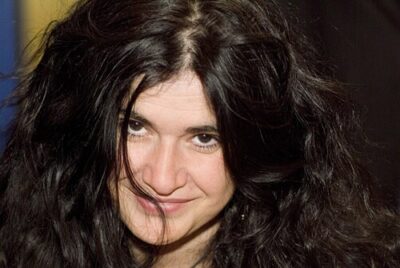 Lucía Etxebarria (2004)Spanish writer
 Antonio Skármeta (2003)Chilean writer and ambassador (1940–2024)
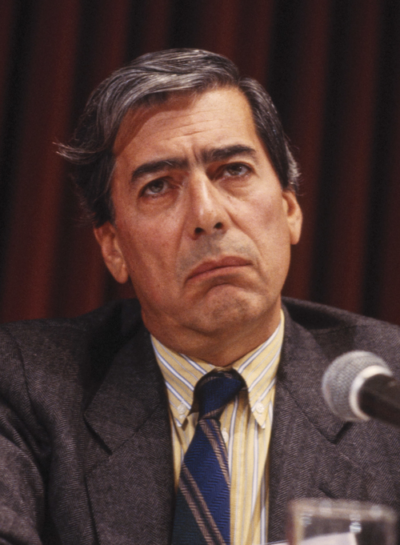 Mario Vargas Llosa (1993)Peruvian, Spanish and Dominican novelist and writer (1936–2025)
 Antonio Muñoz Molina (1991)Spanish writer (born 1956)
 Gonzalo Torrente Ballester (1988–)Spanish Galician writer (1910–1999)
 Manuel Vázquez Montalbán (1979)Spanish writer (1939-2003)
 Juan Marsé (1978)Spanish writer (1933–2020)
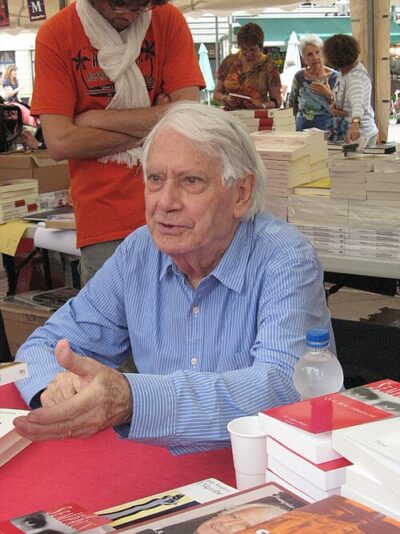 Jorge Semprún (1977)Spanish-French writer (1923-2011)
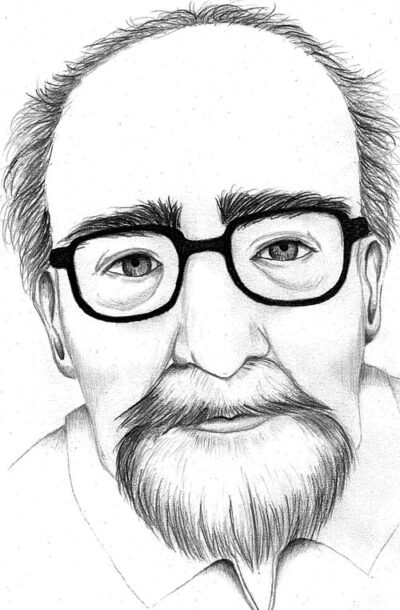 Ramón J. Sender (1969)Spanish writer (1901–1982)
 Ana María Matute (1954)Spanish writer
